2013-2014 · GT · 5.0 Coyote · Six-speed manual
First-hand: we have driven a Mustang.
Buy a 2013 or 2014 and shift it hard before you pay. Grinding is the fault showing itself early, not a quirk to live with.
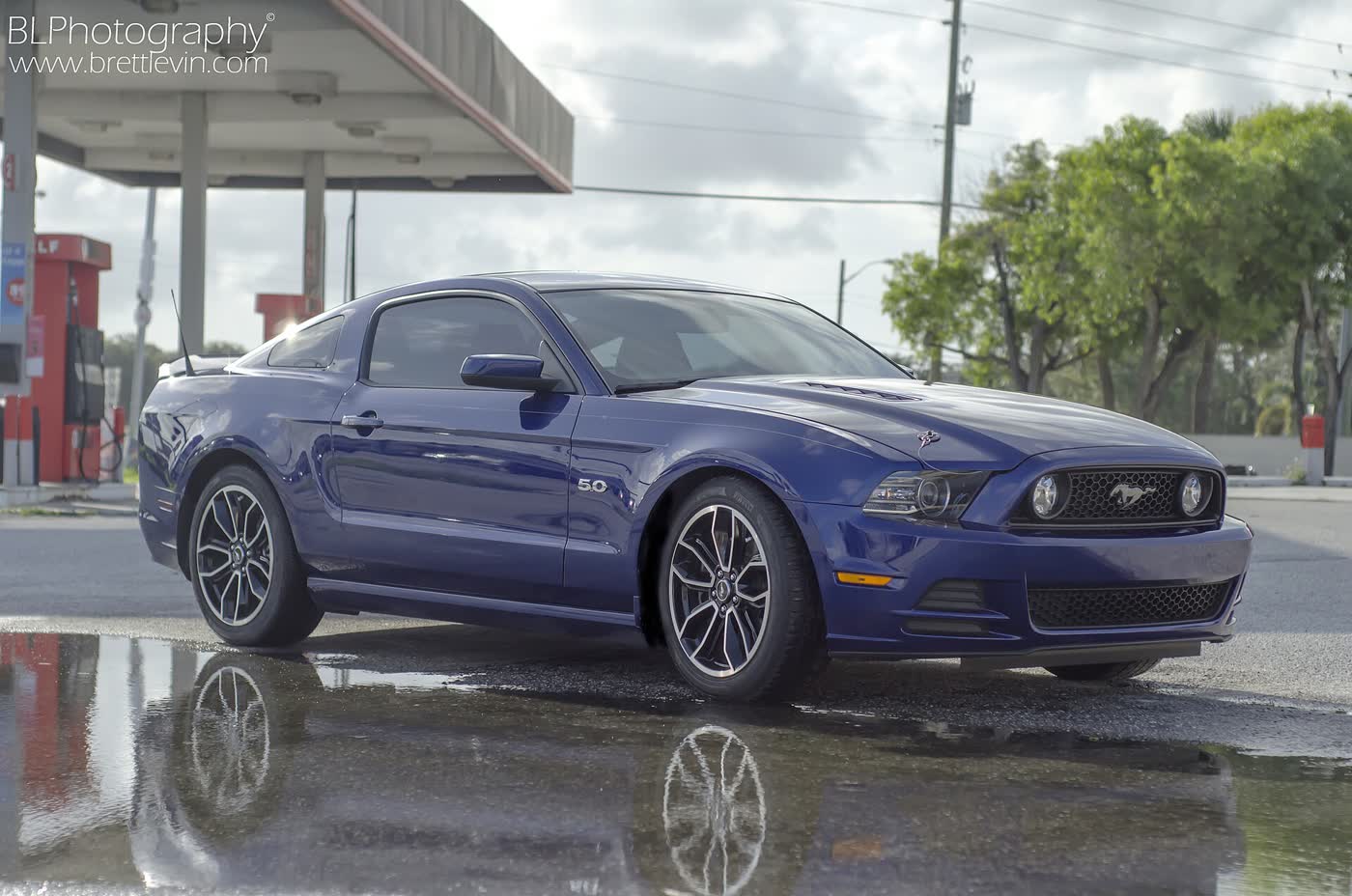
This car is for someone who wants 420 naturally aspirated horsepower and a clutch pedal for hot-hatch money, and who will spend ten minutes on a test drive shifting hard rather than gently.
All money figures use a fixed set of assumptions so they can be compared to other cars we cover: 12,000 miles a year, insurance for a 40-year-old with a clean record on full coverage, and fuel at the octane the car is rated on. These cars average about 5,862 miles a year in the real market.
| Figure | Mustang GT (2013-2014, 5.0 Coyote, 6MT) | Source |
|---|---|---|
| Used buy-in, private party | $17,020, Good condition | KBB |
| Full condition range | $14,770 to $18,720 | KBB |
| Live asking median | $20,236 across 22 listings from 2011-2014, wider than the 2013-2014 scope, $16,087 to $29,434 | Cars.com |
| Asking against book | 1.19x | derived: $20,236 divided by $17,020 |
| Mileage premium | 1.51x. Under 60k the median ask is $27,998; at 90k and over it is $18,524. | Cars.com |
| Dollars per horsepower | $40.5/hp | derived: $17,020 divided by 420 hp |
| Resale value, 2023 to 2025 | $14,854, $11,533 and $12,301 for a 2013 GT coupe | KBB value history |
| What you lose | About $1,532 a year, 9.0% a year | derived: $17,020 at the 2023-2025 rate of change in the row above |
| Against the going rate | $17,020 against about $23,295 for 8.6 lb per hp (0.73x) | derived: what our Board's cars pay for that power-to-weight, explained on How We Score |
~ our estimate, not a measured or quoted figure. Why we mark figures
About $17,020 in the book and $20,236 asking, which is the ordinary dealer margin. What makes this car straightforward to shop is that the spread underneath is almost entirely mileage: under 60,000 miles the asking median is $27,998, and at 90,000 and above it is $18,524.
That is a 1.51x mileage premium, and it means you are mostly buying an odometer reading rather than guessing at a history. It is a friendlier market to shop than the C5's, where the same spread is driven by condition instead.
One thing the market has not priced in: 2013 and 2014 cars carry both the stronger connecting rods and the settled gearbox, and they cost the same as the 2011 and 2012 cars that do not. Read The Risk before you decide that a cheaper 2012 is the same car.
Two figures decide the Deal score. What you would lose: KBB's value for a 2013 GT went from $14,854 in 2023 to $12,301 in 2025, about $1,532 a year at this price. What you get: $17,020 buys 8.6 lb per hp, against about $23,295 for what that power-to-weight usually costs across our Board. More performance for the money than the going rate, and real money lost while you own it.
| Figure | Mustang GT (2013-2014, 5.0 Coyote, 6MT) | Source |
|---|---|---|
| Power-to-weight | 8.6 lb per hp | derived: 3,618 lb divided by 420 hp |
| Power | 420 hp at 6,500 rpm. 2011-2012 cars make 412. | MotorWeek |
| Torque | 390 lb-ft at 4,250 rpm | MotorWeek |
| Curb weight | 3,618 lb with the manual. The automatic is 3,675. | KBB |
| 0-60 mph | Not captured. The 5.1s figure often quoted is from an automatic test car. | MotorWeek |
| Connecting rods | Sinter-forged from 2013, the Boss 302 specification | OnAllCylinders |
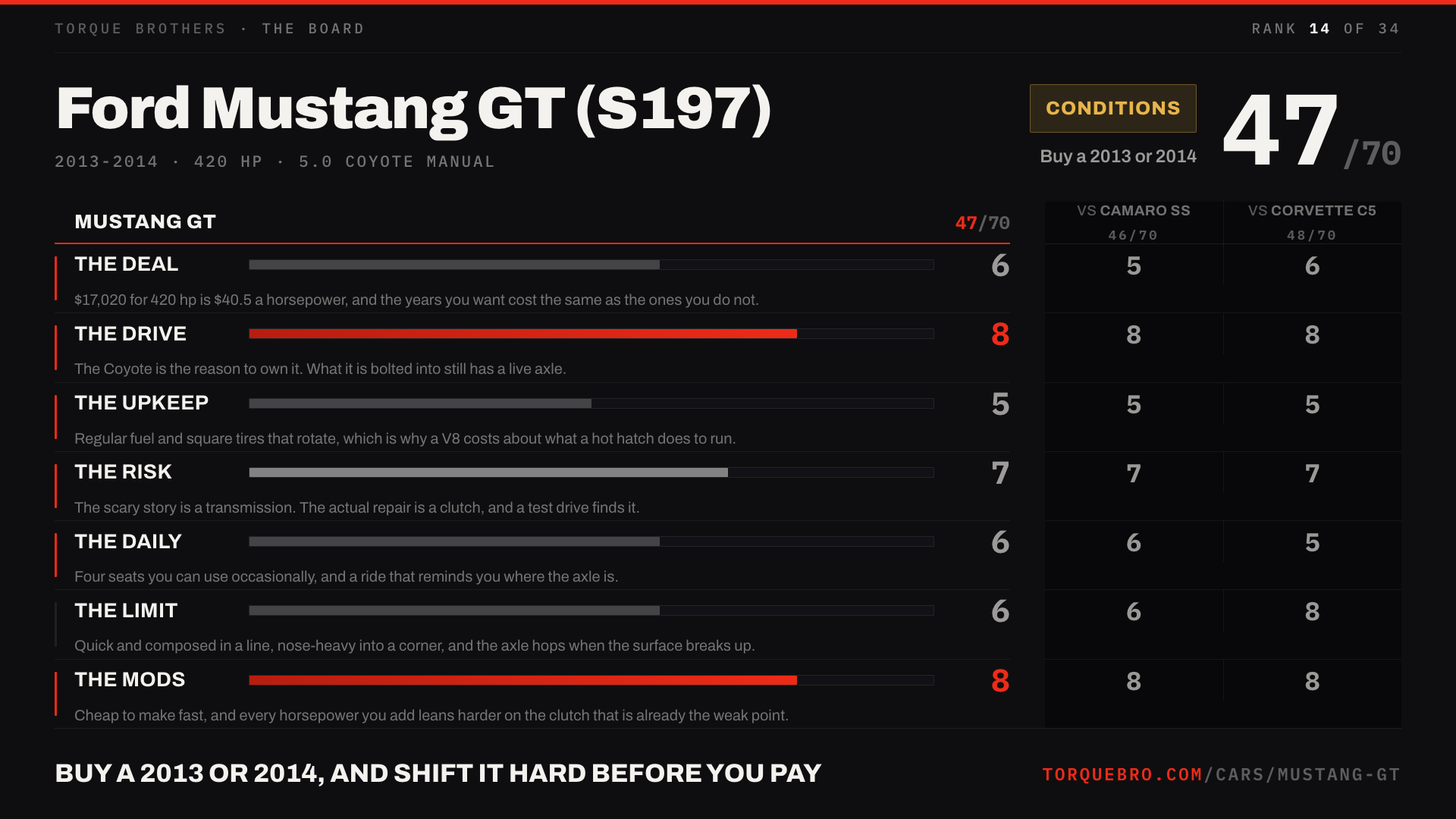
Four hundred and twenty horsepower and 390 lb-ft in 3,618 lb, which is 8.6 lb per hp. At $17,020 that works out at $40.5 a horsepower.
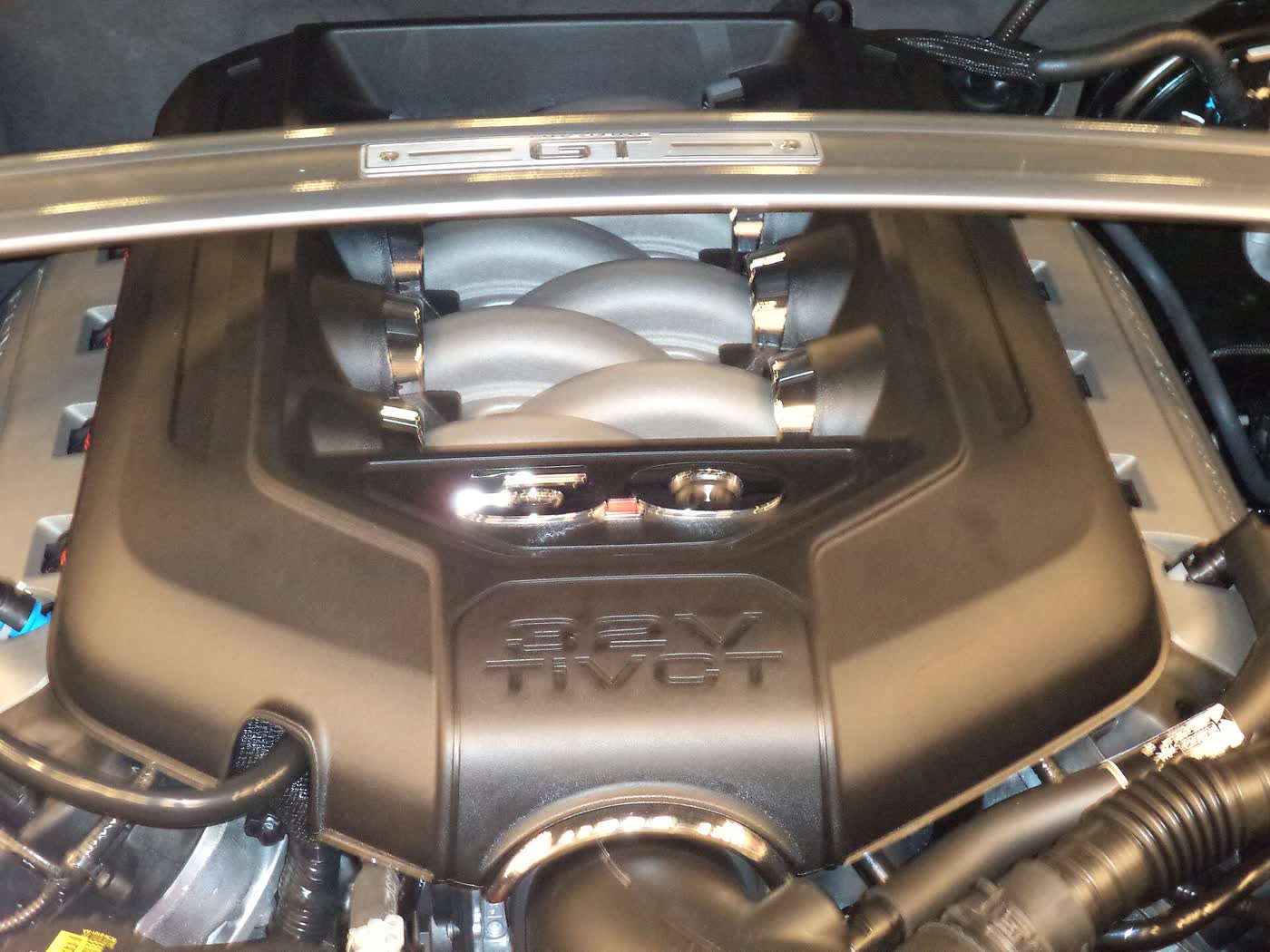
The Coyote is the reason to own this car. It is a naturally aspirated 5.0 that revs to 7,000 and makes its peak power at 6,500, which is not how a pushrod V8 behaves, and it is why people who buy one keep it.
What it is bolted into is the compromise. This is the live-rear-axle car; independent rear suspension did not arrive until the S550 in 2015. On a smooth road you will not care. Over a broken mid-corner surface the axle hops and you will. Note we have not published a 0-60 figure: the number usually quoted for this car comes from a test of an automatic, and the giveaway is the EPA line printed beside it.
| Figure | Mustang GT (2013-2014, 5.0 Coyote, 6MT) | Source |
|---|---|---|
| Annual running cost | $5,185 | derived: fuel $2,211 plus insurance $2,154 plus tires $320 plus service $500 |
| EPA combined | 19 mpg on regular with the manual. The automatic returns 20. | fueleconomy.gov |
| Fuel | $2,211 a year | derived: 12,000 miles at 19 mpg, 87 octane at $3.50 |
| Insurance | $2,154 a year, 2013-2014 average | MoneyGeek |
| Tires | 235/50R18 square, so they rotate and wear evenly | KBB |
| Tire set | About $800 a set, roughly $320 a year | derived: a set every two and a half years at 12,000 miles |
About $5,185 a year, and the headline is the fuel grade. The Coyote is EPA-rated on regular, so 19 mpg combined costs about $2,211 a year at 87 octane rather than 91.
There are four-cylinder cars on this Board that cost more to fuel than this V8 does, purely because they require premium. It is the single most counter-intuitive number on the page.
Tires help too. The base GT runs 235/50R18 square rather than staggered, so they rotate and wear evenly, and a set is about $800. Insurance at $2,154 is 12.7 percent of the car's value a year, which is high enough to notice and low enough that full coverage still makes sense.

| Figure | Mustang GT (2013-2014, 5.0 Coyote, 6MT) | Source |
|---|---|---|
| NHTSA investigation | PE 11-024: 29,807 cars, 364 reports, closed with no recall | ODI Resume |
| The actual fault | Clutch plate fasteners loosening. ODI calls it progressive and promoted by aggressive shifting. | ODI Resume |
| Clutch replacement | $2,214 to $2,476 | RepairPal |
| Cold shift effort | Ford TSB 11-03-18 specifies a lower-viscosity fluid | Ford TSB 11-03-18 |
| Powertrain complaint share | 42.9%, 37.7%, 17.7% and 8.4% across 2011 to 2014 | NHTSA |
| Open recalls | Takata airbag only: 15V319000 and 21V081000 | NHTSA |
The MT82 gearbox is what everyone warns you about, and the story is more specific than the warnings are. NHTSA investigated it: Preliminary Evaluation PE 11-024 covered 29,807 manual cars and 364 reports of shift-quality problems, and closed with no recall and no finding of unreasonable safety risk.
What ODI actually identified is not a transmission problem at all. Three causes were named, and the one that matters to a buyer is gradual loosening of the clutch plate fasteners, a condition ODI calls progressive and says is promoted by aggressive shifting. So the repair is a clutch job with revised fasteners at $2,214 to $2,476, not a gearbox rebuild. And because the fault is progressive, grinding and notchy shifts are its early stage rather than a quirk to live with, which makes it findable on a test drive.
Two independent things then land in the 2013 model year. Powertrain complaints fall from 42.9 percent of all complaints on a 2011 to 8.4 percent on a 2014, and Ford switched the Coyote to sinter-forged connecting rods, the Boss 302 specification. That is why the scope starts at 2013. Beyond the gearbox, every open recall on this car is Takata airbag, which is free to remedy and should be checked by VIN rather than taken on trust.
| Figure | Mustang GT (2013-2014, 5.0 Coyote, 6MT) | Source |
|---|---|---|
| Seats and doors | 4 seats, 2 doors | KBB |
| Cargo volume | 13 cu ft | KBB |
| Infotainment | SYNC with Bluetooth common, no CarPlay in the range | derived: trim-level availability varies across 2013-2014 |
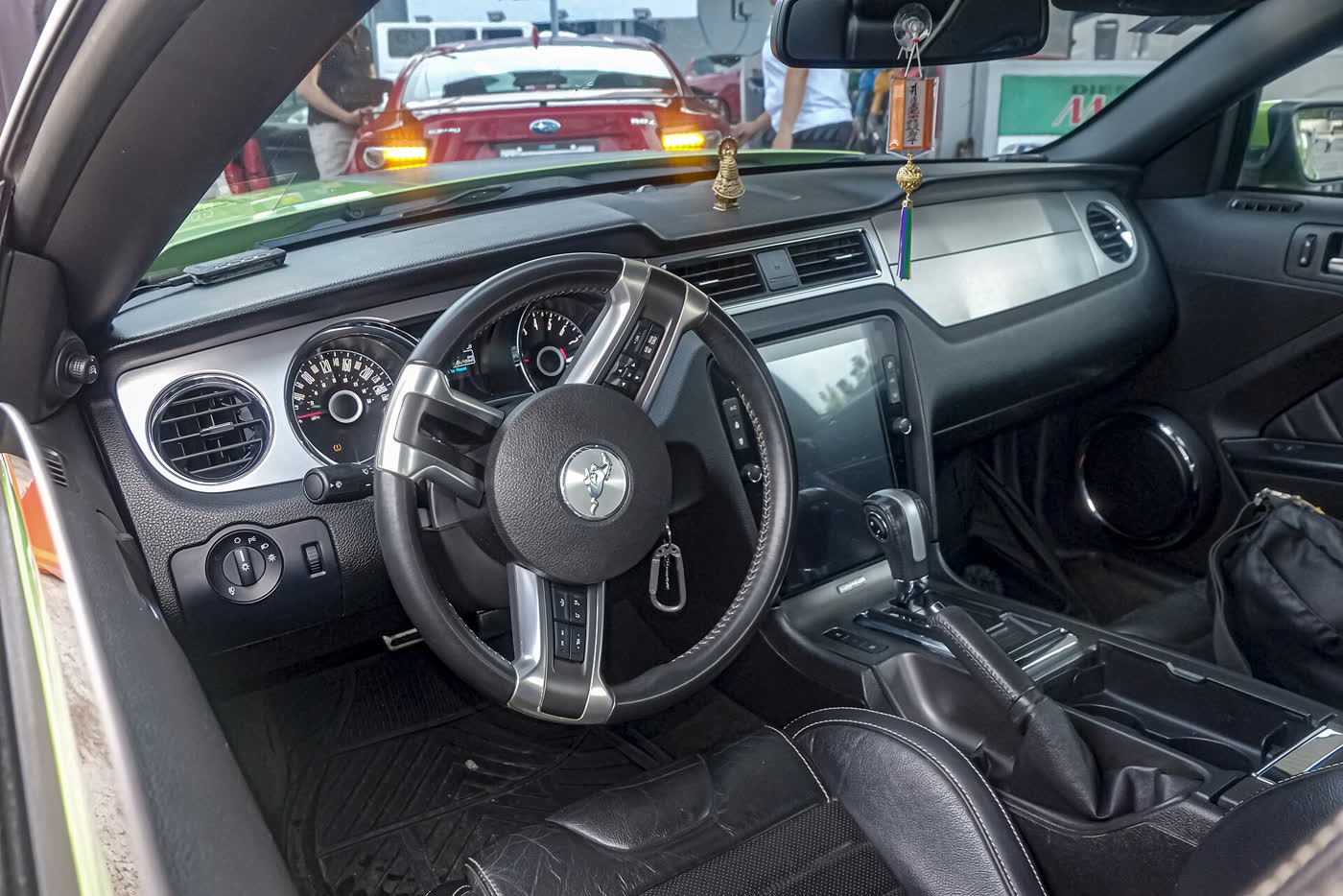
Four seats, two doors and a 13 cu ft trunk. The rear seats exist and will take adults briefly, which is more than the two-seat cars on this Board offer, but nobody should plan a long trip around them.
SYNC with Bluetooth is common and MyFord Touch turns up on later Premium cars, so a phone will connect. There is no CarPlay anywhere in the range.
The ride is the part to try before you commit. A live rear axle over broken pavement is busier than an independent setup, and that is a daily-driving characteristic rather than something you notice only when pressing on.
| Figure | Mustang GT (2013-2014, 5.0 Coyote, 6MT) | Source |
|---|---|---|
| SCCA Solo class | F Street, listed as “Mustang GT (incl. Performance Package - Level 1 and Level 2) (2010-26)” | 2026 SCCA Solo Rules |
| Factory tires | 235/50R18 square on the base GT; 255/40R19 with the Brembo package | KBB |
| Rear suspension | Live axle. Independent rear suspension arrived with the S550 in 2015. | OnAllCylinders |
| Lateral grip | Not captured. Period figures were set on tires no longer sold. | see class |
SCCA F Street · shared with the G37, the 370Z, the 340i, the Camaro SS, the 335i F30, the 335i, the 350Z, the Charger R/T and the Genesis Coupe on this Board.
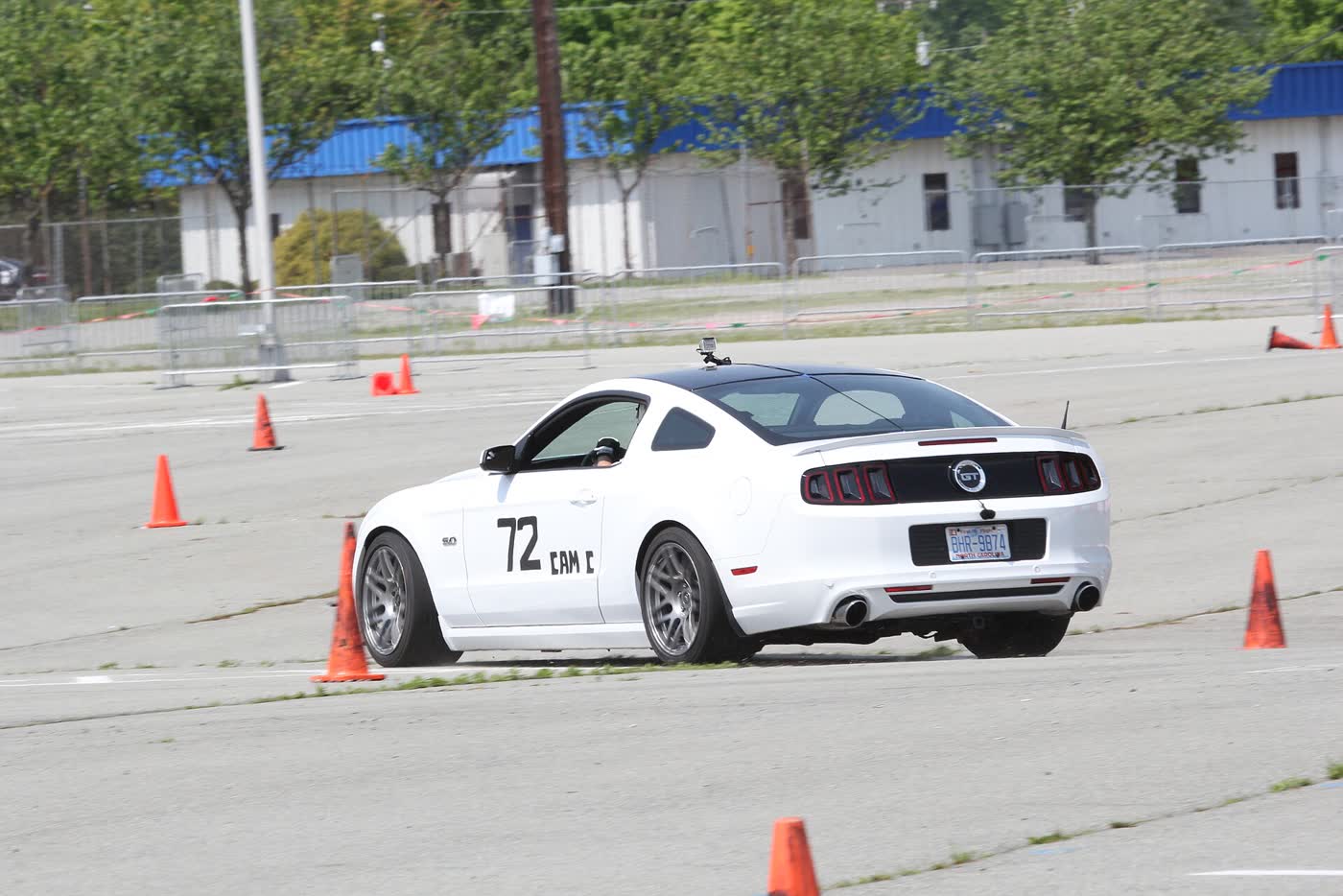
F Street under the 2026 SCCA Solo rules, the same class as the Camaro SS, which makes that comparison a real one rather than a rhetorical one.
What sets the ceiling is the rear axle. The car is quick and composed in a straight line, understeers into a corner, and hops over mid-corner bumps in a way an independent rear end does not. The base GT runs a square 235/50R18 setup; the Brembo package moves to 255/40R19.
We have not published a grip figure. Period numbers were measured on tires that are no longer sold, so quoting one would describe a car nobody can buy today.
| Path | Cost | Risk |
|---|---|---|
| Suspension and wheels | ~$1,500 to $3,500 | Low |
| Bolt-ons (intake, exhaust, tune) | ~$1,500 to $2,500 | Low: modest gains on a naturally aspirated engine |
| Supercharger kit | ~$4,900 to $7,000 before fitting | Moderate to high |
| Supercharger installed, ~550 whp | ~$8,000 | High: budget a clutch alongside it |
| Past 600 whp | $12,000+ | Severe: pistons and oil pump gears |
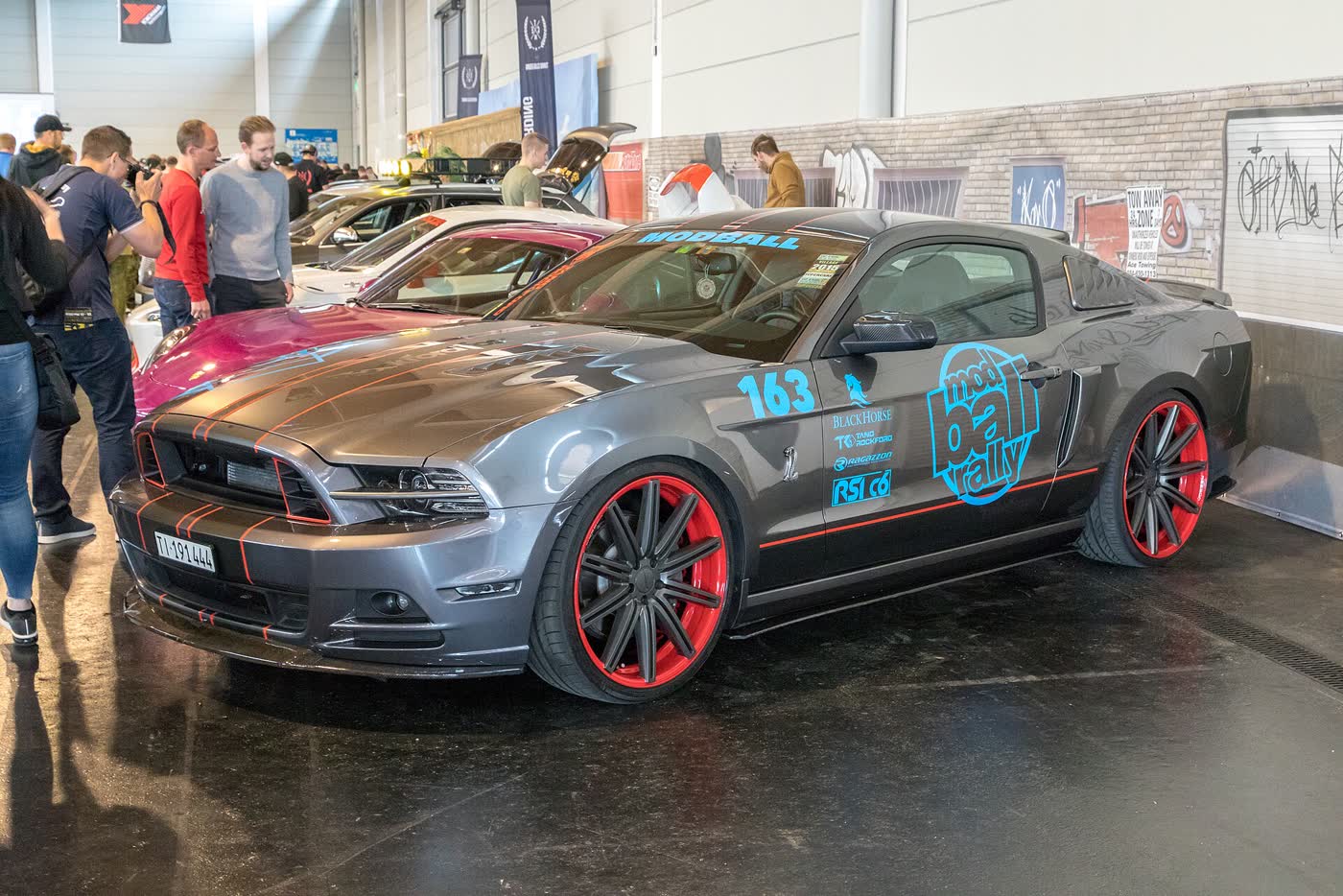
This is where the Mustang is hard to argue with. The Coyote shares its parts volume with the F-150, so the aftermarket is deep and the prices are sane, and the bottom end takes about 550 wheel horsepower safely with 600 to 650 achievable.
Forced induction is the first meaningful step, because a tune alone does little on a naturally aspirated engine. Supercharger kits run $4,900 to $7,000 before fitting; budget about $8,000 installed, which takes roughly 360 whp to 550 and works out near $4,200 per 100 whp.
And here is the part to be honest about. On this car, modifying it makes the fault it is known for worse. The clutch plate fastener condition is clutch-side and ODI says it is promoted by aggressive shifting, so adding 190 wheel horsepower leans directly on the component that was already the weak point. Budget for a clutch alongside the blower rather than after it.
Buy a 2013 or 2014, and shift it hard before you pay. Two unrelated improvements arrive in that model year and both matter: sinter-forged rods in the engine, and a gearbox complaint count that falls by roughly three quarters.
This car is for you if you want 420 naturally aspirated horsepower and a manual gearbox for hot-hatch money, and you can live with a rear axle that lets you know it is there. It is not for you if the only ones in your budget are 2011 and 2012 cars, if you need a settled ride over rough surfaces, or if you plan to supercharge it without budgeting for the clutch.
So you want a V8 and a manual for the price of a used hot hatch. A 2013 or 2014 Mustang GT gives you 420 naturally aspirated horsepower on regular fuel for about seventeen thousand dollars, and the gearbox everybody warns you about turns out to be a clutch fault you can hear on a test drive.
We scored this as a 2013 to 2014 GT with the 5.0 Coyote and the six-speed manual. The years in that sentence are doing real work, and the reliability section explains why.
A 2013 GT coupe books at $17,020 private party in Good condition, and the asking median across the listings we pulled was $20,236. That gap is ordinary dealer margin rather than a warning.
The spread runs from $16,087 to $29,434, and almost all of it is mileage. Under 60,000 miles the asking median is $27,998; at 90,000 and above it is $18,524, a 1.51x premium. That makes this an easier car to shop than some of its rivals, because the price is telling you something simple.
At $17,020 for 420 horsepower you are paying $40.5 a horsepower. The thing worth knowing is that the years you actually want, 2013 and 2014, sell for about the same as the 2011 and 2012 cars you should be more careful with.
This is the reason people hesitate over these cars, and it is worth getting the facts straight because the internet version is vaguer than the record.
NHTSA opened Preliminary Evaluation PE 11-024 into the MT82 six-speed on 3 August 2011 and closed it on 14 December the same year. It covered a population of 29,807 manual 2011 and 2012 Mustangs and 364 unique reports of shift-quality problems. ODI closed it with no recall, finding no indication of loss of motive power or unreasonable safety risk, and only five of the 364 reports alleged an actual inability to select a gear.
Ford named three contributing causes. High shift effort in cold weather, which comes down to transmission fluid viscosity and which Ford addressed with TSB 11-03-18 specifying a lower-viscosity fluid. A clutch stay-out condition above roughly 4,000 rpm, which delays re-engagement without preventing gear selection, addressed with replacement pedal parts under TSB 10-19-4. And gradual loosening of the clutch plate fasteners.
That third one is the one that matters when you are buying. ODI describes it as progressive in nature and says it is promoted by certain aggressive shifting. In other words, the famous MT82 transmission problem is usually a clutch problem, the repair is a clutch job with the revised fasteners at $2,214 to $2,476, and because the condition is progressive the grinding and notchiness people complain about are its early stage. You can find it on a test drive.
2013 and 2014, and the data is unusually clean about it.
Counting complaints straight off the NHTSA file, powertrain complaints run 42.9 percent of all complaints on a 2011, 37.7 percent on a 2012, 17.7 percent on a 2013 and 8.4 percent on a 2014. We show it as a share rather than a raw count on purpose: an older car has had more years to accumulate complaints, so counts are not comparable across model years, but a composition shift from 43 percent to 8 percent is not something age explains.
Then, separately and for unrelated reasons, Ford moved the Coyote to sinter-forged connecting rods for 2013, the same specification as the Boss 302. So the late Gen 1 engine has a stronger rotating assembly than the early one.
Two unrelated improvements arriving in the same model year is rare, and it is why the scope on this review starts at 2013 rather than 2011.
One note for anyone who remembers us dropping the S197 before. We did, in August, and that analysis was right: the 2007 to 2010 cars carry the two-piece spark plug that seizes and breaks on removal, plus cam phaser wear, and the years where Ford had fixed the plug priced out of the budget we were working to. But that was all about the 4.6 3V. The 2011 and later car is a completely different engine, and none of it applies.
About $5,185 a year on our standard assumptions, and the reason it is not worse is the fuel grade.
The 5.0 is EPA-rated on regular. At 19 mpg combined that is roughly $2,211 a year at 87 octane. There are four-cylinder cars on this Board that cost more to fuel than this V8 because they require 91, which is the most counter-intuitive figure on the page.
The base GT also runs a square 235/50R18 tire setup rather than a staggered one, so all four rotate and wear evenly and a set is about $800. Insurance came to $2,154 a year on our standard profile, which is 12.7 percent of the car's value annually.
One thing to watch when you compare EPA figures: the manual returns 19 mpg combined and the automatic 20, so the manual is the thirstier of the two here. That is the opposite of how the Corvette C5 splits, which is a good reason to read the row for the gearbox in front of you rather than carrying a rule between cars.
More easily than most of the cars near it on price. It has four seats and a 13 cu ft boot, and the rear seats will take an adult for a short journey, which is not true of a Corvette or a Miata.
SYNC with Bluetooth is common and MyFord Touch appears on later Premium cars, so your phone will connect even though there is no CarPlay anywhere in the range.
The reservation is the ride. A live rear axle over broken pavement is busier than an independent setup, and you feel that commuting rather than only when you are pressing on. Drive one over a bad road before you decide.
It runs in F Street under the current SCCA Solo rules, which is the same class as the Camaro SS, so the head-to-head people argue about is a real comparison rather than a rhetorical one.
The live rear axle sets the ceiling. The car is quick and composed in a straight line, it understeers on the way into a corner, and over a broken mid-corner surface the axle hops in a way an independent rear end simply does not. None of that makes it bad, but it is what you are working around.
We have not published a lateral grip number. Period figures were measured on tires that have not been sold for years, so the number would describe a car you cannot buy.
Less than almost anything else with this much power, because the Coyote shares its parts volume with the F-150. The stock bottom end handles about 550 wheel horsepower safely, with 600 to 650 achievable; pistons are the constraint and the oil pump gears want upgrading past 550 to 600.
Forced induction is the first meaningful step, since a tune on its own does very little on a naturally aspirated engine. Supercharger kits run $4,900 to $7,000 before fitting and tuning, so budget about $8,000 installed. That takes roughly 360 wheel horsepower to 550, which is around $4,200 per 100 whp.
There is one caution specific to this car, and it is the mirror image of the Corvette C5. The fault the Mustang is known for is clutch-side, and ODI's own language is that it is promoted by aggressive shifting. Adding 190 wheel horsepower drives the exact failure the car is already exposed to. If you are supercharging one, budget for the clutch in the same conversation rather than as a surprise six months later.
Buy a 2013 or 2014, and shift it hard on the test drive. Grinding or a second-gear pop-out is the early stage of a progressive clutch fault, not a characteristic to accept, and finding it before you pay is the difference between a $17,000 car and a $19,500 one.
Check the Takata recall by VIN rather than asking the seller, and confirm the build year rather than trusting the advert. A 2012 is a meaningfully different risk profile at the same money.
The Mustang GT finished at 47 out of 70 on our Board. It gives up points to a live rear axle that costs it both at the limit and on a rough road, and it earns them back with 420 naturally aspirated horsepower, a fuel bill that runs on 87 octane, and a fault that a competent test drive will find.
Filming reference: cue sheet · for the hosts on set, not part of the review.
The frame that closes our video: the Mustang GT at 47/70, with the Camaro SS and the Corvette C5 alongside.