2009-2011 Series 2 · 1.3 Renesis · 6MT
The tier prices every car at 120,000 miles, and a well-kept 13B is documented to need a rebuild at about 125,000. So this one arrives at our own condition basis needing an engine rather than maintenance. It is also a car you can measure before you pay, to the bar: 7.5 bar per face is healthy, under 6.5 bar means months. Get a rotary compression test or do not get involved.
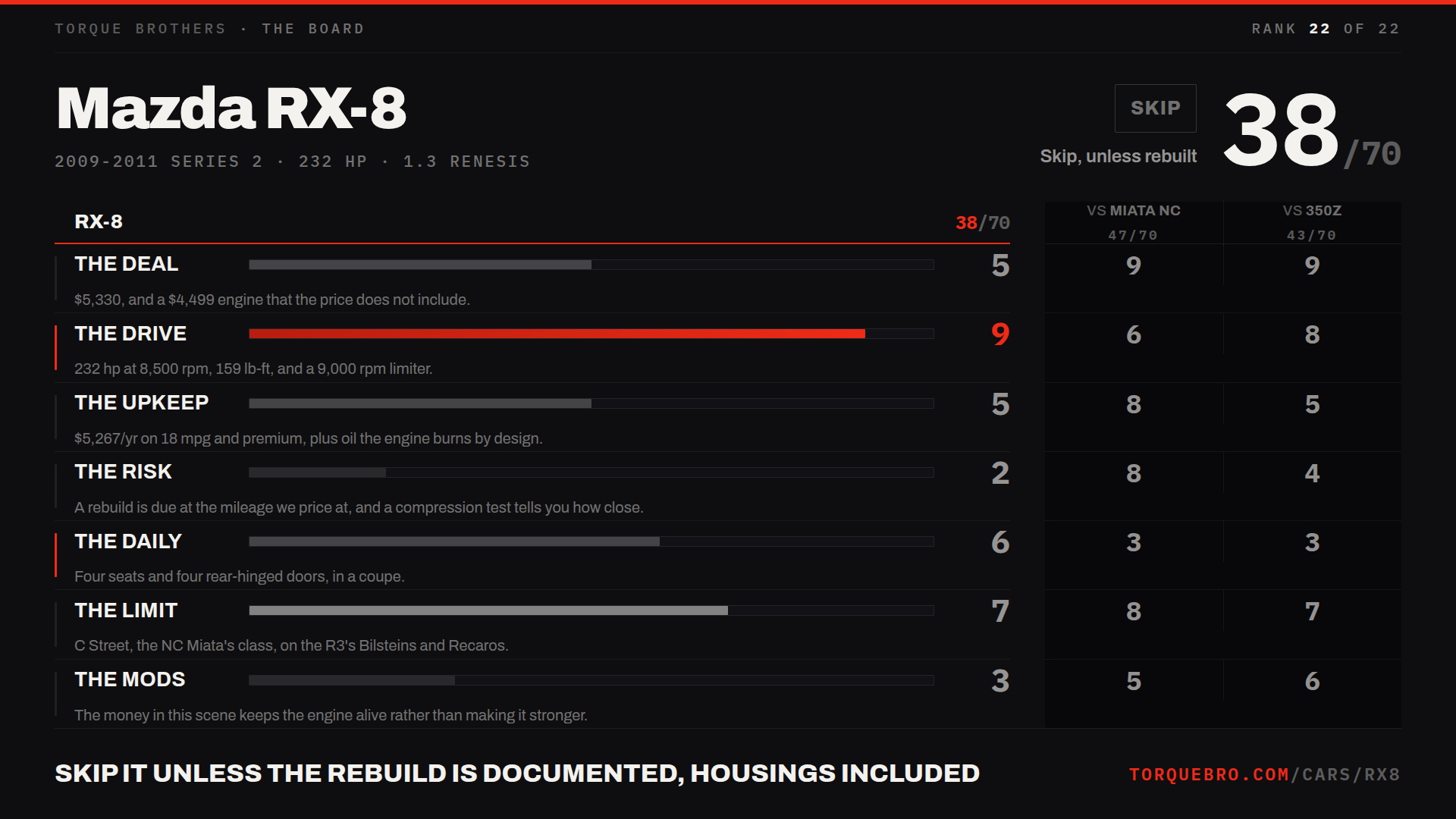
We scored the car as a 2009 to 2011 Series 2 with the Renesis 13B-MSP and the six-speed manual, and it landed at 38 out of 70, with a verdict of Skip it unless the rebuild is documented, housings included.
This car is for someone who wants a rotary, knows exactly what that costs, and is prepared to buy an engine as well as a car. If that is not you, the section to read is The Risk, and you can stop there.
We want to be precise about what this verdict is and is not, because the difference is the whole review. It is not a claim that rotaries are unreliable. It is our own condition basis meeting a documented service life, and those are two numbers you can check.
All money figures use a fixed set of assumptions so they can be compared to other cars we cover: 12,000 miles a year, premium fuel at $4.00 a gallon, and full coverage insurance. Prices are Kelley Blue Book private-party at 120,000 miles in Good condition, which is the flat basis this whole budget tier uses. Insurance figures are published averages, not personal quotes, and on this car ours is an estimate with no source behind it: see The Upkeep.
| Figure | RX-8 (2009-2011 Series 2, 6MT) | Source |
|---|---|---|
| Used buy-in, private party | $5,330 | KBB |
| Condition basis | 120,000 miles, Good, 2010 R3 | KBB |
| Full condition range | $3,905 to $5,680 | KBB |
| Appraisal spread, 2011 | $3,560 to $10,115, a 2.8x spread | Edmunds |
| Dollars per horsepower | $23.0/hp | derived: $5,330 divided by 232 hp |
~ our estimate, not a measured or quoted figure · * there is a caveat, and the note under the table explains it. Why we mark figures
The Deal scores a 5, and that number needs explaining, because a $5,330 sports car with 232 horsepower looks like it should score far higher. It works out to $23.0 per horsepower, which sits between the 350Z's $18.7 and the Mazdaspeed3's $32.6. On buy-in alone this is a strong result.
The score is a 5 because the sticker is not the price. Set $5,330 against a $4,499 exchange engine and the real number is somewhere near ten thousand dollars, and which of those two numbers you actually pay is decided by a test you can run before you buy. That is not a hypothetical we are inventing to be dramatic: it is the arithmetic in The Risk, below.
The spread is where this becomes concrete. Edmunds appraises a 2011 car anywhere from $3,560 to $10,115. On most cars a spread like that is condition in the ordinary sense, and you read it as paint, interior, service history. Here it has one dominant cause. A $4,000 RX-8 and a $9,000 RX-8 are not different conditions of the same car. They are different distances from the same bill. Buying at the bottom of that range is buying a rebuild, and the money you saved is money you have deferred.
One number we will not air: the research for this car carried $28 per horsepower, which was calculated before we pulled the KBB figure at 120,000 miles. It is stale. If you see it anywhere, it came from us and we withdraw it.
| Figure | RX-8 (2009-2011 Series 2, 6MT) | Source |
|---|---|---|
| Power-to-weight | 13.2 lb per hp | derived from the figures below |
| Power | 232 hp at 8,500 rpm | Mazda spec deck |
| Torque | 159 lb-ft at 5,500 rpm | Mazda spec deck |
| Curb weight | 3,065 lb (R3 6MT) | Edmunds |
| Redline | 9,000 rpm (7,500 on the automatic) | Mazda spec deck |
| 0 to 60 mph | Not captured | see below |
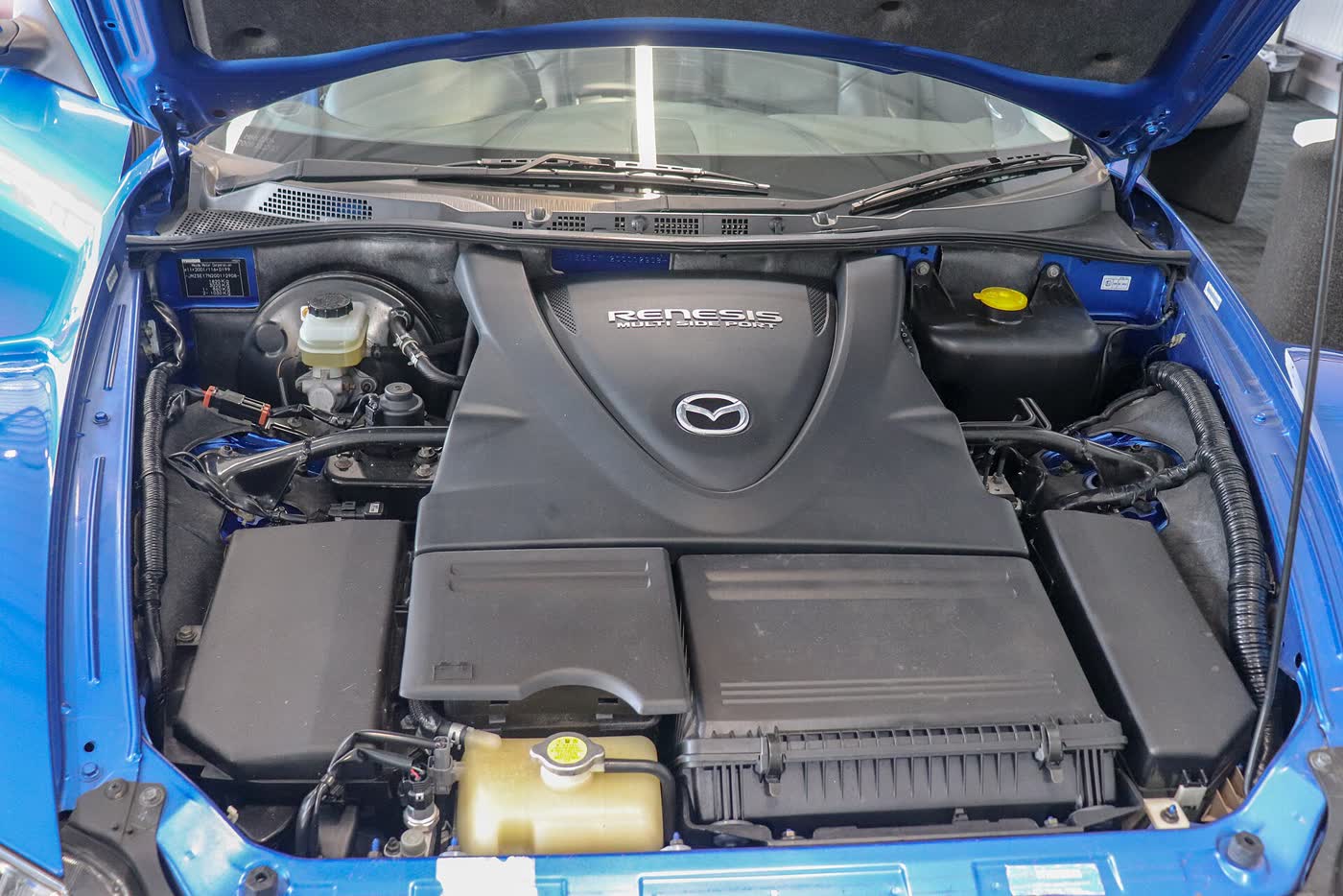
| Engine | 1.3 Renesis 13B-MSP twin-rotor | 8020 Automotive |
The Drive scores a 9, and this is the section where the car earns back some of what The Risk takes away. A 9,000 rpm limiter on a twin-rotor engine is not a specification you can get anywhere else at this money, and the experience of using it is unlike a piston car. The noise arrives somewhere above 7,000 rpm and does not stop. That is not nostalgia talking. It is the reason this car has owners who know exactly what it costs them.
The number that shapes the driving is 159 lb-ft at 5,500 rpm. The Mazdaspeed3 makes 280 lb-ft and the Focus ST makes 270, and those cars ask to be short-shifted. This one asks to be wrung out, every time, which is delightful on a back road and tiring in traffic. If you have never driven a rotary, understand that the torque figure is not a typo and it is not a flaw. It is the design.
Two honest gaps. The 0 to 60 time reads Not captured, and that is deliberate. The figures in circulation are 5.7 and 6.0 seconds from the same aggregator, no instrumented test was reachable, and we would rather publish a hole than a range we cannot stand behind. The second gap is the same one every car on this Board has: these are as-new figures, and a car with 120,000 miles on it makes less. On this engine, measurably less, and the tool that measures it is in The Risk.
The automatic is a different car and we did not score it: 212 hp and a 7,500 rpm limiter. It gives up the thing you came for.
| Figure | RX-8 (2009-2011 Series 2, 6MT) | Source |
|---|---|---|
| Total annual running cost | ~$5,267/yr | sum of the lines below |
| Fuel | ~$2,667/yr | derived from our fixed assumptions |
| Insurance, full coverage | ~$1,800/yr | our estimate, no MoneyGeek page exists |
| Tires, amortized | ~$300/yr | our estimate |
| Routine service | ~$500/yr | our estimate |
| Fuel economy | 18 mpg combined (16/22) | fueleconomy.gov |
| Octane | 91, premium | fueleconomy.gov |
| Oil consumption | By design | 8020 Automotive |
The Upkeep scores a 5, and the fuel line is most of it. Eighteen miles per gallon on premium works out to $2,667 a year at our fixed assumptions. For comparison inside this tier, the Genesis Coupe's 348 hp 3.8 litre V6 costs $2,000 a year in fuel. A 232 hp 1.3 litre drinks more than a 348 hp V6. That is the rotary trade, stated plainly, and it is worth knowing before rather than after.
Then there is a line nobody budgets for, and it is not a fault. The Renesis burns oil deliberately: the oil metering pump injects it into the combustion chambers to seal the apex seals. Consumption is how the engine works. You will top up between services, that is ownership rather than repair, and running it low is a direct route to the failure in the next section. We have not put a dollar figure on it because we could not source one, so treat the $5,267 as a floor.
Be careful with the insurance number. It is an estimate with no source behind it. MoneyGeek, which anchors insurance for the rest of this tier, publishes no RX-8 page at all: the URL returns a 404, confirmed on 3 August 2026. So we bounded it between the 350Z at $1,950 and the NC Miata at $1,512, both of which are MoneyGeek-anchored, and set it at ~$1,800 for a 232 hp four-seat coupe on a low insured value. Use it as a rank rather than a dollar amount, do not compare it against those cars in dollars, and get a real quote in your own name before you commit to anything.
| Figure | RX-8 (2009-2011 Series 2, 6MT) | Source |
|---|---|---|
| Worst realistic repair | $4,499 delivered, exchange engine, used housings | Atkins Rotary |
| Rebuilt engine, new rotor housings | $6,899 delivered, exchange | Atkins Rotary |
| Rebuild of your own core | $2,800, or $3,100 with accessories | Rotary Resurrection |
| Housings, if the core needs them | ~$2,100 rotor, ~$2,600 iron | Rotary Resurrection |
| Removal and reinstallation labour | Not captured | every figure above is an engine price |
| Documented service life | ~125,000 miles on a maintained engine | 8020 Automotive |
| Healthy compression | 7.5 bar per face, under 1.5 bar variance | JDMBuySell |
| Danger line | Below 6.5 bar, months rather than years | JDMBuySell |
The Risk scores a 2, and this is the argument of the whole review, so here is the reasoning in full.
We price every car in this tier at 120,000 miles. That basis exists so the cars stay comparable, and on the other eleven it is simply a mileage. Here it collides with something. 8020 Automotive puts a meticulously maintained 13B at roughly 125,000 miles before it needs a rebuild, with compression loss beginning around 100,000 and complete failure not uncommon by 80,000 on a car that was not looked after.
Read those two numbers next to each other. At the mileage this Board prices at, a best-case car is within five thousand miles of an engine. The others arrive at 120,000 needing maintenance. This one arrives needing an engine, and that is the Risk score.
And then the part that makes the car interesting rather than simply expensive. The failure can be measured against a published threshold before you pay. A hot compression test on a rotary-specific gauge, reading all three faces of each rotor, against Mazda's reference of 7.5 bar per face with under 1.5 bar of variance. Below 6.5 bar generally means months rather than years. An ordinary automotive compression tester will not do this: it needs the rotary gauge and it needs a rotary shop. That is a more specialised inspection than anything else here asks for, and it is also more useful, because you can know to within months how much engine you are buying. Paperwork, cold-start behaviour and a clean idle are not substitutes for the numbers.
Two things that change how you read an advert.
First, a rebuilt engine is not automatically good news. Rotary Revs is blunt about it: replacing apex seals on worn housings makes no more compression and often less. The housings have to be trued and resurfaced. Ask who did the work and what was done to the housings, not just whether it was done.
Second, the flooding reputation is misread. RX-8 Help traced every reported flood back to one of a short list: battery, starter, coils, plug wires, plugs, or compression. So flooding is a precursor rather than a defect, in the same shape the Mazdaspeed3's fuel pump, the WRX's oil consumption and the GTI Mk6's cold-start rattle take. A car that floods is telling you about its compression.
Two rotary specialists publish price lists, which is more transparency than most of this tier's repair figures get. Atkins Rotary sells a rebuilt exchange Renesis at $3,499 plus a $500 core deposit and $500 shipping, so $4,499 delivered on used rotor housings and $6,899 on new ones. Rotary Resurrection rebuilds a core you supply for $2,800, or $3,100 with the external accessories serviced, and adds roughly $2,100 for rotor housings or $2,600 for iron housings if your core needs them.
Every one of those is an engine price, not an installed price. Removal and reinstallation labour is not captured, and we are not going to invent a shop rate to make the number look finished. Treat $4,499 as a floor on the bill rather than the bill.
| Scenario | Year-one cost | As a share of a $5,330 buy-in |
|---|---|---|
| Documented rebuild, housings done, compression at 7.5 bar | ~$600 to $1,000 | 11 to 19 percent |
| Healthy compression, no rebuild history | ~$1,200 to $2,000 | 23 to 38 percent |
| Under 6.5 bar, rebuild inside the year | ~$5,100 to $7,500+ | 96 to 141 percent |
The bottom row is an engine at $4,499 plus the year's ordinary running items, and it is still missing the labour we could not source. The top row assumes the previous owner already paid for all of it. The spread between the rows is the argument for taking the compression test seriously, rather than an argument for despair.
| Figure | RX-8 (2009-2011 Series 2, 6MT) | Source |
|---|---|---|
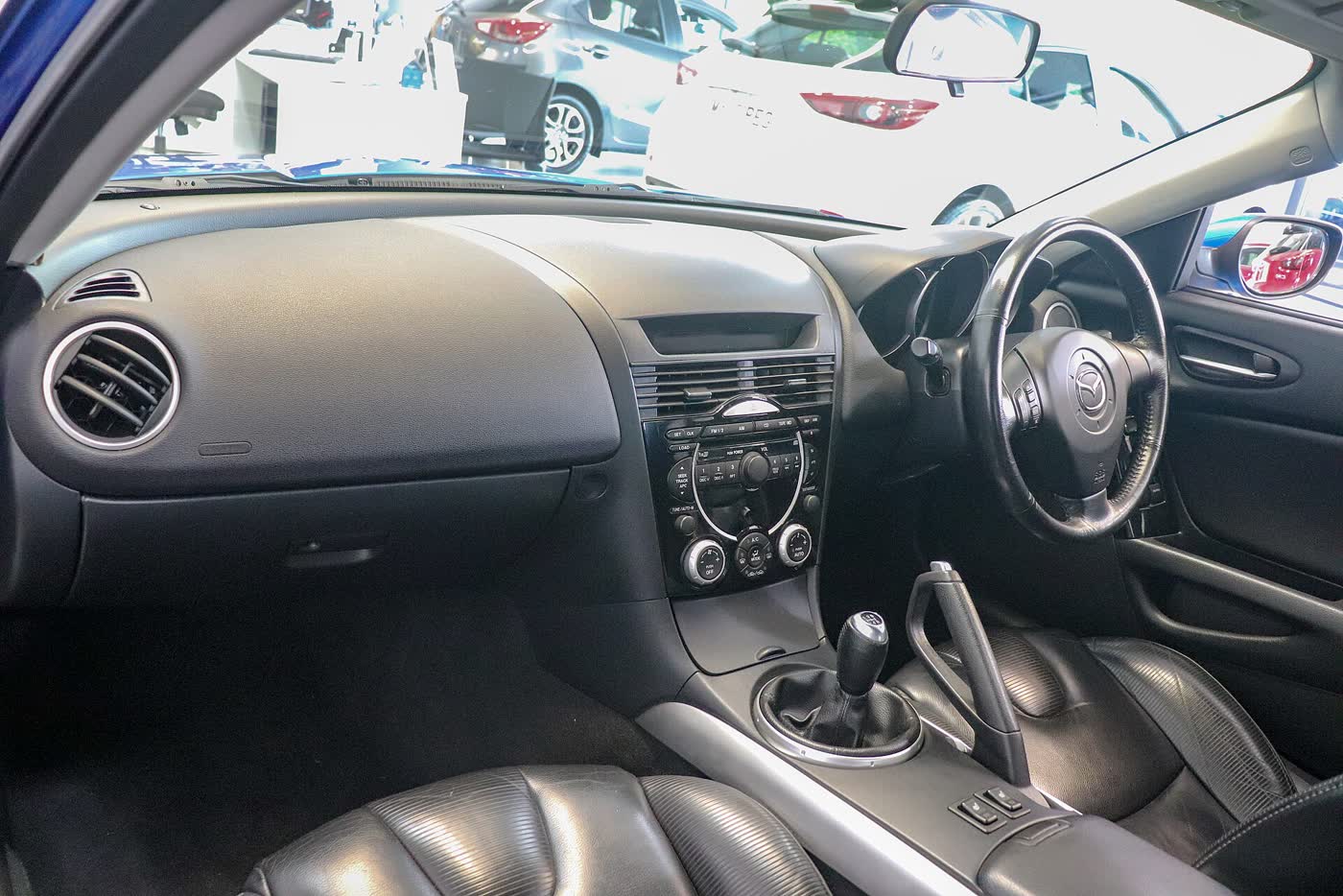
| Seats / doors | 4 / 4, rear-hinged rear doors | KBB |
| Infotainment | No CarPlay | our estimate |
The Daily scores a 6, and this is where the car does better than its reputation. Four seats and four doors in a sports car, with the rear pair rear-hinged so the back seat is reachable rather than decorative. Against the NC Miata's two seats and the 350Z's two, that is a real difference in what the car can be asked to do on an ordinary week.
It is behind the tier's hatchbacks on outright space, and it should be. The GTI Mk6 and the Mazdaspeed3 will take a load this will not. But if the question is whether four people can get in and be comfortable, the answer here is yes, and on a two-seat coupe it is no.
The infotainment is of its era and there is no CarPlay, which is a phone mount rather than a dealbreaker.
| Figure | RX-8 (2009-2011 Series 2, 6MT) | Source |
|---|---|---|
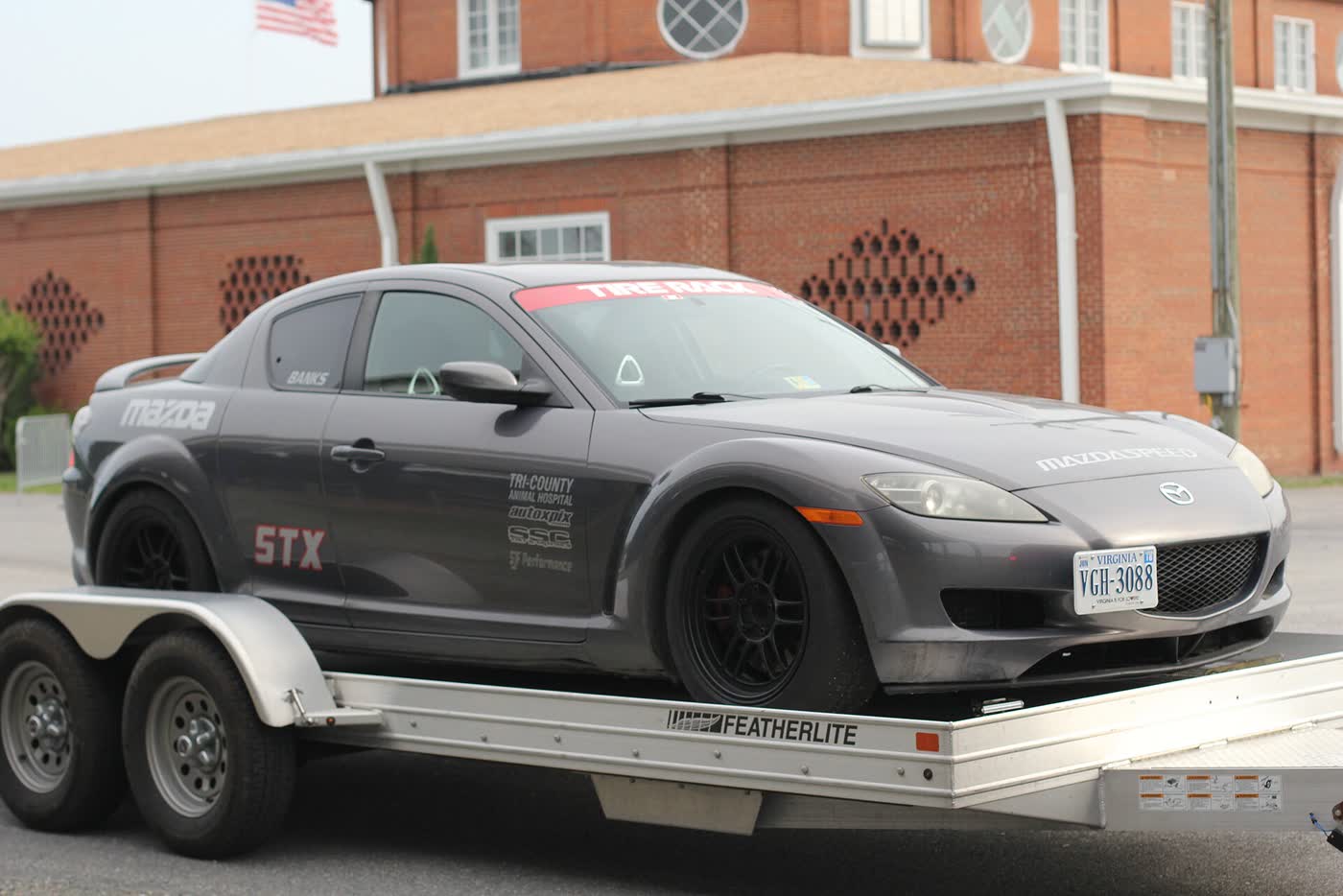
| SCCA Solo class | C Street (CS) * | SCCA Classification Assistant |
| Lateral grip | Not captured | no instrumented figure sourced |
| Braking | Not captured | no instrumented figure sourced |
SCCA C Street · shared with the Miata ND and the Miata NC on this Board.
The Limit scores a 7, and we want to be upfront that it is scored on reputation and hardware rather than on figures, because no instrumented grip or braking number was captured for this car. The R3 is the trim worth having: Bilstein dampers and Recaro seats, which is the chassis specification you want if the car is going anywhere near a cone.
C Street is the NC Miata's class, and the ND Miata's. That is useful context for what kind of car this is understood to be, and where you would be running it. The asterisk is doing real work, though: the class comes from the SCCA classification assistant rather than a direct read of the 2026 Appendix A, and it is part of a pending manual pass that covers six cars in this tier. Do not enter anything on the strength of our reading of it.
| Figure | RX-8 (2009-2011 Series 2, 6MT) | Source |
|---|---|---|
| Cost per +100 whp | Not captured | no installed figure sourced |
| Competition ceramic apex seals | ~$800 in parts | i-Rotary |
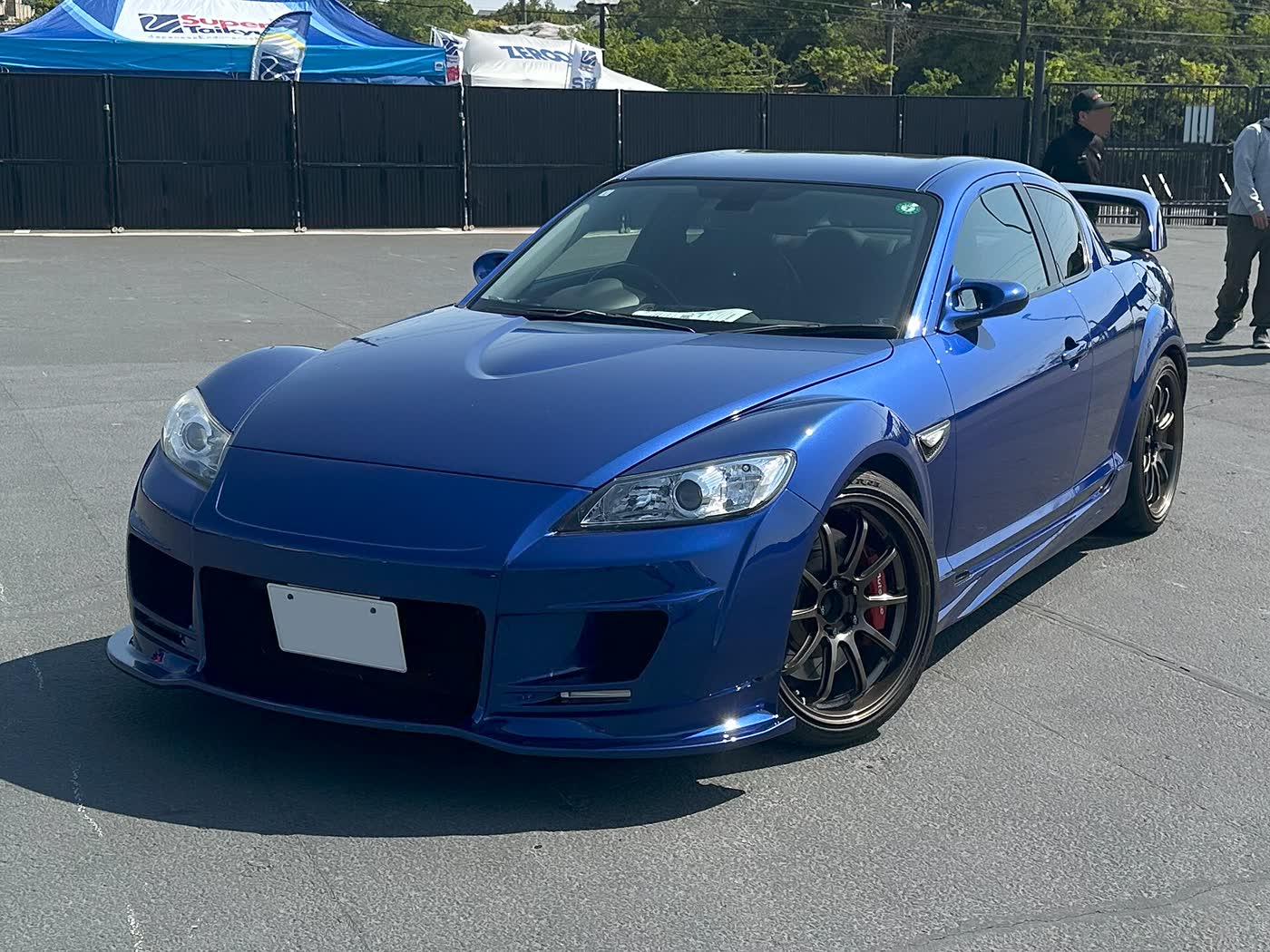
The Mods scores a 3, and the reason is structural rather than a lack of enthusiasm in the scene. The money in this aftermarket goes into keeping the engine alive rather than making it stronger. Competition ceramic apex seals at about $800 in parts is the shape of the whole market: the specialist rotary industry is largely a rebuild industry, and that is itself the answer to this category.
There is a second reason, and it is the one that matters if you were planning a build. The failure mode here is thermal and seal-related, and every route to more power drives exactly that harder: boost, sustained rpm, track use. The Mazdaspeed3 and the WRX have versions of this problem. This one has it in a more direct form, because the wear item and the power path are the same part.
We have not published a cost per 100 wheel horsepower, because no installed figure was sourced and inventing one would make a build look priced when it is not.
38 out of 70. Skip it unless the rebuild is documented, housings included.
The honest recommendation is conditional rather than dismissive. Buy one with a fresh, properly documented rebuild with the housings done, or buy one knowing you are funding the next one. What you cannot do is buy it like a normal used car.
Before you hand over any money: a hot rotary compression test at a rotary shop, three faces per rotor. Then rebuild paperwork that says what was done to the housings. Then the oil top-up history. Everything else about this car is negotiable and those are not.
The skip case is simple: you want a cheap sports car and you want to stop thinking about it. This is not that. The buy case is narrower and real: you want a rotary, you have read the compression numbers above, and you are treating the engine as a consumable with a service life rather than a component that either works or does not. On those terms, and only on those terms, this is a car worth owning.
We scored the RX-8 as a 2009 to 2011 Series 2 with the manual gearbox, and it landed at 38 out of 70, with a verdict of Skip it unless the rebuild is documented, housings included.
Here is the short version, and it is arithmetic rather than opinion. We price every car in this budget tier at 120,000 miles. A meticulously maintained rotary is documented as good for roughly 125,000 miles before it needs a rebuild. So at our own condition basis, this car arrives needing an engine where the others arrive needing maintenance.
That is not the same claim as "rotaries are unreliable," and the difference matters. One is a prejudice. The other is two published numbers sitting five thousand miles apart, and you can check both.
Five thousand three hundred and thirty dollars, for a 2010 R3 in Good condition at 120,000 miles, private party, according to Kelley Blue Book. The full condition range runs $3,905 to $5,680.
That is $23.0 per horsepower for 232 horsepower, which sits between the 350Z's $18.7 and the Mazdaspeed3's $32.6. On the sticker alone this is a lot of sports car for the money.
The number that actually matters is the spread. Edmunds appraises a 2011 car anywhere from $3,560 to $10,115, which is 2.8 times from bottom to top. On most used cars you would read a spread like that as condition. Here it has one dominant cause, and once you know it the whole market makes sense: it is whether the engine has been rebuilt, and how long ago. A four thousand dollar car and a nine thousand dollar car are the same car at different points in the same cycle.
Which means buying at the bottom of that range is buying a rebuild. You have not saved five thousand dollars. You have deferred it.
It revs to 9,000 rpm, which is not a number you can buy anywhere else at this money, and the Mazda spec deck is where that comes from rather than folklore. Two hundred and thirty-two horsepower arrives at 8,500 rpm. The noise above 7,000 is the reason people own these, and it is genuine rather than nostalgic.
The torque figure is the one to understand before you drive one: 159 lb-ft at 5,500 rpm. The Mazdaspeed3 makes 280 and the Focus ST makes 270, and both of those cars want to be short-shifted. This one wants to be taken all the way to the limiter every single time. On an empty road that is a delight. In traffic it is work.
We could not publish a 0 to 60 time. The figures in circulation are 5.7 and 6.0 seconds from the same aggregator and no instrumented test was reachable, so the page reads Not captured rather than quoting a range we cannot stand behind.
One buying note that follows from all this: the automatic runs 212 horsepower and a 7,500 rpm limiter. It gives up the exact thing you came for. Buy the manual.
No, and the fuel line is why. Eighteen miles per gallon combined on premium, from fueleconomy.gov, which at our fixed 12,000 miles a year and $4.00 a gallon is $2,667 a year. For scale inside this tier, the Genesis Coupe's 348 horsepower 3.8 litre V6 costs $2,000 a year to fuel. A 232 horsepower 1.3 litre drinks more than a 348 horsepower V6. That is the rotary trade, and there is no way to drive around it.
Total running cost comes to about $5,267 a year, and you should treat that as a floor for two reasons.
The first is oil. The Renesis burns it on purpose: the oil metering pump injects oil into the combustion chambers to seal the apex seals. This is not a defect and you cannot fix it, because it is how the engine works. You will top up between services. We have not priced that line because we could not source it, so it is not in the $5,267.
The second is insurance. Ours is an estimate with no source behind it, and we would rather say so than let it look researched. MoneyGeek, which anchors the insurance figure for the rest of this tier, publishes no RX-8 page: the URL returns a 404. So we bounded our number between the 350Z's $1,950 and the NC Miata's $1,512 and set it at about $1,800. Get a real quote in your own name before you decide anything on the strength of it.
Somewhere between $600 and $7,500, and which end you land on is decided by one test.
| Scenario | Year-one cost | As a share of a $5,330 buy-in |
|---|---|---|
| Documented rebuild, housings done, compression at 7.5 bar | ~$600 to $1,000 | 11 to 19 percent |
| Healthy compression, no rebuild history | ~$1,200 to $2,000 | 23 to 38 percent |
| Under 6.5 bar, rebuild inside the year | ~$5,100 to $7,500+ | 96 to 141 percent |
The bottom row is a $4,499 exchange engine plus the year's ordinary running items, and it is still missing the removal and reinstallation labour we could not price. The top row assumes somebody else already paid for all of it.
Look at what the spread between those rows means. On most cars, a bad outcome in year one is a percentage of the purchase price. Here the bad outcome is the purchase price again, and the difference between the top row and the bottom row is a test you can run before you pay.
The honest answer is that "reliable" is the wrong frame for this engine, and using the right frame is what makes the car buyable at all.
Apex seal wear is not really a failure. It is a service life. 8020 Automotive puts a well-maintained 13B at roughly 125,000 miles before a rebuild, with compression loss beginning around 100,000 and complete failure not uncommon by 80,000 on a neglected car. It arrives on a schedule rather than by luck, which is a different thing from a head gasket that might go at any time or never.
And it can be measured against a published threshold before you pay. A hot compression test on a rotary-specific gauge, reading all three faces of each rotor. Mazda's reference is 7.5 bar per face with under 1.5 bar of variance. Below 6.5 bar generally means months rather than years. An ordinary compression tester cannot do this; it needs the rotary gauge and a rotary shop, which is a more specialised inspection than a normal pre-purchase check, and a more decisive one. You can know to within months how much engine you are buying.
Paperwork, a clean idle and good cold-start behaviour do not substitute for those numbers. Get the numbers.
Two things that change how you read a listing:
"Rebuilt engine" is not automatically good news. Rotary Revs is blunt: replacing apex seals on worn housings makes no more compression and often less. The housings have to be trued and resurfaced. Ask who did the work and what was done to the housings.
Flooding is a symptom, not the disease. RX-8 Help traced every reported flood back to one of a short list: battery, starter, coils, plug wires, plugs, or compression. So a car that floods is telling you about its compression. Read it as a warning light rather than a quirk.
The rest of the list is real but ordinary: starter motors, ignition coils, plugs and wires are frequent, and catalytic converters get killed by unburnt fuel. None of those decide the purchase. The compression does.
More easily than its reputation suggests, and this is the part people get wrong in the other direction.
It has four seats and four doors, with the rear pair rear-hinged so the back seat is reachable rather than decorative. Against the two-seat NC Miata and the two-seat 350Z, that is a genuine difference in what an ordinary week can look like. Four adults fit and are comfortable.
Where it loses is space and running cost. The tier's hatchbacks will take a load this will not, and 18 mpg on premium is a lot of money for commuting. As a car you use for everything, the engine's service life is the problem rather than the packaging: high-mileage years bring the rebuild forward.
It classes as C Street, which is the NC Miata's class and the ND Miata's, according to the SCCA classification assistant. The R3 is the trim to have for it: Bilstein dampers and Recaro seats from the factory.
Two caveats, and both are ours rather than the car's. We captured no instrumented grip or braking figure for this car, so our Limit score rests on reputation and hardware rather than numbers. And the class comes from the classification assistant rather than a direct read of the 2026 Appendix A, so check it against the current rulebook before you enter anything.
Only in one direction, and it is not the usual one.
The specialist rotary aftermarket is substantial, but look at what it sells: competition ceramic apex seals at about $800 in parts, rebuild components, housings. The money in this scene goes into keeping engines alive rather than making them stronger, and that tells you most of what you need to know.
The reason is mechanical rather than cultural. The failure mode is thermal and seal-related, and every route to more power drives exactly that harder: boost, sustained high rpm, track days. The Mazdaspeed3 and the WRX have versions of this problem, where modifying the car brings the failure forward. Here it is more direct, because the wear item and the power path are the same part.
We have published no cost per 100 wheel horsepower for this car, because no installed figure was sourced and a made-up one would make a build look priced when it is not.
These two share a class and roughly share a price, and they answer the same question in opposite ways.
The NC Miata is $6,985 and its worst realistic repair is $1,967. Every one of its failures is findable before you pay, so a good inspection moves you to a cheap first year. The RX-8 is $5,330 and its worst realistic repair is $4,499 before labour, and no inspection removes it, because it is not a fault to find. It is a clock to read.
Both cars reward the same buyer behaviour, which is inspecting properly rather than shopping on price. But on the Miata the inspection tells you whether this example is a good one. On the RX-8 it tells you how much time is left. If you want a cheap rear-drive car to enjoy and stop thinking about, that is the Miata. If you want the rotary specifically, and the noise, and the 9,000 rpm, then no Miata substitutes for it and you should read the next section carefully.
Skip it unless the rebuild is documented, housings included. Thirty-five out of seventy.
We want to be careful about what that verdict is, because it is easy to hear it as a sneer and it is not one. This is our own 120,000-mile condition basis meeting a documented service life of about 125,000 miles. It is arithmetic, and it applies to a well-maintained car, not a neglected one.
The conditional buy is real. A car with a fresh, properly documented rebuild, housings included, is a good car at this price and its year one looks like the top row of that table. So is a car whose compression test comes back at 7.5 bar per face, as long as you understand you have bought time rather than escaped the bill.
What you cannot do is buy this like a normal used car, on a test drive and a clean service book. Bring a rotary shop, get the numbers, and price the engine into the purchase whether or not you are paying for it this year.
Filming reference: cue sheet · for the hosts on set, not part of the review.
The frame that closes our video: the RX-8 at 38/70, with the Miata NC and the 350Z alongside.