2017-2021 · Manual · Front-wheel drive
Buy the front-drive benchmark, but test first-to-second cold and hot, and get a US quote for synchro work before you commit.
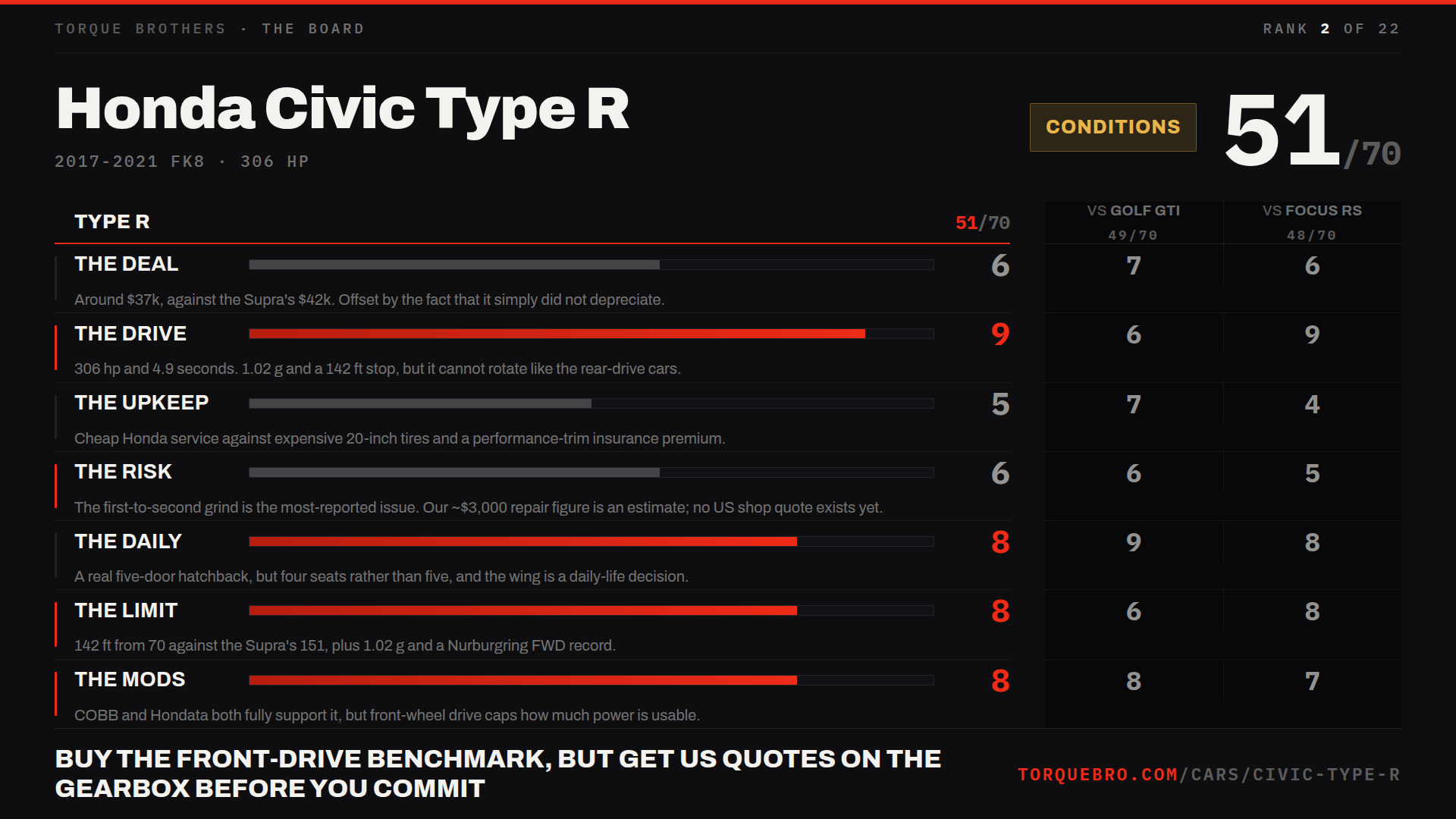
We scored the car as a 2017 to 2021 FK8 with the manual, which is the only transmission it came with, and it landed at 51 out of 70 with a verdict of Buy, with conditions.
This car is for someone who wants a 306 hp front-driver at 1.02 g, who will actually use that capability, and who can absorb the fact that it costs roughly twice what a GTI does. If you are shopping purely on value, skip to The Deal, because this car ties a GTI on our Board while asking for a lot more money.
All money figures use a fixed set of assumptions so they can be compared to other cars we cover: 12,000 miles a year, premium fuel at $4.00 a gallon, and insurance for a 35-year-old driver with a clean record and full coverage. Insurance numbers are published averages, not personal quotes. Prices are from Kelley Blue Book.
| Figure | Civic Type R (2017-2021 FK8) | Source |
|---|---|---|
| Used buy-in (KBB private-party, clean) | ~$37,000 | we found no published source for this figure |
| Original MSRP range | $34,700 (2018) to $37,895 (2021) | fueleconomy.gov lists the 2018 at $34,700 (before destination). 2021 derived: $38,890 with destination (Carscoops) less the $995 destination charge = $37,895 |
| KBB listing (2021) | $36,122 and $37,700 | we found no published source for this figure: a point-in-time KBB listing price that KBB model pages no longer show |
| KBB listing (2019) | $41,988 | we found no published source for this figure: a point-in-time KBB listing price that KBB model pages no longer show |
| 3-year resale retention | Not captured as a percentage | Not captured as one percentage: KBB reports the 3-year change per model year and trim, from 0% down (2018) to 6% down (2021 Touring) |
| Depreciation | Did not depreciate; some cars list above original MSRP | we found no published source for this figure |
~ our estimate, not a measured or quoted figure · * there is a caveat, and the note under the table explains it. Why we mark figures
At roughly $37,000, against the Supra's $42,000, this is expensive for the Board, and that is the single reason this category scores a 6. You are paying close to double what a clean GTI costs, and about $9,000 more than a Focus RS. On a Board built to rank value, that is a heavy load to carry no matter how good the car is.
What partly rescues it is unusual: the FK8 did not depreciate. Look at the listings above and you will notice a 2019 car at $41,988, which is more than any of them cost new, and 2021 examples sitting essentially at their original sticker. We have not put a retention percentage in the table because a percentage understates what is actually happening here. If you buy a good one and look after it, the realistic outcome is that it costs you very little to own in capital terms.
One sourcing note. You will find claims that 2021 cars start just above $30,000. That comes from aggregator editorial and is flatly contradicted by Kelley Blue Book listings, so we have disregarded it. If you are budgeting off that number you will be disappointed when you start shopping.
| Figure | Civic Type R (FK8) | Source |
|---|---|---|
| Power | 306 hp, 295 lb-ft | Honda press kit |
| Power-to-weight | 10.2 lb/hp | derived: 3,117 lb divided by 306 hp (both from the Honda press kit) |
| Engine | K20C1 2.0T, front-wheel drive | Honda press kit (2.0-liter turbo, front-wheel drive); Wikipedia (K20C1 engine code) |
| 0 to 60 mph | 4.9 sec (Car and Driver) | Car and Driver (via Yahoo) |
| MotorTrend figure-8 | 24.30 sec | MotorTrend |
| Curb weight | 3,117 lb | Honda press kit |
Three hundred and six horsepower and a 4.9 second run to 60 makes the Type R quicker than every hot hatch here bar the Focus RS, and quicker than most of the rear-drive coupes too. The K20C1 is a serious engine and the car is fast in a way that surprises people who still think of front-wheel drive as the compromise option.
What keeps this at an 8 rather than a 9 is the layout, and we want to be precise about why. It is not that the car understeers or feels dull, because it does not; Honda engineered around the front-drive problem harder than anyone else has. It is that you cannot steer this car on the throttle. The Focus RS will send torque to one rear wheel and rotate. The Supra will do it the old-fashioned way. The Type R grips and points, brilliantly, but the conversation is one-way.
Curb weight is 3,117 pounds, from cars.com and Honda's own specifications, which gives 10.2 pounds per horsepower. That is better than either the GTI at 13.4 or the Veloster N at 11.3, and it is a big part of why the Type R keeps up with rear-drive coupes that look quicker on paper.
| Figure | Civic Type R (FK8) | Source |
|---|---|---|
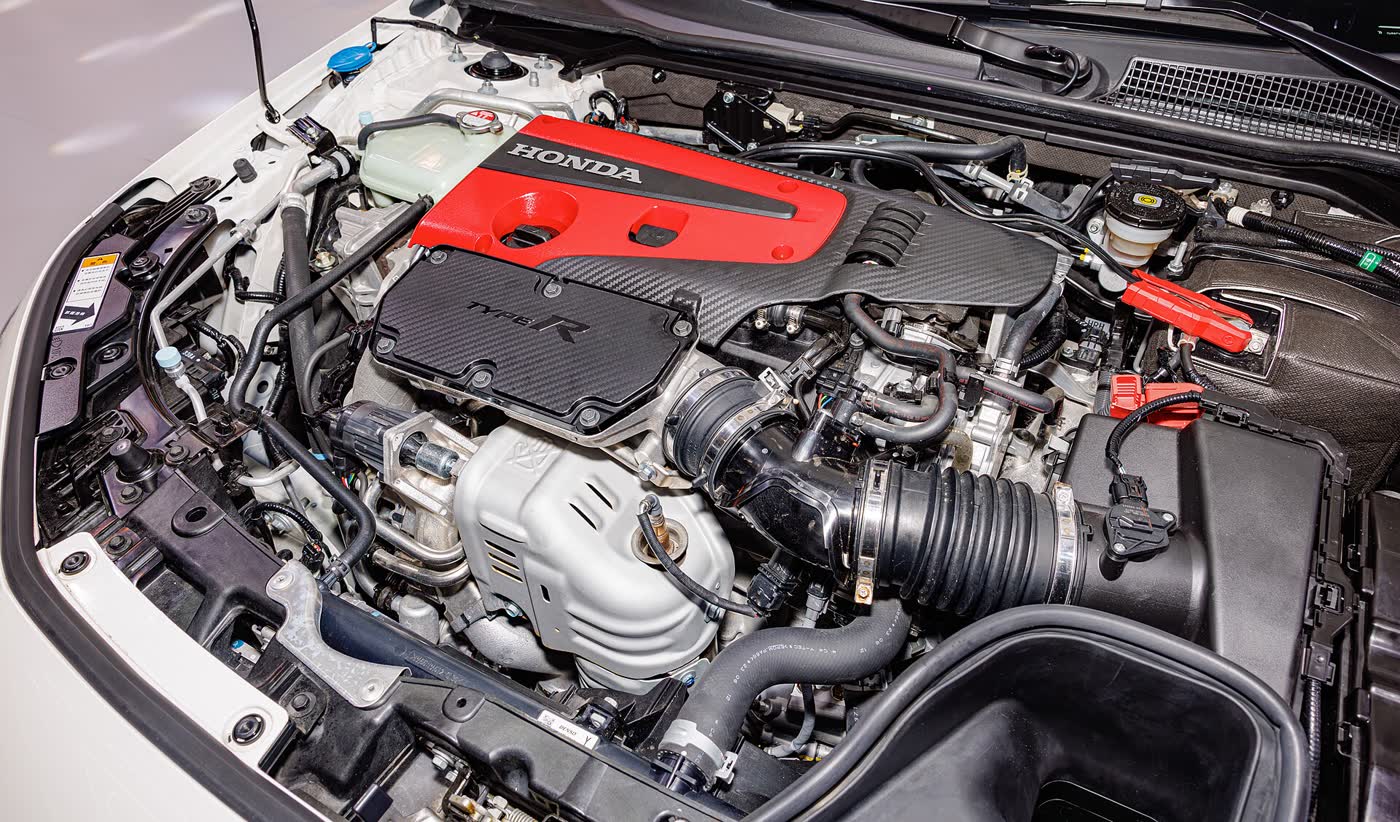
| Total annual running cost | ~$5,350/yr | derived: $2,460 insurance + $1,920 fuel + $520 tires + $450 service |
| Insurance | ~$2,460/yr (estimated) | our estimate: a 1.32x performance-trim step on a Civic base premium; we found no published source for this figure |
| Fuel | $1,920/yr (sourced, 25 mpg combined) | fueleconomy.gov (25 mpg combined, manual). derived: 12,000 miles divided by 25 mpg, times $4.00 per gallon |
| Tires | ~$520/yr (estimated, 245/30R20) | our estimate for a set of 245/30R20 summer tires (fitment per Honda specifications) |
| Service | ~$450/yr (estimated) | our estimate |
| Tires | 245/30R20, expensive and fast-wearing | Honda specifications list the 245/30ZR20 size and note that summer tires wear faster than normal passenger-car tires; "expensive" is our judgment |
Roughly $5,350 a year, which puts the Type R between the GTI at $4,380 and the Focus RS at $8,866. The fuel line is now sourced: the EPA's 25 mpg combined on our standard 12,000 miles at $4.00 a gallon gives $1,920. The other three lines are estimates, and the insurance figure in particular is modelled from a trim multiplier rather than quoted from a single consistent source the way the Golf R's was. Note the total went up from the $5,230 we first published, because the old figure did not leave enough room for 245/30R20 tires. Treat it as a position on a scale, not as a bill.
The forces pulling in each direction are clear enough. Honda dealer service is cheap and the K20 is not a difficult engine to look after, which helps. Against that, the car rides on 245/30R20 tires, which is an expensive size that wears quickly on a car people drive hard, and the Type R trim carries a performance-car insurance premium rather than a Civic one.
The practical takeaway is that this is not an expensive car to run by the standards of things that go this fast, but it is not a Civic either. Budget somewhere near the middle of our Board and get a real insurance quote before you commit, because that line is the biggest single variable and our figure for it is an estimate.
| Figure | Civic Type R (FK8) | Source |
|---|---|---|
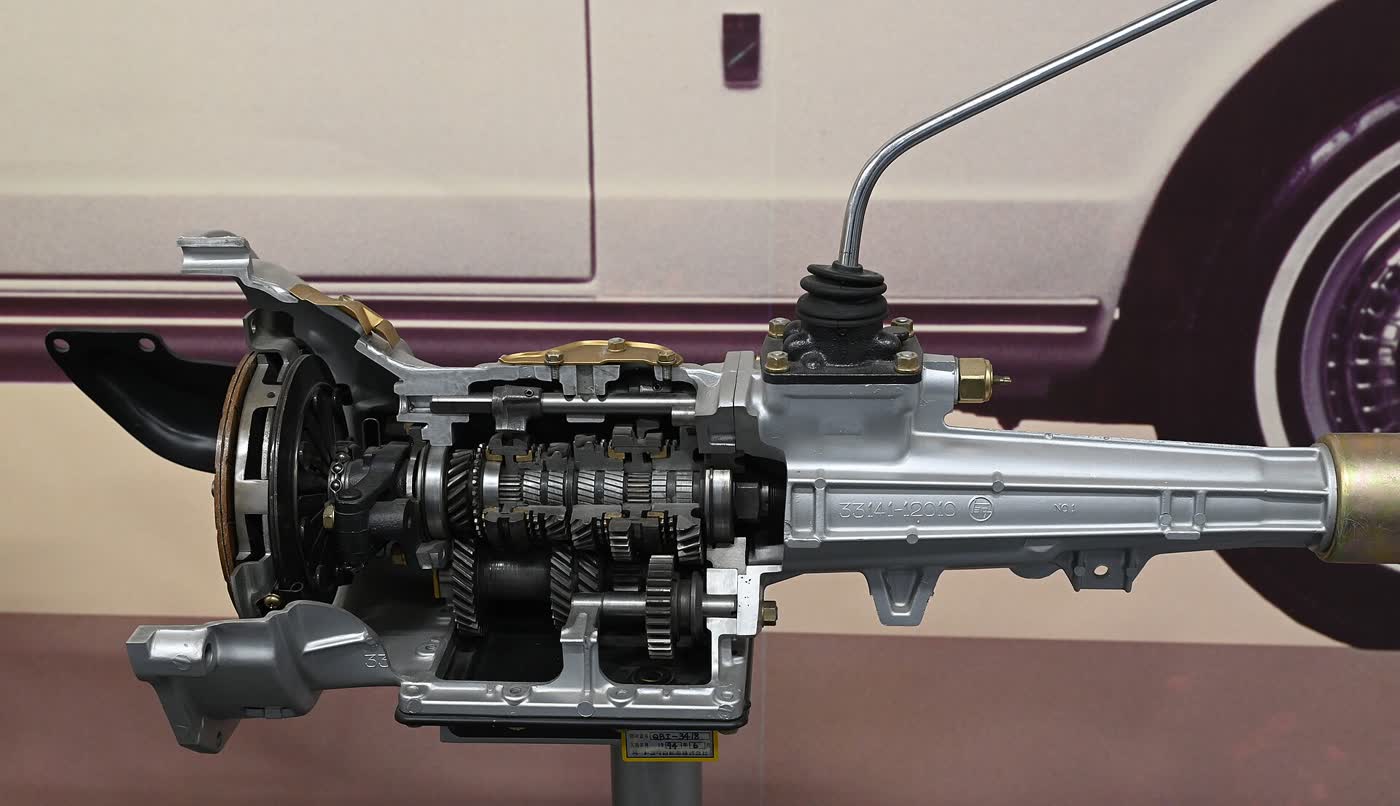
| Worst realistic repair | ~$3,000 (estimated, US) | our estimate: gearbox out plus a synchro set, 8 to 12 hours of US labor; no US shop quote. For scale only, Car Checker lists a full gearbox rebuild at EUR 1,500 to 2,500 and synchro work from GBP 800 to 1,200 (European prices) |
| Headline issue | First-to-second gear grind, most-reported FK8 problem | Car Checker FK8 report |
| Cause | Ratio gap stresses the synchros, worsened by incorrect clutch pedal free-play | Car Checker FK8 report |
| Fix | Free-play adjustment and fluid; synchro replacement or rebuild if damaged | Car Checker FK8 report |
| Fuel system | In-tank fuel pump failures: stuttering under load, warning lights | NHTSA recall 20V-314 (in-tank fuel pump may fail, 2018-2019 Civic Type R); stuttering and warning-light symptoms from Car Checker FK8 report |
| Body | Cracks at the roof-to-boot junction with rust forming around them, some cars | CivicX owner thread (rust under the paint at the top corners of the trunk on a 2017 Type R; owner reports, not a survey) |
| Brakes | Facelift two-piece discs developing hairline cracks under repeated hard use | we found no published source for this figure |
The headline issue is a first-to-second gear grind, and it is the most-reported FK8 problem by a distance, with a dedicated hundred-page owner forum thread behind it. The mechanism is understood: the ratio gap between first and second puts real load through the synchros, and an incorrectly set clutch pedal free-play from the factory makes it considerably worse. Caught early, the fix can be as simple as adjusting the free-play and changing the fluid. Caught late, you are into synchro replacement or a full gearbox rebuild.
Here is where we have to be careful about what that $3,000 actually is. It is our estimate, not a quote. The only repair figures we could find were single-source and denominated in pounds and euros, and converting foreign labour rates directly into dollars would be inventing a number. So we built the figure from the work itself instead: gearbox out, a synchro set, and eight to twelve hours at US shop rates. That lands around $3,000, which slots sensibly between the GTI's $900 water pump and the GR86's $6,500 engine. Two things to hold onto. Caught early, this is often just a free-play adjustment for a few hundred dollars, so the $3,000 is the bad outcome rather than the likely one. And somebody still needs to ring three US shops and get real quotes, because that remains the single most valuable outstanding item on this car.
Three other things to check. In-tank fuel pumps can fail, showing up as stuttering under load and warning lights. Some cars develop cracks at the roof-to-boot junction with rust forming around them, which is body and structural rather than mechanical and deserves a proper look during inspection. And the facelift two-piece brake discs have developed hairline cracks under repeated hard use, which matters if you plan to track it. Honda reliability underneath keeps this at a 6, but it is a soft 6.
| Figure | Civic Type R (FK8) | Source |
|---|---|---|
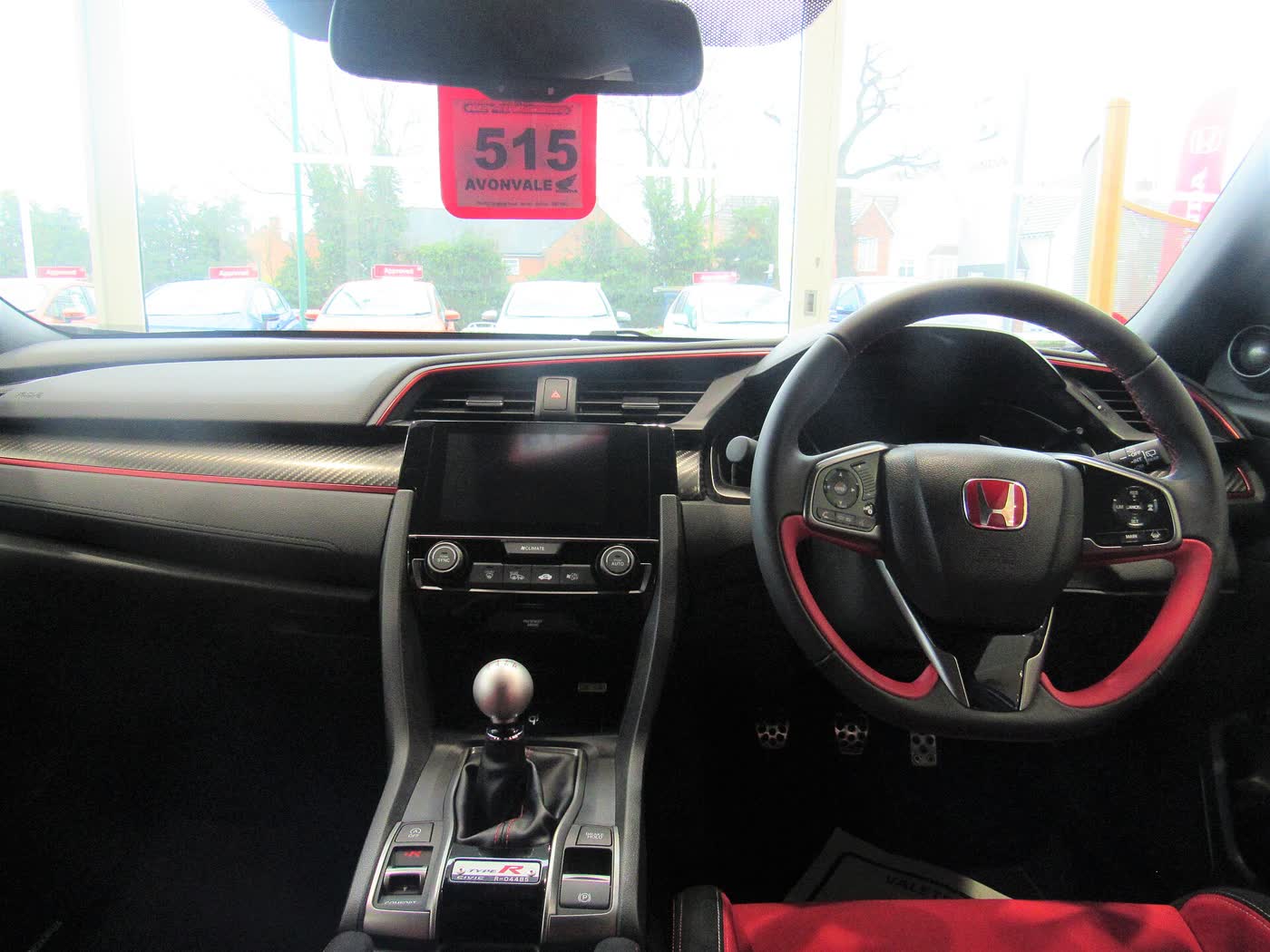
| Body style | 5-door hatchback | Honda press kit |
| Cargo, seats down | 46.2 cu ft | Honda press kit |
| Seats | 4 | Honda press kit (seating capacity 4) |
| Doors | 4 | KBB lists 4 doors; Honda calls it a 5-door hatchback because it counts the tailgate |
| Cargo volume | 25.7 cu ft | Honda press kit |
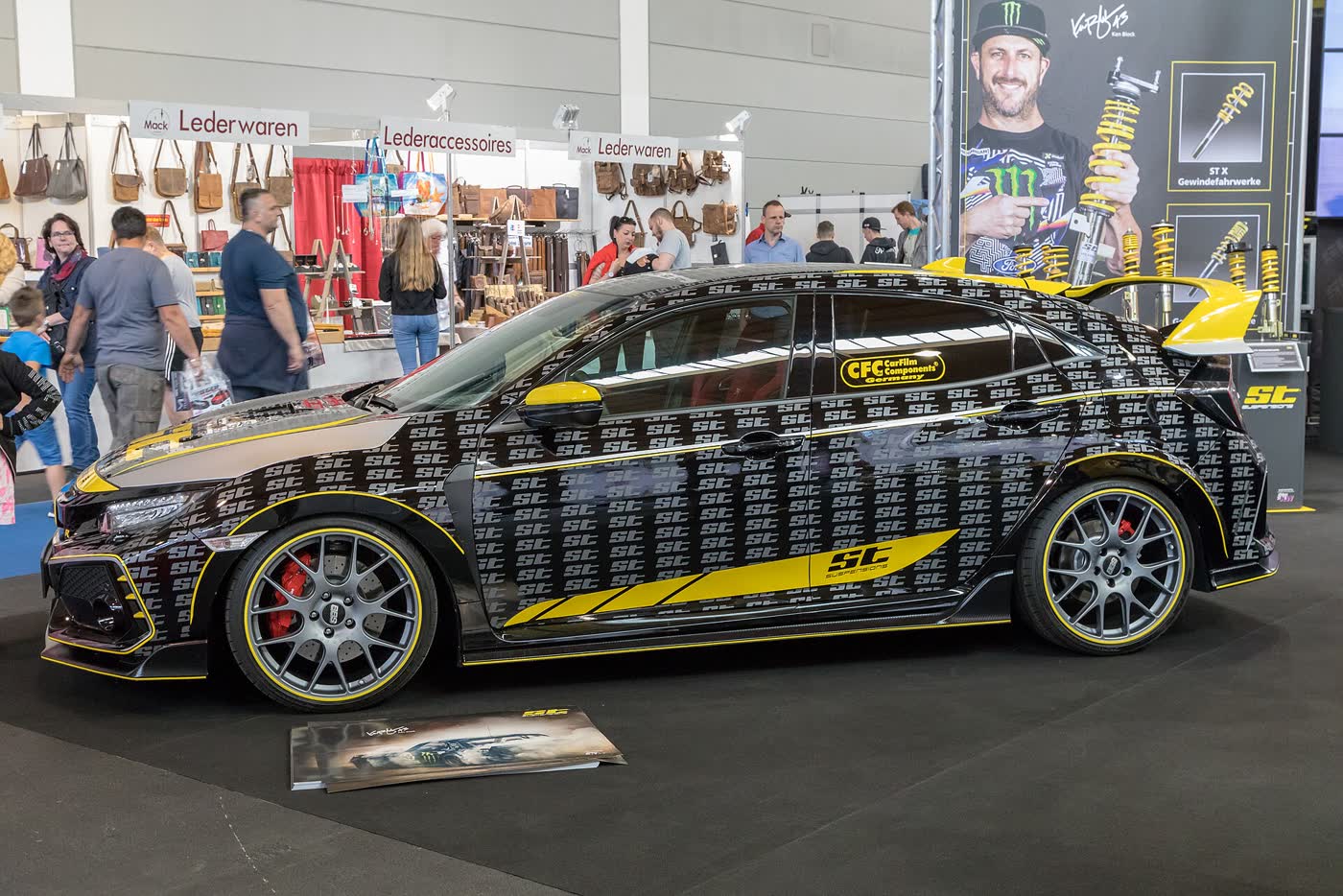
| Styling | Large fixed rear wing and aggressive bodywork | Car and Driver (via Yahoo) (describes a massive rear wing and many external vents and fins) |
The Type R is a proper five-door hatchback, which is why it scores with the GTI and the Focus RS up at the top of this category rather than down with the two-seat coupes. Four doors, a hatch, and a back seat that adults can use put it in a completely different practicality class from a Miata or a Supra.
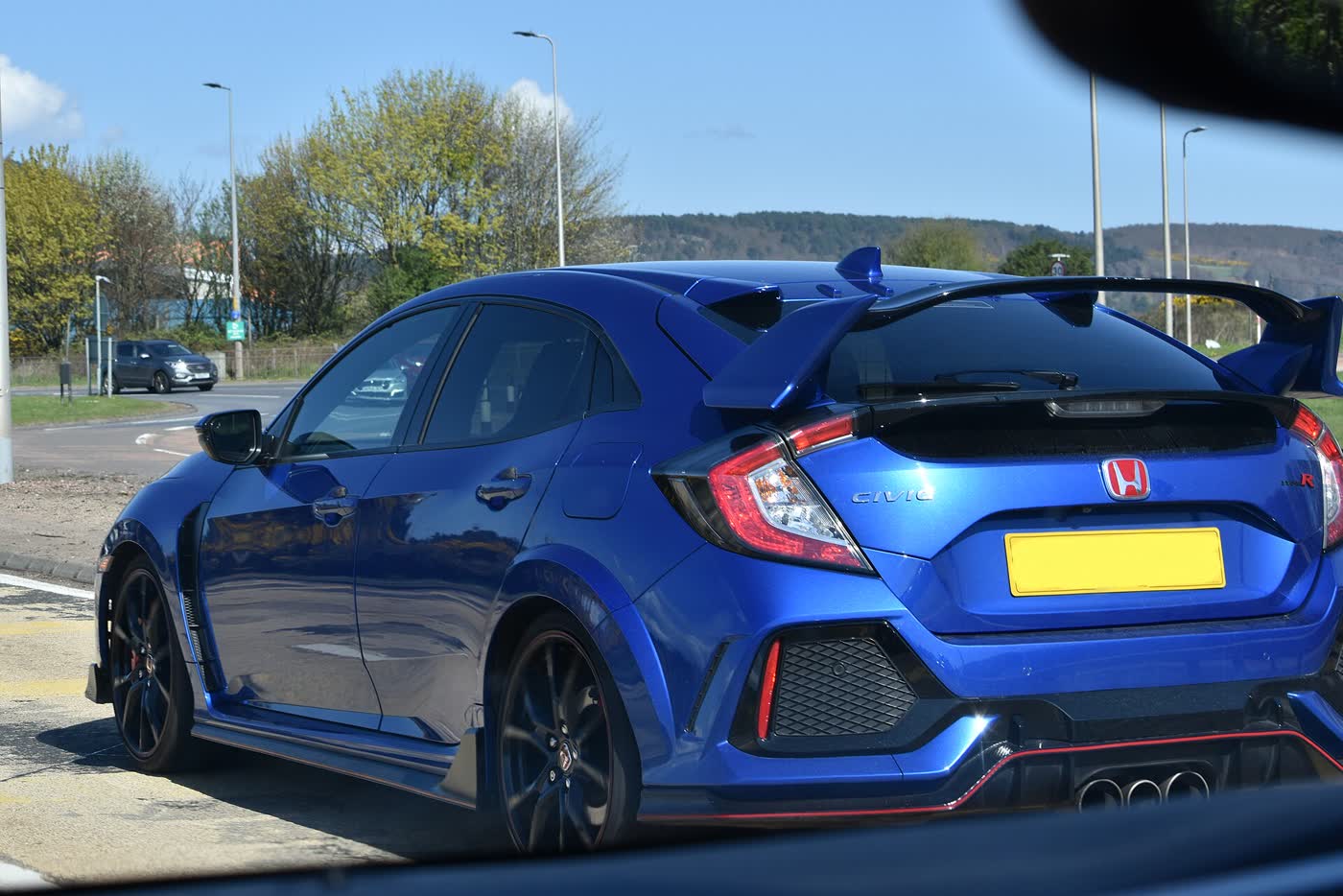
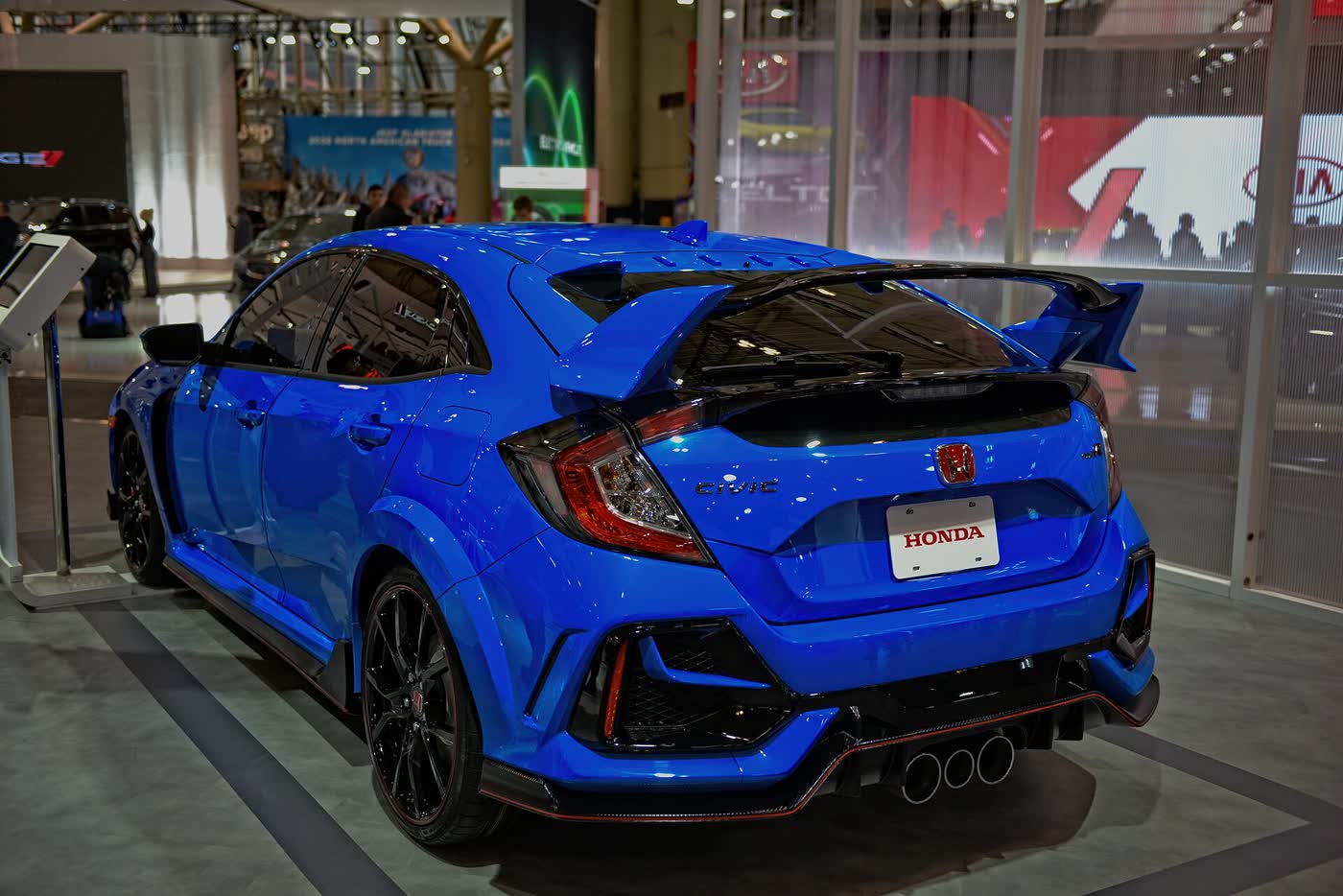
Two things keep it a point behind the GTI. The first is the seating: the FK8 has four seats rather than five, because there is no middle rear seat. For most buyers that is irrelevant, but if you ever need to carry three people in the back it is a hard stop rather than a squeeze. The second is the styling. The fixed rear wing and the bodywork are not subtle, and whether that is a feature or a problem depends entirely on you, but it is a real daily-driving consideration in a way that a Golf's anonymity is not.
One number that surprised us once we had it: at 25.7 cubic feet behind the rear seats, the Type R actually carries more cargo than the GTI's 22.8. It scores a point lower anyway, and it should, because five seats beat four and anonymity beats a fixed rear wing for most people living with a car every day. But if raw luggage space is what you are optimising for, the Honda wins this comparison outright.
| Figure | Civic Type R (FK8) | Source |
|---|---|---|
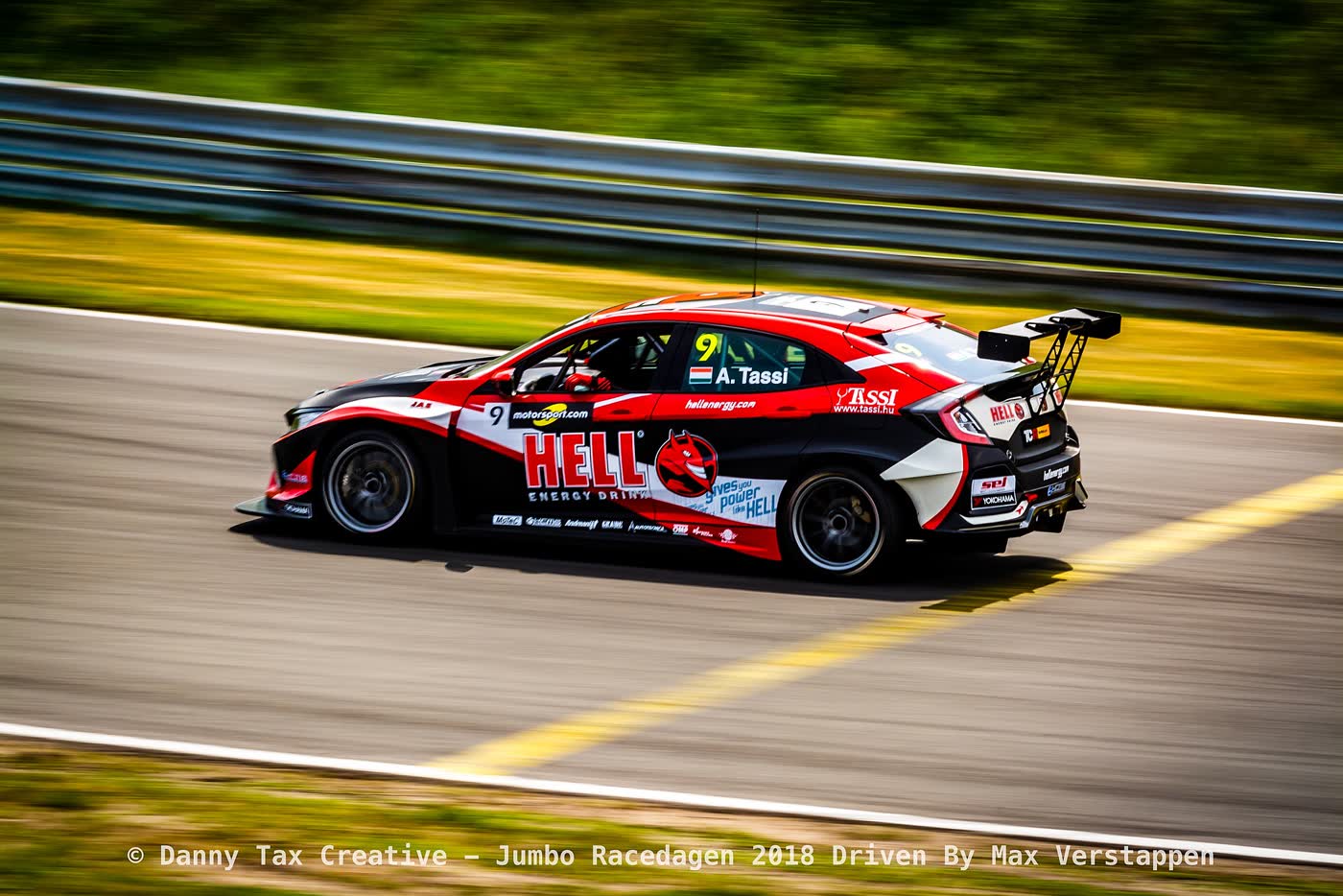
| 70-0 braking | 142 ft | Car and Driver (via Yahoo) |
| Max grip | 1.02 g | Car and Driver (via Yahoo) (300-ft skidpad) |
| MotorTrend figure-8 | 24.30 sec | MotorTrend |
| Nurburgring | 7:43.80, FWD production record | Honda press kit (lap set April 2017) |
| Source | Braking, grip, and 0-60 all Car and Driver, single outlet | Car and Driver (via Yahoo) |
This is where the Type R earns its place. One hundred and forty-two feet from 70 miles per hour, against the Supra's 151 and the Miata's 170. One point oh two g of lateral grip, level with the Supra. And Honda took it round the Nurburgring in 7:43.80 to set the front-wheel-drive production record, which is real competition pedigree.
An important note on comparability, because we are strict about this. Those braking and grip figures come from Car and Driver using the same 70-0 protocol as our Miata, GR86, and Supra numbers, so the braking comparison across those four cars is apples to apples. That is not true everywhere on this Board, and it is worth saying out loud when it is.
So why an 8 and not higher? Because our Limit score rates engagement and behaviour at the edge, not instrumented numbers, which is the same rule that lets a 0.90 g Miata reach the same 8. The Type R is stunningly capable and it will out-brake and out-grip almost anything here, but it is still front-wheel drive and it cannot be adjusted on the throttle. If we get seat time and find it more playful than the data suggests, this is the score most likely to move up.
| Path | Result | Risk |
|---|---|---|
| Tuning platforms | COBB Accessport and Hondata FlashPro, both full support | Low |
| COBB Accessport V3 | $715 | Sourced |
| Hondata FlashPro | $790 | Sourced |
| MHI Stage 2 turbo | ~530 hp (estimated midpoint) | Vendor claims conflict |
| MHI Stage 2 turbo cost | ~$2,200 (estimated) | No captured quote |
| Usable power ceiling | Limited by front-wheel drive rather than by the engine | n/a |
The FK8 is unusually well served for tuning. Both COBB, with the Accessport, and Hondata, with FlashPro, offer full support for the car, and having two mature and competing platforms is a genuine advantage that not every car here enjoys. The K20C1 underneath is a robust base to build on.
The entry price is the good news, and it lands almost exactly where the GTI does. A COBB Accessport V3 runs $715 and a Hondata FlashPro $790, both from established retailers, against the roughly $700 a GTI owner pays for a Stage 1 flash. Beyond a tune the picture gets less certain. The MHI Stage 2 OEM turbo upgrade exists and is popular, but the vendor claims around it range from "500 plus horsepower" to "supports 560 horsepower." We have put ~530 hp on the page as the midpoint of that spread and ~$2,200 as a typical price, but both are our estimates rather than captured figures, and the horsepower claim in particular is a vendor number nobody has independently dynoed.
One correction worth stating plainly, because it circulates widely: you may have seen a claim about 620 horsepower on stock internals attached to this car. That build was an FL5, the following generation, not an FK8. We removed it from our research for that reason and you should discount it when you see it. What holds this to an 8 is the same thing that holds the GTI there: front-wheel drive limits how much power you can actually put down, whatever the engine will make.
Buy, but buy carefully: test first-to-second cold and hot, confirm the clutch pedal free-play is correct, and get a US quote for synchro work before you sign anything. Check the roof-to-boot junction while you are there. It scores 51 out of 70 on a 142-foot stop, 1.02 g and genuine practicality, then giving it back on a $37,000 buy-in and a gearbox issue we cannot yet price.
This car is for you if you want a 306 hp front-driver at 1.02 g and you will actually use it. It is not for you if you are shopping on value, because it ties a GTI on this Board while asking for roughly twice the money, and that comparison is the whole reason we say this Board ranks best buy rather than best car.
So you want to buy a used Civic Type R. This car stops shorter than anything else we have ever put on our Board, it holds the Nurburgring front-wheel-drive production record, it did not depreciate, and on a value ranking it still only managed to tie a Golf GTI. All four of those things are true at once, and understanding why is the whole point of this article.
We scored it as a 2017 to 2021 FK8 with the manual, which is the only gearbox it came with, and it landed at 51 out of 70. There is also one figure on this page that is our estimate rather than a quote, and it happens to be the most expensive question you will face as an owner. We will get to that.
Around $37,000 for a clean one, against the Supra's $42,000. Original MSRP ran from $34,700 in 2018 to $37,895 in 2021.
Now look at what the market actually did with those numbers. We found 2021 cars listed at $36,122 and $37,700, essentially at sticker. And we found a 2019 listed at $41,988, which is more than any FK8 cost when it was new. That is not a typo and it is not an outlier seller having a laugh. This car simply did not depreciate.
We have deliberately not put a three-year resale percentage in our table, because a percentage would understate what is happening. Normal cars lose value and you calculate how much. This one has, in places, gained it. The practical consequence for you is twofold. Buying one is close to a lateral financial move rather than a purchase, which is rare for a 306 horsepower car. But it also means the usual used-performance-car logic, where you let the first owner eat the depreciation, does not apply here. There is no discount waiting for you.
One sourcing warning before you start budgeting. You will find claims that 2021 cars start just above $30,000. That figure comes from aggregator editorial and is flatly contradicted by Kelley Blue Book listings. If you build your budget around it you are going to have a bad time when you actually start shopping. Price off real listings.
The K20C1 makes 306 horsepower and 295 pound-feet, and Car and Driver ran it to 60 in 4.9 seconds. MotorTrend put it round their figure-eight in 24.30 seconds. That makes it quicker than every hot hatch on our Board except the Focus RS, and quicker than most of the rear-drive coupes too, which still surprises people who last thought seriously about front-wheel drive in about 2005.
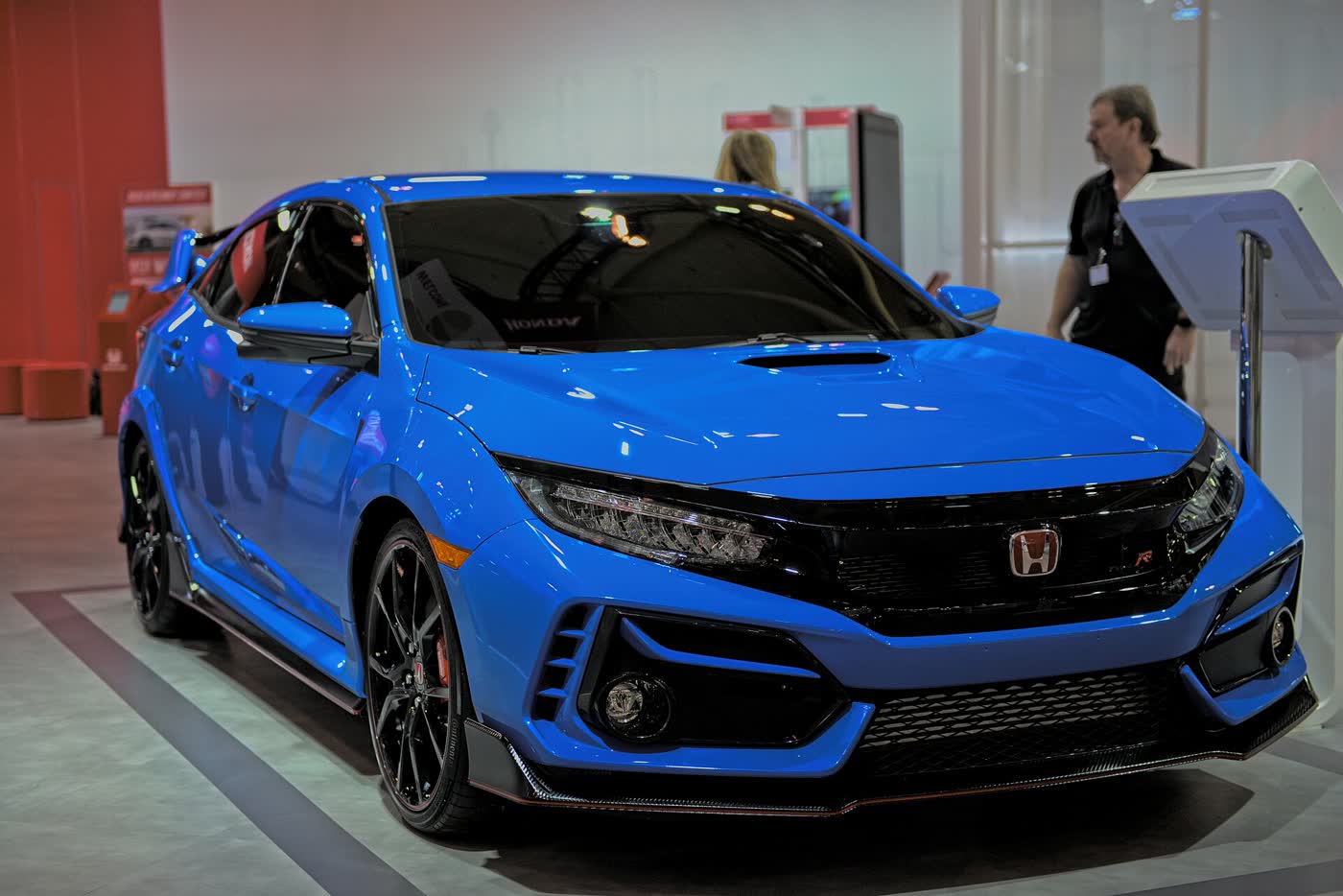
Here is where we want to be precise, because the usual criticism of this car is lazy. The Type R scores an 8 on The Drive rather than a 9, and it is not because it understeers or feels inert. Honda engineered around the front-drive problem harder than anyone else has managed, and the car turns in and holds a line in a way that embarrasses more expensive machinery.
The reason it stops at 8 is narrower and more specific: you cannot steer this car on the throttle. A Focus RS will send torque to a single rear wheel and rotate. A Supra will do it the old-fashioned way. The Type R grips, points, and goes, brilliantly, but the conversation only runs in one direction. If what you want from a fast car is that back-and-forth with the rear axle, no amount of Honda engineering substitutes for it, and you should be shopping rear-drive.
Curb weight is 3,117 pounds, from cars.com and Honda's own specifications, which gives 10.2 pounds per horsepower. That is better than either the GTI at 13.4 or the Veloster N at 11.3, and it is a big part of why the Type R keeps up with rear-drive coupes that look quicker on paper.
Our figure is roughly $5,350 a year, sitting between the GTI at $4,380 and the Focus RS at $8,866. One line in it is now solid: the EPA rates this car at 25 mpg combined, and on our standard 12,000 miles at $4.00 a gallon that is $1,920 of fuel. The rest is still modelled, and the insurance figure in particular comes from a trim multiplier rather than a single consistent source the way the Golf R's does. Worth saying that this total went up from the $5,230 we first published. Once the fuel and insurance lines were pinned down, what was left over for tires and service came to $850, and that is simply not enough to run 245/30R20s. Correcting the tire line is what moved it.
The forces pulling in each direction are clear enough. Honda dealer service is cheap and the K20 is not a difficult engine to look after, both of which help. Pulling the other way, the car rides on 245/30R20 tires. That is an expensive size, it is a thin sidewall that punishes potholes, and it wears quickly on a car that people buy specifically to drive hard. And the Type R trim carries a genuine performance-car insurance premium rather than a Civic one.
The practical instruction is simple: get a real insurance quote before you commit. It is the single largest variable in our estimate and our figure for it is the least solid thing on this page.
This is the section that should decide your purchase, and it is also where we are going to tell you something no spec sheet will.
The headline issue is a first-to-second gear grind, and it is the most-reported FK8 problem by a distance, with a dedicated hundred-page owner forum thread behind it. The mechanism is well understood: the ratio gap between first and second puts real load through the synchros, and here is the part that matters, an incorrectly set clutch pedal free-play from the factory makes it considerably worse.
That detail changes the economics completely. Caught early, the fix can be a free-play adjustment and a fluid change, which is a modest bill. Caught late, once the synchros are actually chewed, you are into synchro replacement or a full gearbox rebuild. Same underlying fault, wildly different outcomes, decided largely by whether a previous owner noticed and acted.
So here is your test drive instruction, and it is the most useful sentence in this article: shift from first to second repeatedly, both when the car is stone cold and again when it is fully warm. The fault often presents differently at different temperatures, and a seller who has warmed the car up before you arrive may, knowingly or not, be hiding it from you.
Now the blank cell we mentioned at the top. Every other car on our Board has a worst-realistic-repair figure in dollars. This one does not. The repair cost figures we could find for FK8 synchro work were single-source and denominated in pounds and euros, and converting foreign labour rates into a US dollar number to publish would be inventing data, not reporting it. So we left it blank rather than fill it with something that looks authoritative and is not. What that means for you is concrete: before you buy, ring three US shops and get real quotes for synchro work on this gearbox. That is the single most valuable piece of homework on this car, and nobody has done it for you, including us.
Three other things to check. In-tank fuel pumps can fail, which shows up as stuttering under load and warning lights. Some cars develop cracks at the roof-to-boot junction with rust forming around them, which is a body and structural issue rather than a mechanical one, and it deserves a proper look during inspection rather than a glance. And the facelift two-piece brake discs have developed hairline cracks under repeated hard use, which matters if you intend to track it.
Honda reliability underneath keeps this at a 6, and that is fair. But we will say plainly that it is a soft 6, precisely because the headline repair has no price attached to it yet.
Yes, and more comfortably than its bodywork suggests. This is a proper five-door hatchback, which is why it scores an 8 on The Daily alongside the Focus RS and well clear of the two-seat coupes further down our Board. Four doors, a hatch, and a back seat adults can use put it in a completely different practicality class from a Miata or a Supra.
Two things keep it a point behind the GTI. The first is seating: the FK8 has four seats, not five, because there is no middle rear seat. For most buyers that is irrelevant. If you ever need to carry three people in the back it is a hard stop rather than a squeeze, and it is the kind of thing you discover at the worst possible moment.
The second is simply how it looks. The fixed rear wing and the bodywork are not subtle, and whether that is a feature or a problem is entirely down to you. But it is a real daily-driving consideration in a way a Golf's anonymity is not, and it is worth being honest with yourself about how much attention you want your commuter car to attract.
One number that surprised us once we had it: at 25.7 cubic feet behind the rear seats, the Type R actually carries more cargo than the GTI's 22.8. It scores a point lower anyway, and it should, because five seats beat four and anonymity beats a fixed rear wing for most people living with a car every day. But if raw luggage space is what you are optimising for, the Honda wins that comparison outright.
This is where the car stops being impressive and becomes remarkable. One hundred and forty-two feet from 70 miles per hour, against the Supra's 151 and the Miata's 170. Its 1.02 g of lateral grip is level with the Supra's. And Honda took it round the Nurburgring in 7:43.80 to set the front-wheel-drive production record, which is real competition pedigree.
A methodological note, because we are strict about this and most comparisons are not. Those braking and grip figures come from Car and Driver using the same 70-0 protocol as our Miata, GR86, and Supra numbers. That means this braking comparison is apples to apples. It is not true everywhere on our Board: the two Nissans, for instance, were measured 60-0 and converted to a 70-0 estimate, so their numbers cannot be read against these ones with the same confidence. When a comparison is like for like it is worth saying so out loud, because most published comparisons quietly mix protocols and hope nobody notices.
So why does a car that stops in 142 feet and pulls 1.02 g only score 8 on The Limit? Because our Limit score rates engagement and behaviour at the edge, not instrumented numbers. It is the same rule that lets a Miata pulling 0.90 g reach the same 8. The Type R will out-brake and out-grip almost everything here, but it is still front-wheel drive and it cannot be adjusted on the throttle. If we get proper seat time and find it more playful than the data suggests, this is the score most likely to move up.
Unusually well served, and that is worth stating clearly: both COBB, with the Accessport, and Hondata, with FlashPro, offer full support for this car. Two mature, competing tuning platforms is a genuine advantage that several cars on our Board do not enjoy, and the K20C1 underneath is a robust base to build on.
The entry price is the good news, and it lands almost exactly where the GTI does. A COBB Accessport V3 runs $715 and a Hondata FlashPro $790, both from established retailers, against the roughly $700 a GTI owner pays for a Stage 1 flash. Beyond a tune the picture gets murkier. The MHI Stage 2 OEM turbo upgrade exists and is popular, but the vendor claims attached to it range from "500 plus horsepower" to "supports 560 horsepower." We have put ~530 hp on the page as the midpoint of that spread and ~$2,200 as a typical price, but both are our estimates rather than captured figures, and the horsepower claim in particular is a vendor number nobody has independently dynoed.
Now a correction that matters, because this one circulates constantly. You will see a claim about 620 horsepower on stock internals attached to this car. That build was an FL5, which is the following generation, not an FK8. It is the wrong car. We removed it from our research for exactly that reason, and you should discount it every time you see it quoted at you, particularly by anyone selling you a car or a part.
What holds this to an 8 rather than a 9 is the same thing that caps the GTI: front-wheel drive limits how much power you can actually deploy, whatever the engine is willing to make.
This is the comparison that explains our entire Board, so it is worth sitting with. The Type R scores 50. The Golf GTI scores 49. They are level.
On any measure of capability that is absurd. The Type R has 78 more horsepower, stops nineteen feet shorter, grips harder, and holds a Nurburgring record. It is, straightforwardly, the better car. Nobody who has driven both would argue otherwise.
It ties a GTI because it costs roughly twice as much. Around $37,000 against $19,000. Our Board ranks best buy, not best car, and when you are paying eighteen thousand dollars more, the additional capability has to be worth eighteen thousand dollars to you specifically. The Type R takes The Drive 8 to 7 and The Limit 8 to 6. The GTI takes The Deal 7 to 6 and The Daily 9 to 8, and the two tie on Upkeep, Risk, and Mods. Add it up and you get a dead heat.
The practical way to read that: if you will use what the Type R offers, at track days or on roads that deserve it, the extra money buys you something real and you should spend it. If you mostly want a quick, practical car for the road, the GTI does that job for half the money and you can keep the difference. Both answers are correct. They are just answers to different questions.
Buy, but do the homework first. Test first-to-second cold and hot, confirm the clutch pedal free-play is correctly set, inspect the roof-to-boot junction for cracks and rust, and get US quotes for synchro work before you sign anything. That last one especially: our $3,000 is a reasoned estimate, not a quote, and it is still the softest expensive number on the car.
It scored 51 out of 70 on a 142-foot stop and 1.02 g while being a practical five-door, then giving it all back on a $37,000 buy-in and a gearbox issue nobody has properly priced in dollars yet.
This car is for you if you want a 306 hp front-driver at 1.02 g and you will actually use that capability. It is not for you if you are shopping on value, because it ties a GTI on our Board while asking roughly twice the money. That single comparison is the clearest illustration on this whole site of why we rank best buy rather than best car.
Filming reference: cue sheet · for the hosts on set, not part of the review.
The frame that closes our video: the Type R at 51/70, with the Golf GTI and the Focus RS alongside.