2016-2018 · With verified head-gasket work
First-hand: Dan owns one.
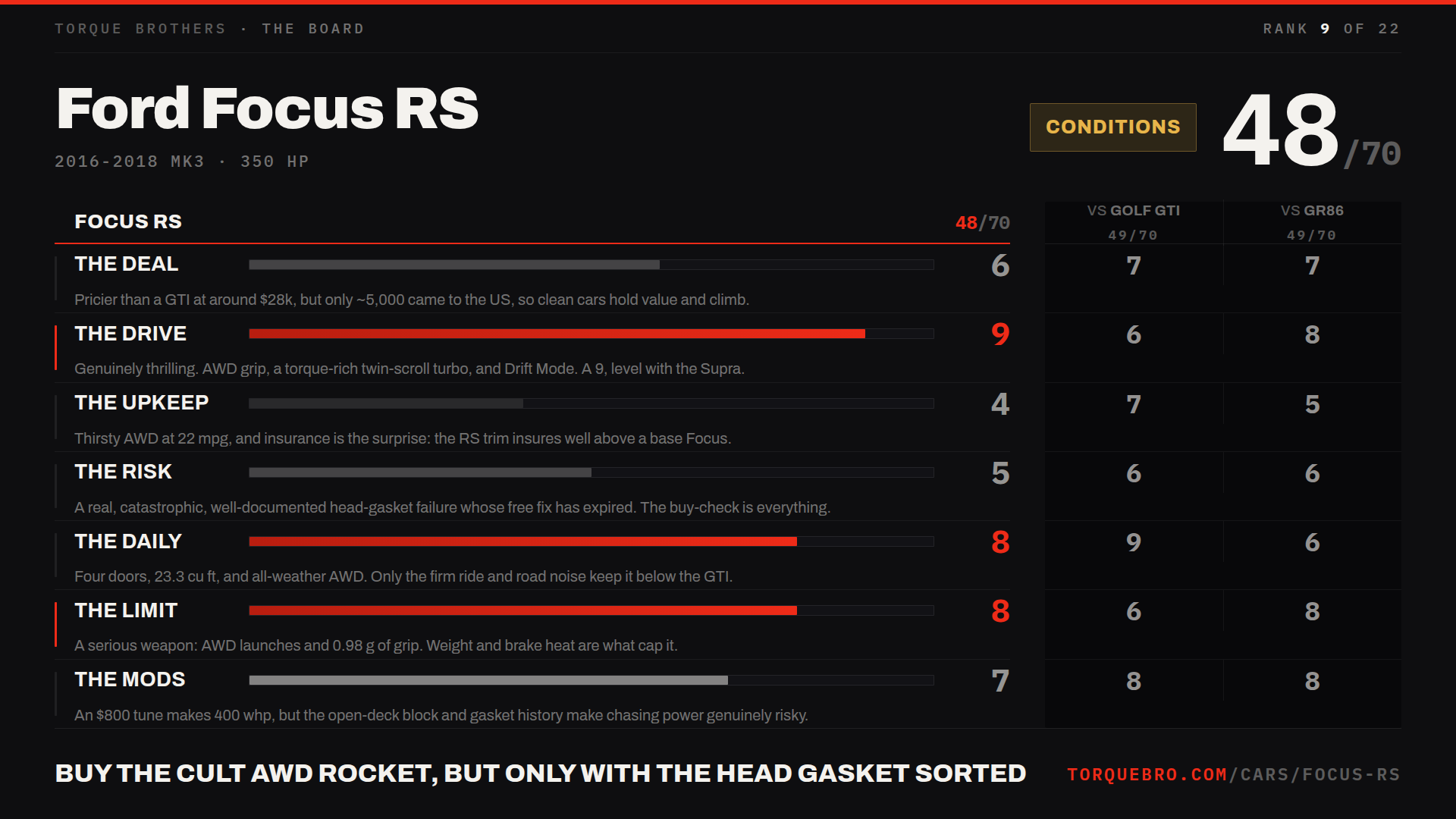
Buy the cult AWD rocket, but only with the head gasket sorted. Ford's free fix expired in January 2019, so verify Program 17B32 was done and pressure-test the cooling system before you hand over a dollar.
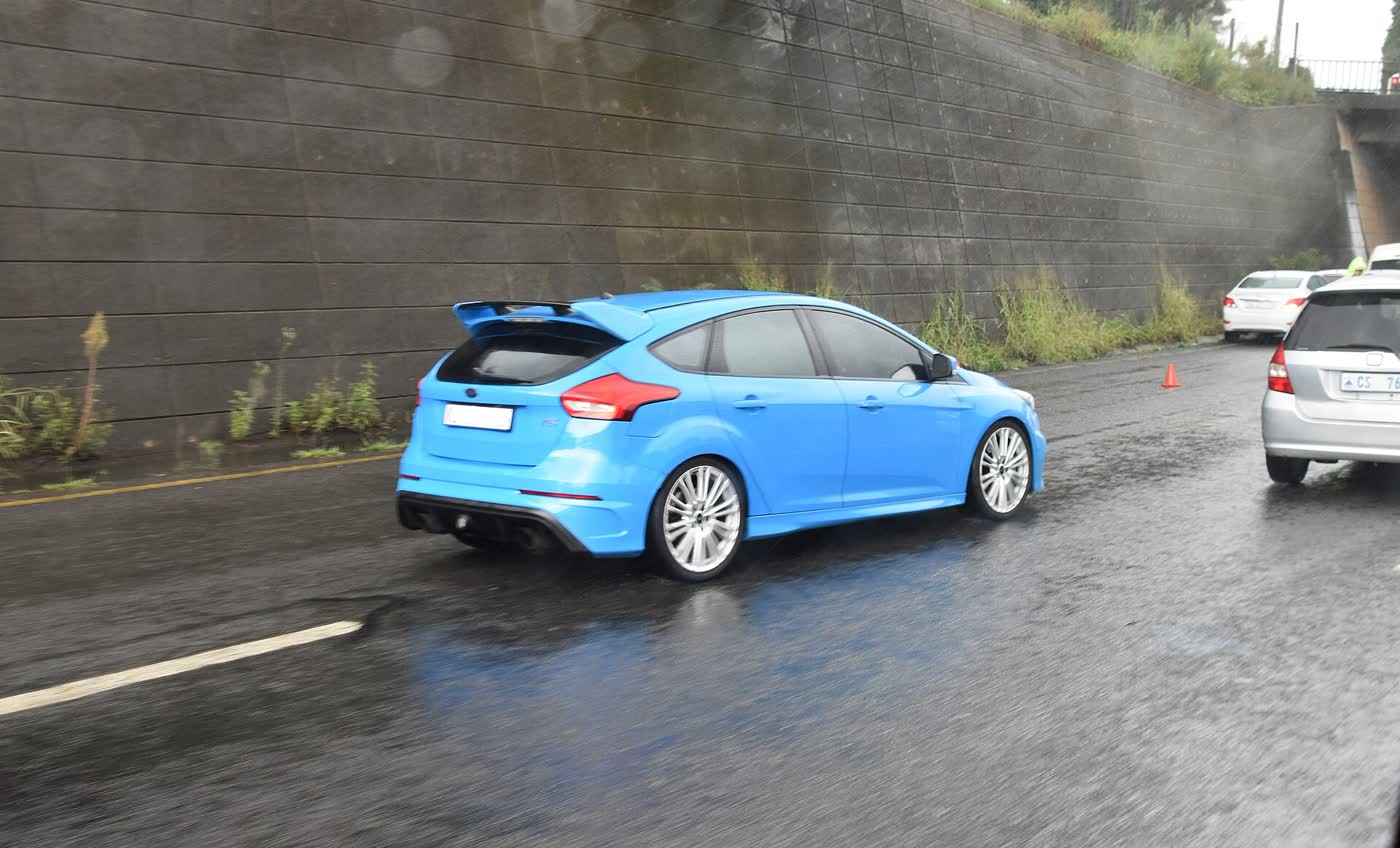
We scored the car as a 2016 to 2018 Focus RS with verified head-gasket work, which is the only version we would tell anyone to buy, and it landed at 47 out of 70 with a verdict of Buy, with conditions.
This car is for someone who wants a characterful hot hatch, who will actually use the all-wheel drive, and who is disciplined enough to walk away from a car without paperwork. If you want a low-worry daily, skip to The Risk first, because that section is the whole decision on this car.
All money figures use a fixed set of assumptions so they can be compared to other cars we cover: 12,000 miles a year, premium fuel at $4.00 a gallon, and insurance for a 35-year-old driver with a clean record and full coverage. Insurance numbers are published averages, not personal quotes. Prices are from Kelley Blue Book.
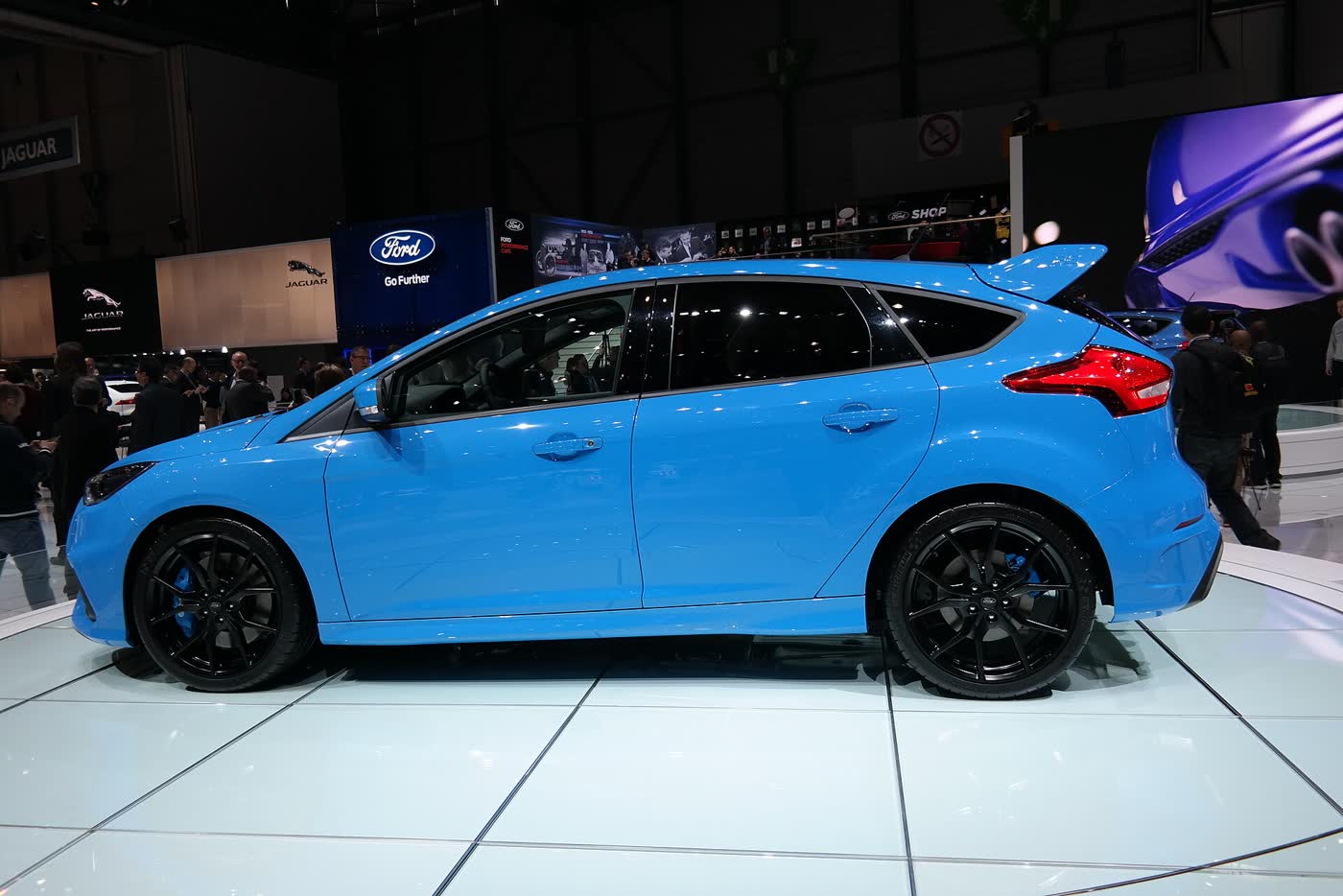
| Figure | Focus RS (2016-2018) | Source |
|---|---|---|
| Used buy-in (KBB private-party, clean) | ~$28,000 | we found no published source for this figure |
| Typical range | $22,000 to $40,000 | we found no published source for this figure |
| Pristine low-mile examples | Appreciating past $45,000 | we found no published source for this figure |
| Original MSRP | $36,995 | Motor Authority: the 2018 Limited Edition at $41,995 is a $5,000 premium over the regular 2017 Focus RS, both prices including $875 destination. derived: $41,995 minus $5,000 = $36,995 |
| US production | ~5,000 units | we found no published source for this figure |
| 3-year resale retention | ~85% | we found no published source for this figure |
| Trims | RS, RS2 package, RS Edition (2018, ~1,000 units, collectible) | Motor Authority: 1,000 U.S. units of the 2018 Focus RS Limited Edition, with the RS2 package standard. "Collectible" is our assessment |
| Price trend | Holding and appreciating as a modern cult classic | we found no published source for this figure |
~ our estimate, not a measured or quoted figure. Why we mark figures
At around $28,000 the RS is expensive for a hot hatch and clearly pricier than a GTI, which is why this category is a 6 rather than something higher. You are paying a real premium over the sensible choice, and the spread on listings is wide: $22,000 buys a high-mile car with a story, while pristine examples have already climbed past their original $36,995 sticker.
What justifies the price is scarcity. Only about 5,000 came to the United States, and that limited supply is why clean cars hold roughly 85 percent of their value over three years and why the very best ones are appreciating rather than depreciating. Buying a good one is closer to a lateral financial move than a purchase, which is unusual for a 350 horsepower car.
The thing to understand is that the price is not what caps this score on its own. It is the price combined with the risk. Paying $28,000 for a car that might need a $3,500 engine repair is a different proposition from paying $28,000 for something bulletproof, and the two have to be read together. A documented car is worth a real premium over an undocumented one, and you should pay it.
| Figure | Focus RS (2016-2018) | Source |
|---|---|---|
| Power-to-weight | 10.0 lb per hp | derived: ~3,500 lb divided by 350 hp = 10.0 lb per hp |
| Power | 350 hp, 350 lb-ft | KBB, 2017 Focus RS and Car and Driver, via Yahoo: 350 hp at 6,000 rpm, 350 lb-ft at 3,200 rpm |
| Curb weight | ~3,500 lb | Car and Driver, via Yahoo: 3,459 lb |
| 0 to 60 mph | 4.7 sec | Ford's claim: Automotive Addicts lists 4.7 sec to 60 mph; SlashGear reports Ford quotes 4.7 sec to 62 mph |
| Engine | 2.3L EcoBoost turbo I4, all-wheel drive | KBB, 2017 Focus RS: 4-cylinder EcoBoost 2.3T. fueleconomy.gov: 2.3 L turbo, all-wheel drive |
| Signature | Rear-biased AWD with Drift Mode and launch control | Car and Driver, via Yahoo: torque vectoring that can send up to 70 percent of engine thrust to a single rear wheel, a Drift mode, and a launch-control program |
This is a 9 on the Drive, level with the Supra, and it is the reason people forgive this car everything else. Three hundred and fifty horsepower and 350 lb-ft in a 3,500 pound hatchback works out to 10 pounds per horsepower and a 4.7 second run to 60, which is quick, but the number is not the story. The character is.
The all-wheel-drive system is rear-biased and can send most of the torque to a single rear wheel, which is what makes Drift Mode more than a gimmick. Combined with a torque-rich twin-scroll turbo and launch control, it produces a car that does things no front-drive hot hatch can do and does them theatrically. Very few cars at any price feel this distinctive.
So the buyer question here is simple, because this section has no real caveat. If what you want is a hot hatch with genuine personality and grip you can lean on in any weather, the RS earns its 9 outright. Everything that holds this car back on the Board is somewhere else on this page.
| Figure | Focus RS (2016-2018) | Source |
|---|---|---|
| Total annual running cost | ~$8,866/yr | derived: the four lines below added together ($2,182 + $5,784 + $400 + $500 = $8,866) |
| Fuel | ~$2,182/yr (22 mpg, 91 octane) | EPA combined rating, fueleconomy.gov: derived: 12,000 miles divided by 22 mpg, at $4.00 a gallon |
| Insurance | ~$5,784/yr ($482/mo) | MoneyGeek, RS Hatchback trim: $482 a month for full coverage, times 12. The same table prices the Focus ST at $293 a month. |
| Tires (amortized) | ~$400/yr | our estimate |
| Routine service | ~$500/yr | our estimate |
| Fuel economy | 22 mpg combined | fueleconomy.gov, 2016, 2017 and 2018: 22 mpg combined for the manual in each year |
| Octane | 91 | fueleconomy.gov lists premium gasoline. 91 is the premium grade the Board prices fuel at |
About $8,866 a year all in, and most of that is insurance: MoneyGeek prices the RS at $482 a month, $5,784 a year. Twenty-two miles per gallon on premium is the cost of dragging all-wheel-drive hardware around, and it is roughly $400 a year more in fuel alone than a GTI.
The line that catches people out is insurance. Owners often assume an RS insures like a Focus, and it does not. The RS trim specifically runs well above the regular car, about $5,784 a year on MoneyGeek's trim table, against $293 a month for the Focus ST, because insurers rate it as the performance car it is. Budget for performance-car premiums rather than the grocery-getter rates you will read in forum threads, and get a real quote before you commit.
The only relief is parts. This is still a Ford, so consumables and common components are cheap and widely available, which softens the blow on routine work. But the honest summary is that it is expensive to keep on the road, and a 5 reflects that.
| Figure | Focus RS (2016-2018) | Source |
|---|---|---|
| Worst realistic repair | ~$3,500 (head gasket + possible cylinder head) | Ford's service bulletin allows 9.2 labor hours to replace the head gasket and 10.3 to replace the cylinder head. The ~$3,500 total: we found no published source for this figure |
| Worse case | Cracked open-deck block | Autotrader South Africa reports cracks in the engine block between cylinders one and two on failed cars. It does not describe the block as open-deck |
| Affected cars | 2016-2017 (build dates Aug 2015 to Jul 2017) | Ford's service bulletin: 2016-2017 Focus RS built at Saarlouis from August 3, 2015 through July 6, 2017 |
| Symptoms | Low coolant, white exhaust smoke, engine failure | Ford's service bulletin lists white smoke and low coolant; Autotrader South Africa reports engine failures on affected cars |
| Cause | Ford fitted some cars with the Mustang EcoBoost head gasket | The Drive, reporting Road & Track: the engines were assembled with the Mustang EcoBoost head gasket. Ford has not confirmed that cause |
| Ford's fix | Program 17B32, free regardless of mileage or mods, ENDED January 31, 2019 | we found no published source for this figure |
| Buy check | Confirm 17B32 paperwork, pressure-test the cooling system | Ford's service bulletin sets out the cooling-system pressure test (20 psi held for 5 hours). Confirming the paperwork is our advice |
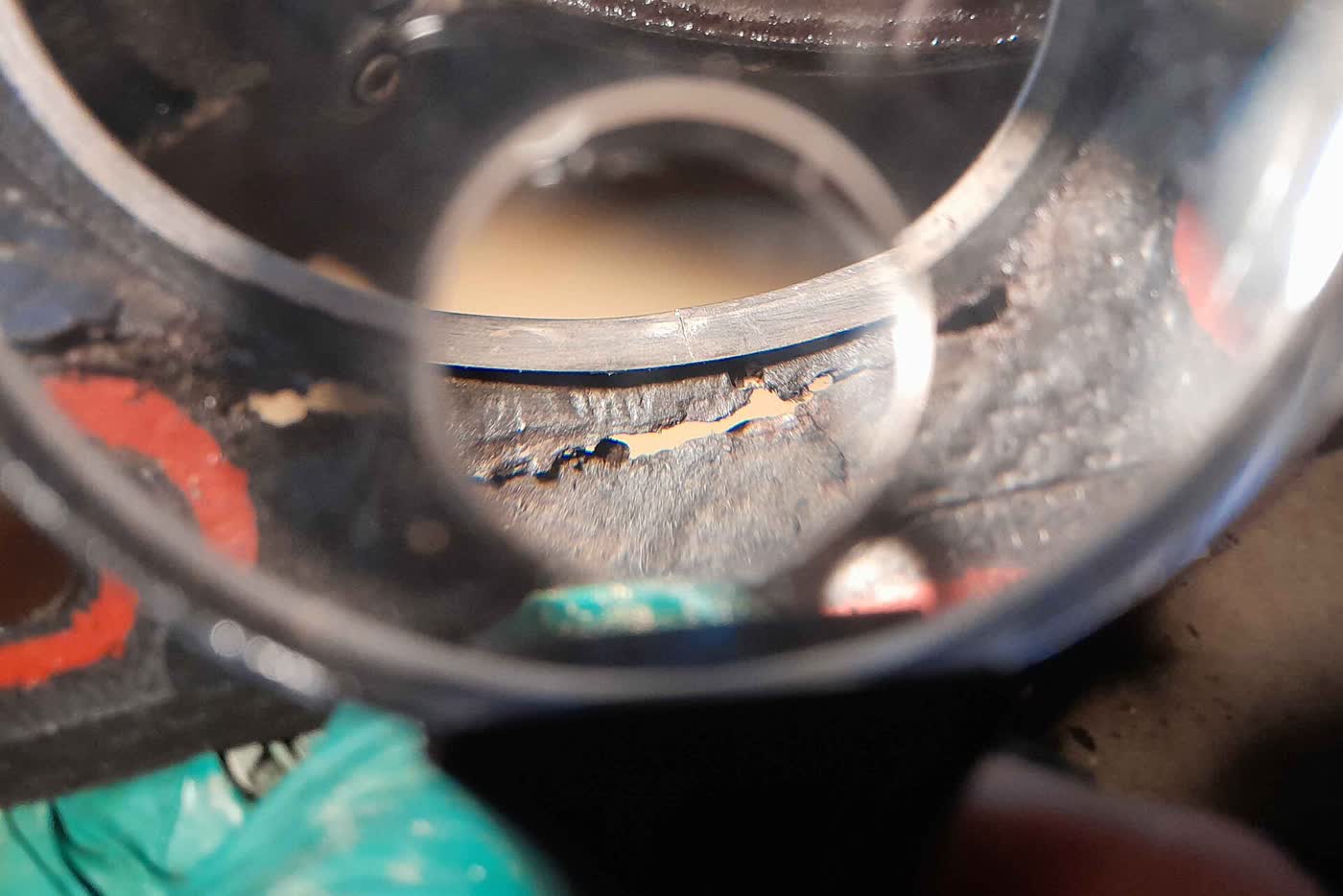
This is the section that decides whether you buy this car, so read it twice. Some 2016 and 2017 cars can leak coolant into the combustion chamber, which shows up as mysteriously low coolant, white smoke from the exhaust, and eventually a dead engine. The cause is strange: Ford fitted some cars with the Mustang EcoBoost's head gasket, whose hole-and-depression design let coolant stagnate and damage the head.
Ford did the right thing at the time. Customer Satisfaction Program 17B32 replaced the head gasket, and the cylinder head too if it failed a pressure test, free of charge, regardless of mileage and regardless of whether the car was modified. The problem for you is the date: that window closed on January 31, 2019. Every RS on the market today has either had the work done or has not, and if it has not, the bill is yours.
That is why the buy-check is the entire purchase. Get paperwork proving 17B32 was completed, and have the cooling system pressure-tested during the inspection regardless. A car with documentation is a 47-point car worth buying. A car without it is a gamble on a $3,500 repair that can become worse if the open-deck block has cracked. We score The Risk at 5 because the failure is real, catastrophic, and well documented, and because the free fix is gone. Not because the car is fragile once sorted.
| Figure | Focus RS (2016-2018) | Source |
|---|---|---|
| Cargo volume | 23.3 cu ft | we found no published source for this figure |
| Seats | 5 | Cars.com, 2017 Focus RS specs |
| Doors | 4 | Cars.com, 2017 Focus RS specs |
| All-weather | AWD makes it a genuine year-round daily | fueleconomy.gov lists all-wheel drive. "A genuine year-round daily" is our assessment |
| Ride | Very firm, loud, firm Recaro buckets | Car and Driver, via Yahoo: a hard ride, a loud exhaust in the sportier modes, and Recaro bucket seats that are constricting on long highway drives |
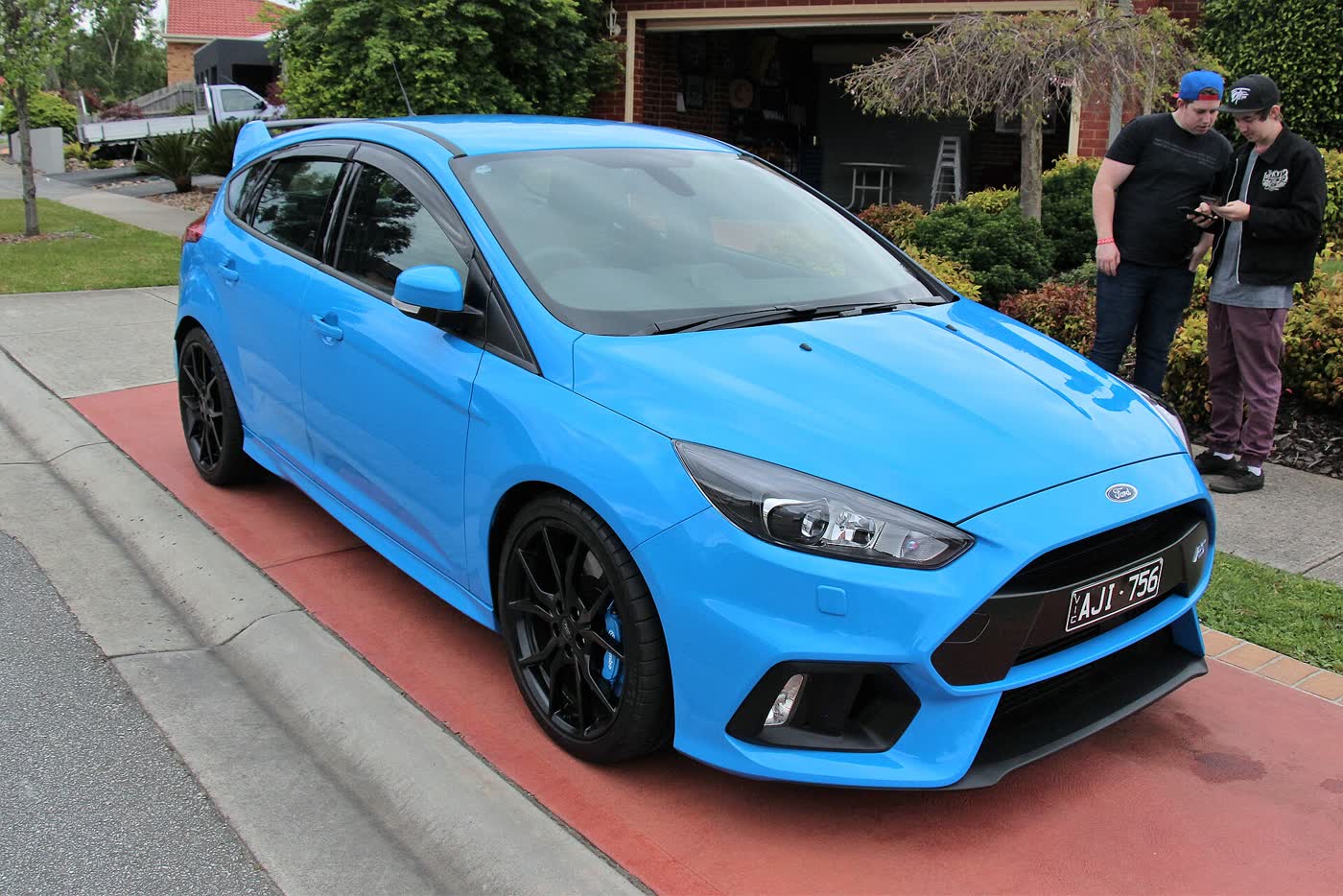
An 8 here, on 23.3 cubic feet of cargo, four doors and five seats, which is marginally more space than even the GTI offers. Add all-wheel drive that works in snow and you have a car that can be your only vehicle through a real winter without excuses.
What keeps it a point behind the GTI is not space, it is comfort. The ride is very firm, the cabin is loud at speed, and the Recaro buckets are aggressively bolstered in a way that is fantastic for twenty minutes and wearing on a long highway slog. This is a practical car that never lets you forget it is a performance car.
The practical read: if you need one car and you live somewhere with weather, the RS is a strong answer and better than almost anything else on this Board. Just go and sit in one for a while before you commit, because the seats and the ride are the kind of thing you either stop noticing or never stop noticing.
| Figure | Focus RS (2016-2018) | Source |
|---|---|---|
| Class | AWD, track and rallycross favorite | our assessment |
| Max grip | 0.98 g | Car and Driver, via Yahoo: 0.98 g on a 200-foot skidpad, on the standard Michelin Pilot Super Sport tires |
| 70-0 braking | 158 ft | Car and Driver, via Yahoo: 158 ft from 70 mph |
| Track hardware | Brembo brakes, Recaro buckets, Drift Mode, launch control | Car and Driver, via Yahoo: Recaro bucket seats, a launch-control program, Drift mode. Automotive Addicts: Brembo 4-piston front calipers |
| Caveat | ~3,500 lb with AWD drag; Brembos boil fluid after repeated hard laps | Car and Driver, via Yahoo: 3,459 lb curb weight. The brake-fluid boiling after repeated hard laps: we found no published source for this figure |
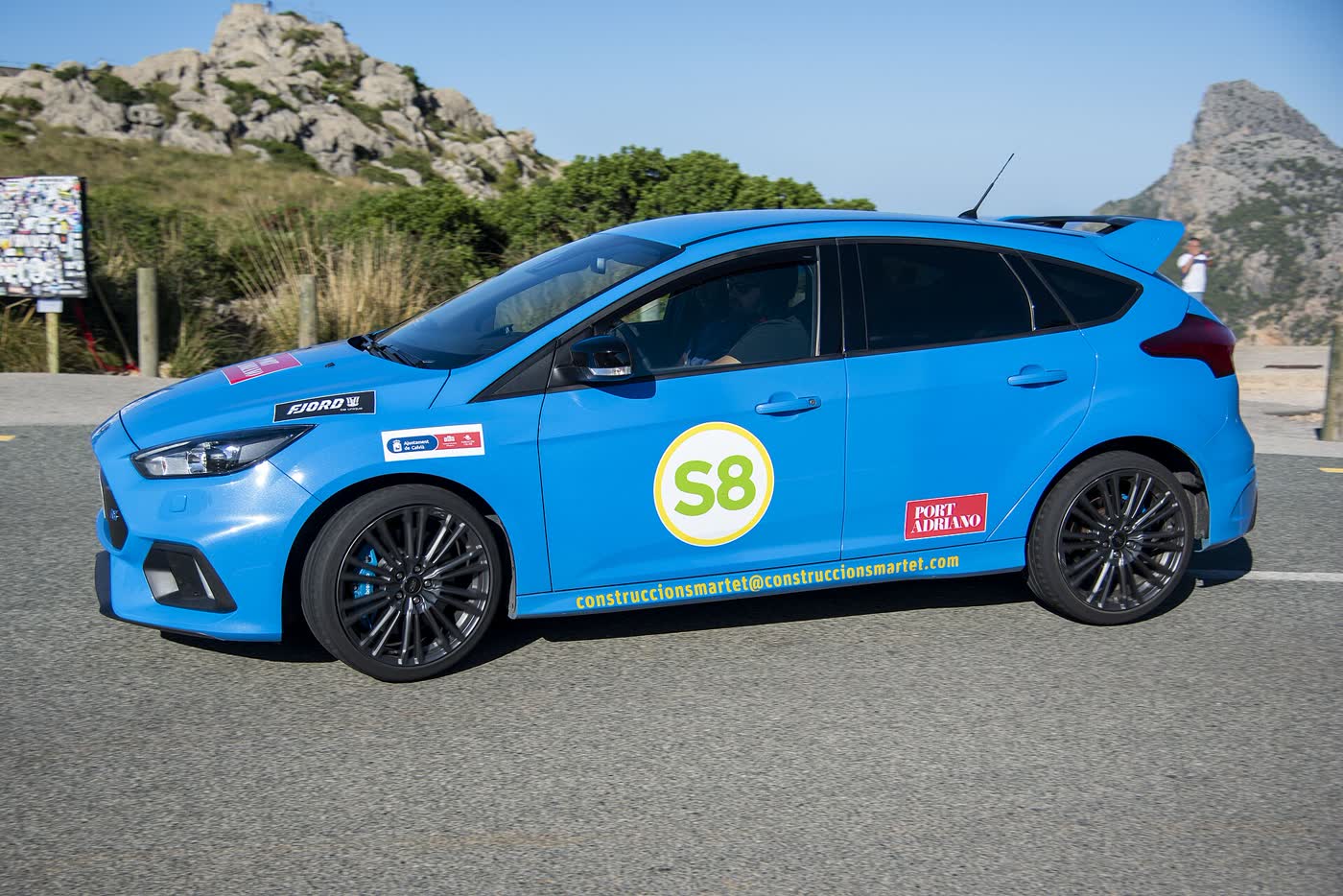
The RS is a serious weapon at the limit and an 8 is well earned. Nearly a full g of lateral grip, 158 foot stops from 70, launch control that fires it off the line, and an all-wheel-drive system that lets you get on the power absurdly early out of a corner. On a rallycross course or a damp track day it is close to unbeatable at the money.
Two things keep it from going higher. It is heavy at around 3,500 pounds, and all-wheel-drive drag is something you feel as the session goes on. More seriously, the Brembos have been documented boiling their fluid after repeated hard laps, and given this engine's cooling history, sustained track heat deserves genuine caution rather than a shrug.
So the honest framing is that this is a phenomenal fast-road and rallycross car and a very good track car with a short shopping list. Fresh high-temperature brake fluid and better pads should be your first purchase if you plan to do repeated hard laps, and keep an eye on coolant temperature while you are out there.
| Path | Result | Risk |
|---|---|---|
| Handling mods | The safer spend on this platform | Low |
| Tune | ~$800, roughly 400 whp | Moderate (already a stressed engine with a gasket history) |
| Bolt-ons | 440+ whp | Moderate |
| Big power | Open-deck block cracks under sustained high boost | High |
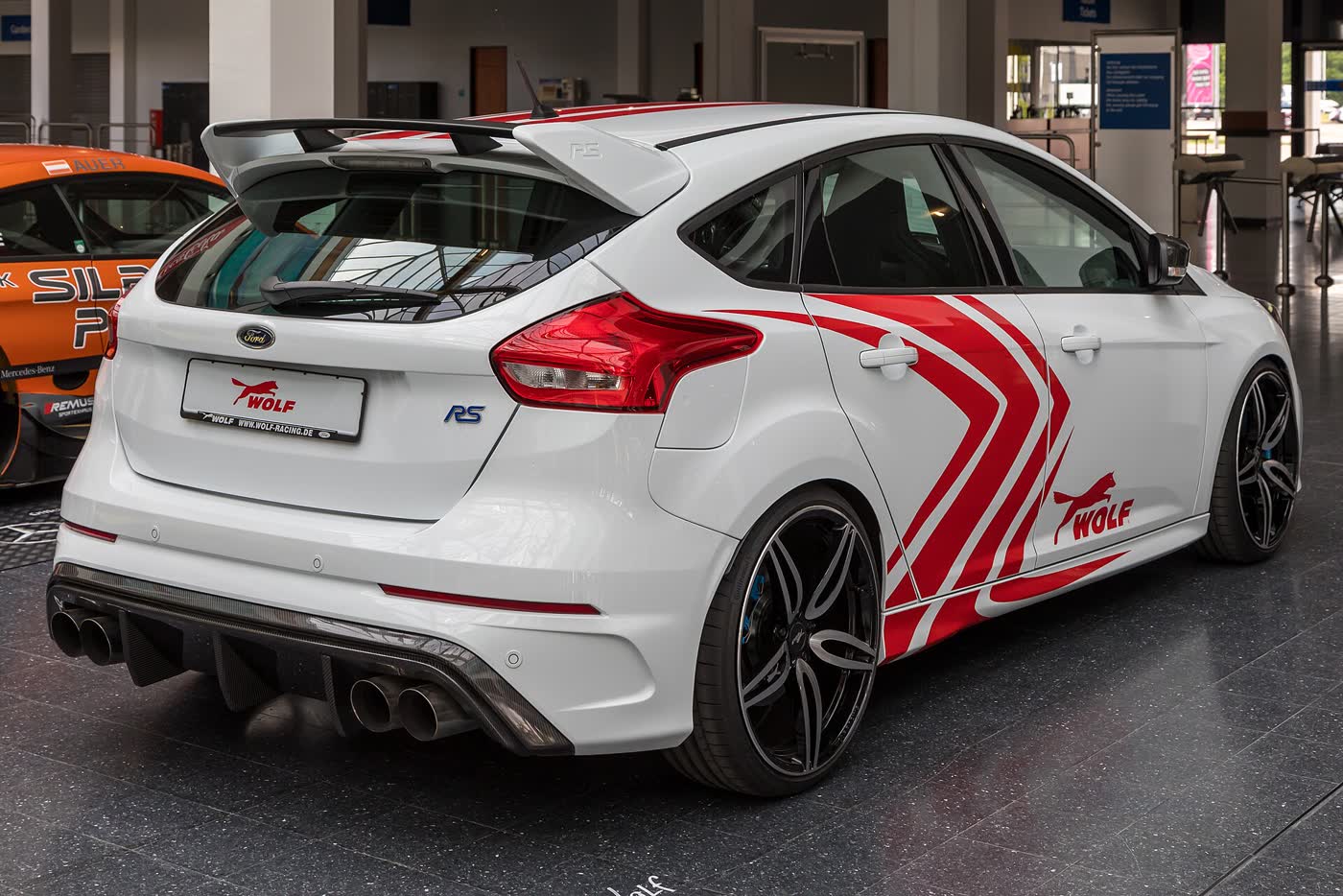
On paper the RS looks like a tuning bargain, and the headline supports it: roughly $800 for a tune takes you to about 400 wheel horsepower, and bolt-ons push past 440. The aftermarket is large, shared with the wider EcoBoost and RS community, so parts and tuning knowledge are easy to find.
The reason this is a 7 and not an 8 or 9 is that the cheap power comes with a real asterisk this time. Unlike the Supra or the Nissan Z, where a tune is close to free performance, the RS is starting from an engine that already has a gasket history and an open-deck block that cracks under sustained high boost. That block is the true ceiling, and it is a structural limit rather than a fueling one.
Our advice is to invert the usual order on this car. Spend on handling, brakes, and cooling first, where the returns are real and the risk is low, and treat big power as the thing you do last if at all. Chasing 500 horsepower in an RS is possible, but you are stacking boost on top of the exact weakness this car is already known for.
Buy, but only with the head gasket sorted. It scores 47 out of 70 on a Drive of 9, level with the Supra, plus a strong Limit and Daily, then giving most of it back on running costs and on a risk that is real rather than theoretical.
This car is for you if you want a characterful hot hatch, you will use the all-wheel drive, and you have the discipline to walk away from a car whose 17B32 paperwork cannot be produced. It is not for you if you want a low-worry daily or cheap speed, because the GTI does that job better for less money.
So you want to buy a used Focus RS. This is a hot hatch that scores a 9 on the Drive, level with a Toyota Supra, and there is a single piece of paperwork that decides whether you are buying a bargain or a $3,500 engine repair.
Ford used to fix that problem for free. Then they stopped. The free-fix window closed on 31 January 2019, and that single fact is the reason this article exists rather than being a rerun of what everybody already knows about this car. Every RS on the market today has either had the work done or has not, and if it has not, the bill is now yours. We scored it as a 2016 to 2018 car with verified head-gasket work, and it landed at 47 out of 70.
We are putting this first because it is the whole decision, and because the story is stranger than the summarised version you usually get.
Some 2016 and 2017 cars, built between August 2015 and July 2017, can leak coolant into the combustion chamber. The symptom chain runs: mysteriously low coolant, then white smoke from the exhaust, then engine failure. By the time you are at stage three you are into serious money.
Here is the cause, and it is not a design flaw in the RS engine as such. Ford fitted some cars with the Mustang EcoBoost's head gasket. That gasket's hole-and-depression design let coolant stagnate where it should have circulated, and stagnant coolant damaged the cylinder head. It was, in effect, a parts mix-up rather than an engineering failure of the 2.3-litre itself, which is why it affects some cars and not others and why it has never been possible to predict from mileage or how the car was driven.
Ford's response at the time was good. Customer Satisfaction Program 17B32 replaced the head gasket, and the cylinder head too if it failed a pressure test, free of charge, regardless of mileage and regardless of whether the car had been modified. That last clause is remarkable. Manufacturers almost never cover modified cars, and Ford did.
The problem for you, buying in 2026, is the date. That programme ended on 31 January 2019. So the question is no longer "will Ford fix this" but "did somebody already have it fixed," and the only way to answer it is documentation. A car with 17B32 paperwork is a solved problem. A car without it is an open bet on roughly $3,500 for a head gasket and possible cylinder head, and potentially worse if the open-deck block has cracked.
Two instructions follow, and they are the most important sentences on this page. Get paperwork proving 17B32 was completed. And have the cooling system pressure-tested during your inspection regardless, even on a documented car, because documentation proves history and a pressure test proves current condition.
We score The Risk at 5 because the failure is real, catastrophic, well documented, and its free remedy has expired. We do not score it lower, because a car with the work verified is not a fragile car. The risk lives almost entirely in the paperwork, not in the metal.
About $28,000 for a clean one, with the wider market running from $22,000 up to $40,000. Pristine low-mileage examples have climbed past $45,000, which is comfortably above the $36,995 the car cost new.
The reason is scarcity. Only around 5,000 came to the United States. That is a tiny number, and it is why clean cars hold roughly 85 percent of their value over three years and why the best ones are appreciating rather than depreciating. Among the trims, the 2018 RS Edition is the collectible one, with roughly 1,000 units built.
Now something that looks like an error on our Board until you understand it. The Focus RS holds 85 percent of its value against the GTI's 72, and it still scores 6 on The Deal, behind both. How?
Because The Deal weighs what you pay against what you get back, and here the two are pulling in opposite directions. At $28,000 this is $9,000 more than a GTI and $6,000 more than a Golf R. That is a lot of capital to commit. The strong resale offsets some of it but not all, and the price has to be read alongside the risk: paying $28,000 for a car that might need $3,500 of engine work is a materially different proposition from paying it for something sorted. Price and risk are not separate considerations on this car. They are the same consideration.
The practical consequence: a documented car deserves a real premium over an undocumented one, and you should be willing to pay it. That premium is cheaper than the repair.
This is the highest Drive score we have ever awarded, tied with the Toyota Supra at 9, and it is the reason owners forgive this car everything else on this page.
The numbers: 350 horsepower and 350 pound-feet from the 2.3-litre EcoBoost, around 3,500 pounds, which works out to 10.0 pounds per horsepower, and 4.7 seconds to 60. Quick, but the number is not the story.
The story is the all-wheel-drive system. It is rear-biased, and it can send most of the available torque to a single rear wheel. That hardware is why Drift Mode is not the marketing gimmick it sounds like: the car rotates, oversteers on demand, and does things no front-drive hot hatch can do at any price. Add launch control and a torque-rich twin-scroll turbo and you have a car with more personality than anything else in this segment.
Compare that to the Golf R, whose Haldex system is front-biased and reactive. The R grips and goes. The RS pivots and plays. That single difference is the clearest line between the two cars, and it is worth more to some buyers than every practical advantage the Volkswagen holds.
This section has no meaningful caveat, which is unusual on our site. The RS earns its 9 outright. Everything holding this car back is somewhere else on this page.
About $8,866 a year on our figures, and most of that is insurance: MoneyGeek prices the RS at $482 a month, $5,784 a year. Twenty-two miles per gallon on 91 octane is the price of hauling all-wheel-drive hardware around, and it works out to roughly $400 a year more in fuel than a GTI.
The line that catches people out is insurance, and this is a documented owner misconception rather than us being cautious. Owners routinely assume an RS insures like a Focus. It does not. The RS trim specifically runs well above the regular car: MoneyGeek's trim table has it at $482 a month, $5,784 a year, against $293 a month for the Focus ST. If you have been reading forum threads quoting grocery-getter rates, budget for performance-car premiums instead and get a real quote before you commit.
We replaced an earlier estimate of ours on this line. It was a trim multiplier applied to a base-Focus premium we could not re-read, and it sat below the Focus ST's own figure on MoneyGeek, which could not be right. We now use MoneyGeek's RS row directly. It is still one aggregator's average, so get a quote specific to you.
The one genuine relief is parts. This is still a Ford, so consumables and common components are cheap and widely available, which takes some sting out of routine work.
Yes. Twenty-three point three cubic feet of cargo, four doors, five seats. That is marginally more space than even the GTI offers. Add all-wheel drive that works in snow and you have a car that can be somebody's only vehicle through a real winter without excuses or a set of seasonal tires sitting in the garage.
So why does it score 8 while the GTI and Golf R score 9, despite having more room than both? Not space. Comfort. The ride is very firm, the cabin is loud at speed, and the Recaro buckets are aggressively bolstered in a way that is fantastic for twenty minutes and wearing on a three-hour motorway slog. This is a practical car that never once lets you forget it is a performance car first.
Our advice is unglamorous but genuine: go and sit in one for a while before you commit, ideally on a longer drive rather than a lap of the block. The seats and the ride are exactly the kind of thing you either stop noticing in a fortnight or never stop noticing at all, and only you can find out which.
Seriously good, and an 8 on The Limit is well earned. Our figures put it at 0.98 g of lateral grip and a 158 foot stop from 70 mph, with Brembo brakes, Recaro buckets, launch control, and Drift Mode as standard equipment. On a rallycross course or a damp track day, at this money, it is close to unbeatable.
An honest note on those figures. Car and Driver published 154 feet and 1.04 g for this generation, which is better than the numbers we carry, and the tire specification behind the two tests is unresolved: one account lists Michelin Cup 2s and another lists standard Pilot Super Sports. Given what we learned checking the GTI's braking, where the same car varied by twenty feet purely on rubber, that tire question probably explains the whole gap. We have kept our more conservative figures and flagged it as an open item rather than quietly adopting the better ones.
Two things keep it from scoring higher. It is heavy at around 3,500 pounds and you feel the all-wheel-drive drag accumulate as a session goes on. More seriously, the Brembos have been documented boiling their brake fluid after repeated hard laps. Connect that to this engine's cooling history and sustained track heat deserves genuine caution on this car rather than a shrug.
The practical framing: this is a phenomenal fast-road and rallycross car, and a very good track car with a short shopping list. Fresh high-temperature brake fluid and better pads should be your first purchase if you plan repeated hard laps, and keep an eye on coolant temperature while you are out there.
On paper this looks like the tuning bargain of our entire Board. Roughly $800 for a tune takes you to about 400 wheel horsepower, and bolt-ons push past 440. The aftermarket is large and shared with the wider EcoBoost and RS community, so parts and knowledge are easy to find.
And yet this scores 7 on The Mods, behind the other two hot hatches, while making more power for less money than either. That inversion is deliberate and it is what this section is about.
Our Mods score is not cost-to-power. It is cost-to-power weighed against what you are risking. On a Supra or a Nissan Z, a tune is close to free performance on an engine with enormous headroom. On the Focus RS you are stacking boost onto an engine that already has a head-gasket history, and the true ceiling is structural: the open-deck block cracks under sustained high boost. That is not a fueling limit you can solve with bigger injectors. It is the block itself.
So we would invert the usual advice on this car. Spend on handling, brakes, and cooling first, where the returns are real and the risk is low. Treat big power as the thing you do last, if at all. Chasing 500 horsepower in an RS means loading more stress onto the exact weakness the car is already famous for, and doing it to a car whose value depends on being a documented, healthy example.
This is the real decision for anyone shopping all-wheel-drive hot hatches, and the two cars answer completely different questions.
The RS wins where it matters to an enthusiast. It is quicker, 350 horsepower and 4.7 seconds against 292 and 5.2. It takes The Drive 9 to 8 and The Limit 8 to 7. And the rear-biased all-wheel drive with Drift Mode does things the Golf R's front-biased Haldex system fundamentally cannot.
The Golf R wins nearly everything else. It is $6,000 cheaper at around $22,000. It is cheaper to run, roughly $5,250 a year against $8,866. It takes The Daily 9 to 8 on comfort despite having slightly less cargo room. And it carries no equivalent of the head-gasket story, no expired programme, and no paperwork you have to chase before you can sleep at night. On our Board the R takes it 49 to 47.
The honest way to choose: if you want a hot hatch with genuine character, one that will entertain you on a back road and hold its value while doing it, and you have the discipline to insist on documentation, buy the Focus RS. If you want a quick, comfortable, all-weather car that will simply get on with it, buy the Golf R. Most people who ask us this question want the R. A meaningful number of them buy the RS anyway, and having driven both, we completely understand why.
Buy, but only with the head gasket sorted. Get paperwork proving Program 17B32 was completed, and pressure-test the cooling system during inspection regardless of what the paperwork says. If a seller cannot produce that documentation, walk away, however good the car looks and however much you want it. The free fix expired in January 2019 and there is no version of this where the bill goes to somebody else.
It scores 47 out of 70 on a Drive of 9, level with the Supra, plus a strong Limit and Daily, then handing most of it back on running costs and on a risk that is real rather than theoretical. Two figures on this page remain open: the braking and grip numbers, where Car and Driver published better results on possibly different tires, and the insurance line, where MoneyGeek implies more than double our estimate.
This car is for you if you want a characterful hot hatch, you will use the all-wheel drive, and you have the discipline to walk away from an undocumented example. It is not for you if you want a low-worry daily or cheap speed, because the GTI does that job better for a lot less money. On this car, more than any other we have covered, the paperwork is the car.
Filming reference: cue sheet · for the hosts on set, not part of the review.
The frame that closes our video: the Focus RS at 47/70, with the Golf GTI and the GR86 alongside.