2009-2011 · FA5 Sedan · K20Z3, 6MT
The premium for a 2009 or newer car is almost exactly what the 2006-2008 gearbox repair costs, so you pay it either way. Buy the later one, and on the test drive work the 2-to-3 upshift cold. The skip case is wanting to be fast.
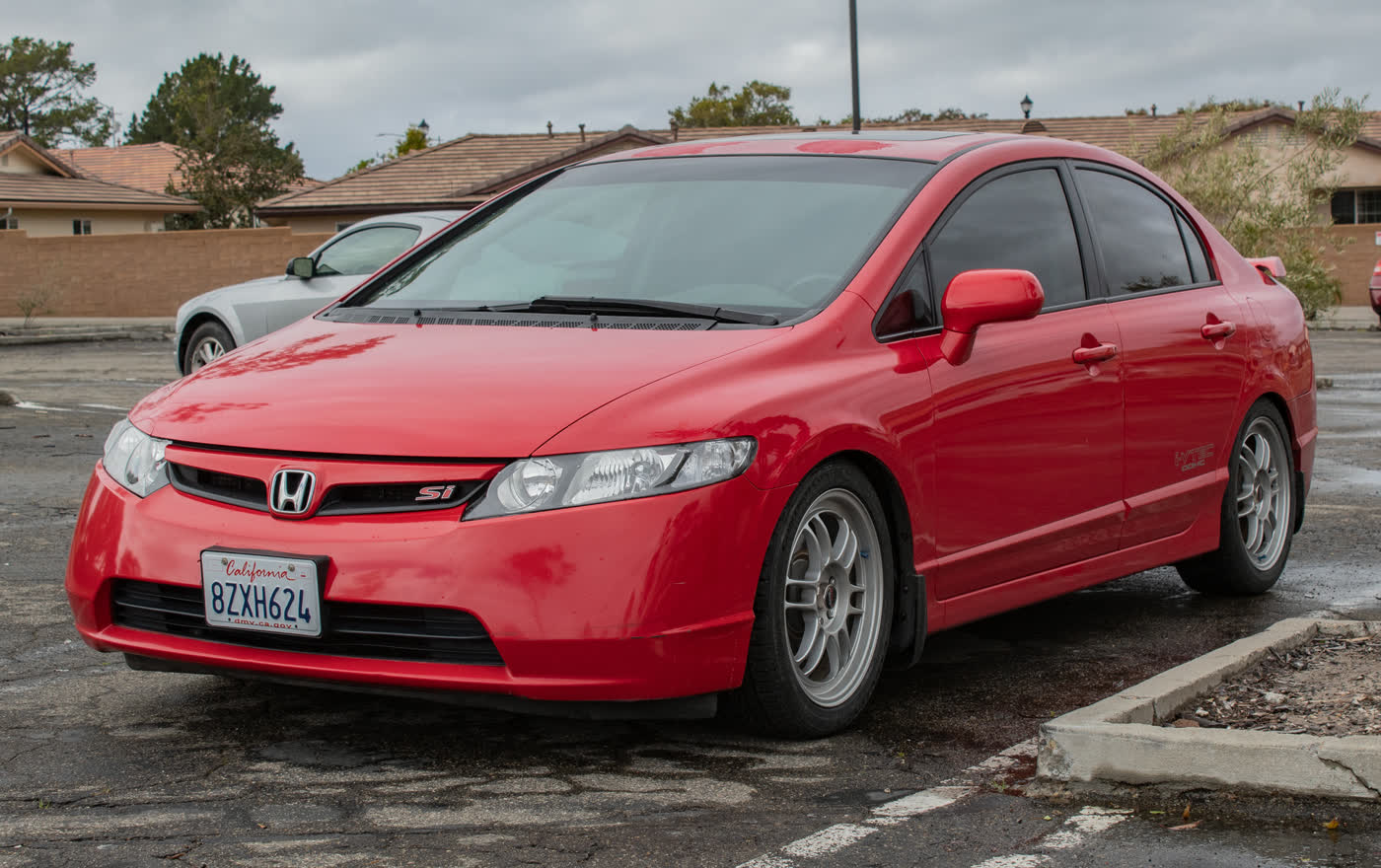
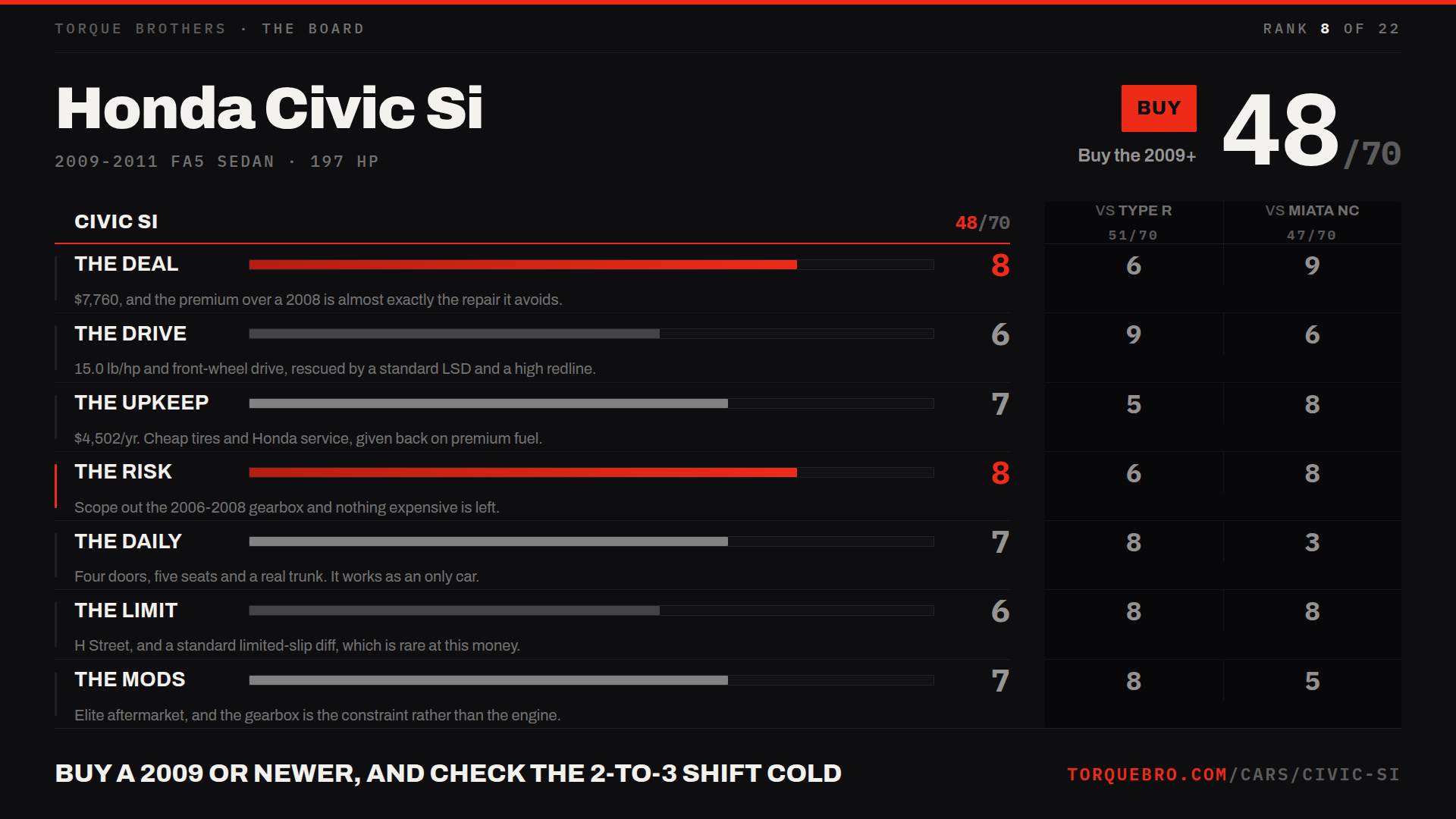
We scored the car as a 2009 to 2011 sedan with the K20Z3 and the six-speed manual, and it landed at 48 out of 70, with a verdict of Buy a 2009 or newer, and check the 2-to-3 shift cold.
Here is the whole review in one sentence, and it is the cleanest piece of buying advice this budget tier has produced: the premium for a 2009 or newer car is almost exactly what the 2006 to 2008 car's known gearbox repair costs. You are paying that money either way. Pay it to the seller and you get a working car; pay it to a workshop and you get downtime as well.
All money figures use a fixed set of assumptions so they can be compared to other cars we cover: 12,000 miles a year, premium fuel at $4.00 a gallon, and full coverage insurance. Prices are Kelley Blue Book private-party at 120,000 miles in Good condition. Insurance is MoneyGeek.
| Figure | Civic Si (2009-2011 FA5 Sedan) | Source |
|---|---|---|
| Used buy-in, private party | $7,760 | KBB |
| Condition basis | 120,000 miles, Good | KBB |
| Full condition range | $6,285 to $8,135 | KBB |
| Dollars per horsepower | $39.4/hp | derived: $7,760 divided by 197 hp |
| 2009 Si Sedan, listed range | $5,935 to $7,785 | KBB 2009 |
| 2008 Si Sedan, listed range | $4,090 to $5,440 | KBB 2008 |
~ our estimate, not a measured or quoted figure · * there is a caveat, and the note under the table explains it. Why we mark figures
The Deal scores an 8. At $7,760 this is one of the cheaper cars in our budget tier, and it still puts you in the top half of our Board. At $39.4 per horsepower it is actually better value than the NC Miata's $41.8, for $775 more money, though both are a long way behind the 350Z's $18.7.
But the number that should shape your shopping is the gap between those last two rows. A 2008 Si sits at $4,090 to $5,440. A 2009 sits at $5,935 to $7,785. The premium for the later car is roughly $1,845 to $2,345. Hold that thought for two sections, because the repair the later car avoids costs $1,500 to $3,000.
That is not a coincidence you can ignore, and it is why this section scores where it does. You will meet cheaper Civic Sis than the one we are recommending. They are cheaper for a specific, documented, expensive reason, and the market has priced it correctly.
On mileage, the flat 120,000-mile basis is fair here in a way it is not for the Miata. These were daily drivers, most are on their second or third owner, and a low-mileage example is the exception rather than the rule. Nothing below needs discounting.
| Figure | Civic Si (2009-2011 FA5 Sedan) | Source |
|---|---|---|
| Power-to-weight | 15.0 lb per hp | derived from the figures below |
| Power | 197 hp at 7,800 rpm | Honda fact sheet |
| Torque | 139 lb-ft at 6,200 rpm | Honda fact sheet |
| Curb weight | 2,954 lb | Edmunds |
| 0 to 60 mph | 6.8 to 7.0 sec sedan | Edmunds track test |
| Differential | Helical limited-slip, standard | Honda fact sheet |
| Redline | Unresolved, 8,000 or 8,300 | see below |
The Drive scores a 6, and we are going to be straight about the number before we defend it. 15.0 pounds per horsepower is a shade behind even the NC Miata's 14.9, and this is a front-wheel-drive car where the Miata is rear-wheel drive. On the two things our Drive score cares about most, pace and engagement, it starts behind.
What pulls it level is hardware and character. The K20Z3 wants revs, with peak power arriving at 7,800 rpm, and it comes with a helical limited-slip differential as standard equipment. Neither the NC Miata nor a base 350Z can say that at this money. On a back road the Si does something rare for a cheap front-drive car: it puts the power down out of a corner instead of scrabbling.
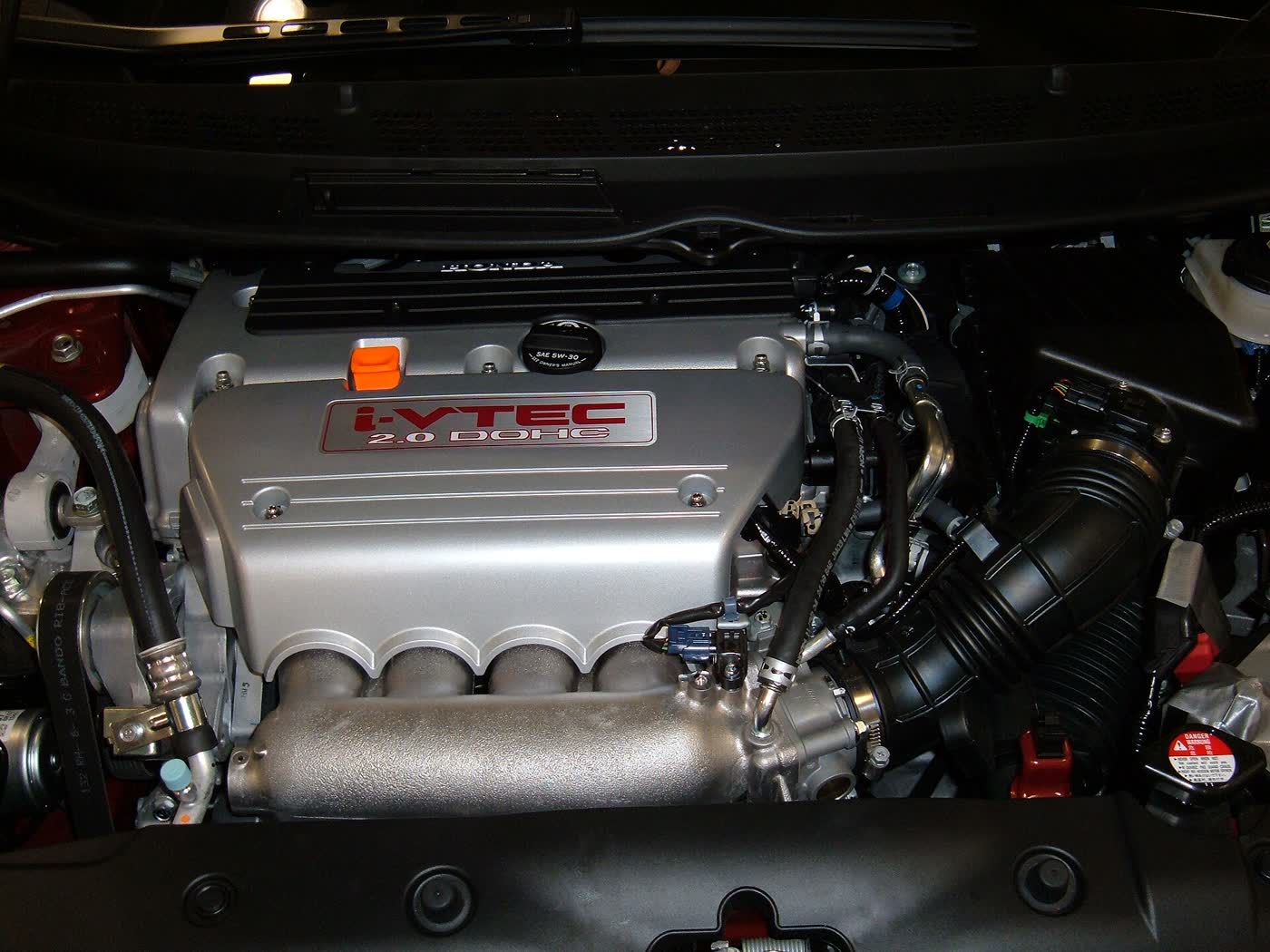
One honest gap. We are not going to tell you the redline, because our sources disagree between 8,000 and 8,300 rpm, and this is precisely the stat this car is famous for. Getting it wrong on camera would be the kind of small error that costs more credibility than it saves time. What we can source is Honda's own figure of peak power at 7,800 rpm, so however the redline resolves, this engine is working at revs where most of its rivals have stopped.
| Figure | Civic Si (2009-2011 FA5 Sedan) | Source |
|---|---|---|
| Total annual running cost | ~$4,502/yr | sum of the lines below |
| Fuel | ~$2,000/yr | derived from our fixed assumptions |
| Insurance, full coverage | ~$1,902/yr | MoneyGeek |
| Tires, amortized | ~$200/yr | our estimate |
| Routine service | ~$400/yr | our estimate |
| Fuel economy | 24 mpg combined | fueleconomy.gov |
| Octane | 91, premium | fueleconomy.gov |
The Upkeep scores a 7. About $4,502 a year, which slots between the GTI and the Veloster N, and the shape of it is friendly nearly everywhere. The tires are ordinary 215-section 17s and cost very little. Honda service is cheap and every independent shop in the country knows the car. There is no timing belt, no exotic fluid, no dealer-only anything.
Two things hold it back. The first is that it wants premium fuel, which surprises people about a Civic and costs you roughly $250 a year against running regular. The second is insurance, and it is worth a moment because it caught us out.
Full coverage runs $1,902 a year, which is 24.5 percent of what the car is worth. That is past the point where full coverage makes sense for most people, and it is the general lesson of this whole tier: sensible cars are not cheap to insure once they are only worth seven thousand dollars. For scale, a plain 2009 to 2011 Civic runs about $145 to $150 a month on the same source, so the Si premium itself is modest.
We had that ratio wrong in an earlier draft, at 28 percent, and the wrong way round. It was calculated against a lower placeholder price before we pulled the Blue Book value at our 120,000-mile standard. At the real price it is 24.5 percent, against the NC Miata's 21.6 and well clear of the 350Z's 34.1. Wrong in direction, not just in size.
One caveat on the source. MoneyGeek breaks the Si out by trim but not by trim and year together, so this is a trim-level figure blended across the generation rather than specific to 2009 to 2011. We have tagged it accordingly. It is the same limitation the Veloster N carries.
| Scenario | Year-one cost | As a share of a $7,760 buy-in |
|---|---|---|
| Maintained | ~$750 to $1,000 | 10 to 13 percent |
| Typical | ~$2,050 to $2,450 | 26 to 32 percent |
| Neglected | ~$3,050 to $3,450 | 39 to 44 percent |
That is a narrow spread, and it is narrow for a structural reason rather than by luck. Because the scope excludes the one expensive failure, the worst case here is ordinary accumulated wear: a clutch at $1,000 to ~$1,400, a suspension refresh around $700, brakes around $400, fluids and plugs around $350, tires around $600.
Compare that to the 350Z in this same tier, where the neglected case runs 94 to 135 percent of the purchase price and no inspection can protect you from it. Here the worst case is 44 percent and every line of it is visible before you buy.
| Item | Severity | How often | Can a PPI catch it? |
|---|---|---|---|
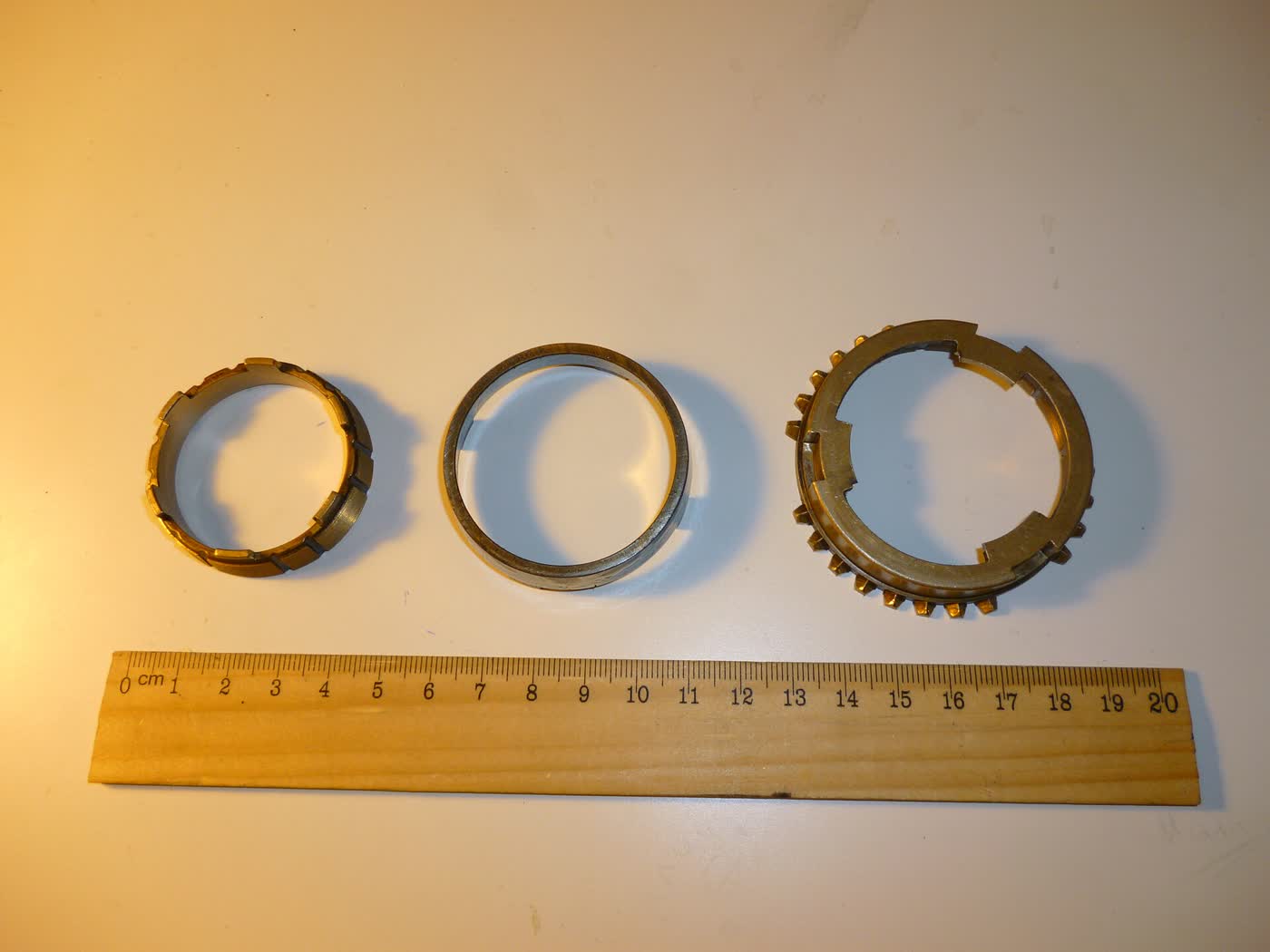
| Third-gear synchro grind and pop-out | High, $1,500 to $3,000 | Notorious on 2006-2008. Largely resolved 2009+ | Yes, and it is THE check |
| Clutch wear | Moderate, ~$1,000 to $1,400 | Normal for the mileage | Yes |
| A/C compressor | Moderate | Moderate | Yes |
| Engine, the K20Z3 | n/a | Rare. No known catastrophic mode | n/a |
The Risk scores an 8, which ties both Miatas at 8 on Risk, and unlike them this car earns it partly by construction rather than purely by engineering.
The one expensive failure on this generation is the third-gear synchro, which grinds on the 2-to-3 upshift and eventually pops out of gear entirely. It costs $1,500 to $3,000 to put right. It is notorious on 2006 to 2008 cars, Honda issued TSB 08-020 in April 2008 mandating replacement of the whole third gear set, and cars built from 2009 are largely clear of it. That is why our scope starts where it does, and it is why the price gap between a 2008 and a 2009 exists.
And it is completely detectable. Drive the car with the engine cold and make the 2-to-3 upshift repeatedly. Any grind, any resistance, any tendency to pop back out, and you are looking at the gearbox. That is a five-minute check on a test drive and it is the single most valuable thing you can do with this car.
Beyond that the list is short and boring, which is the point. A clutch will want doing at some stage. The air conditioning compressor is a known moderate item. And the K20Z3 itself has no documented catastrophic failure mode at all, which is the thing that really separates this car from most of the tier.
Search for problems with this generation of Civic and you will quickly find the 2006 to 2009 cracked engine block, along with the detail that Honda's free-engine warranty extension excludes the Si. At least one aggregator described that exclusion as "particularly concerning" for Si buyers.
It is the opposite of concerning. The cracked block is a defect in the R18, the 1.8-litre engine in ordinary Civics. The Si has the K20Z3, a completely different engine. The Si was excluded from the warranty extension because it does not have the defective block, not because Honda declined to help its owners.
Taking that source at face value would have put a phantom catastrophic engine failure into this section and scored the car several points lower than it deserves. It is the fourth time in this project that an article covering a model across its whole range has blended engines or generations together, and the first where the contaminated source drew an explicit conclusion that was exactly backwards.
| Figure | Civic Si Sedan | Source |
|---|---|---|
| Seats | 5 | CarBuzz |
| Doors | 4 | CarBuzz |
| Infotainment | No CarPlay. Aux and USB late in the run | CarBuzz |
| Head-unit retrofit | ~$300 to $500 | our estimate |
| Cargo volume | Not captured | we did not source it |
The Daily scores a 7, and this is the category where a Civic Si quietly wins arguments against far more exciting cars. Five seats, four doors, a real trunk, and Honda ergonomics that were class-leading at the time and still make sense today. Against the Miata's two seats and the 350Z's two seats, this is not a close contest.
It is a car in this tier we would call a credible only-car, and it is a Honda, which means the running costs and the parts availability match the practicality. If you want one car that does the commute, the airport run and a good road on Sunday, this is the shortlist.
What keeps it off a higher score is a combination of age and badge. There is no CarPlay, and aux and USB only appear late in the run, so budget $300 to $500 for a head unit. And the interior is a sensible Honda interior rather than a nice one: the G37 has the same five seats and four doors with a luxurious cabin around them, which is why that car takes an 8 and this takes a 7. We also did not source a cargo figure, so that row reads Not captured rather than carrying a number we guessed.
If you are looking at the FG2 coupe instead, it is the same car mechanically with two doors, and it scores a point lower here.
| Figure | Civic Si (2009-2011) | Source |
|---|---|---|
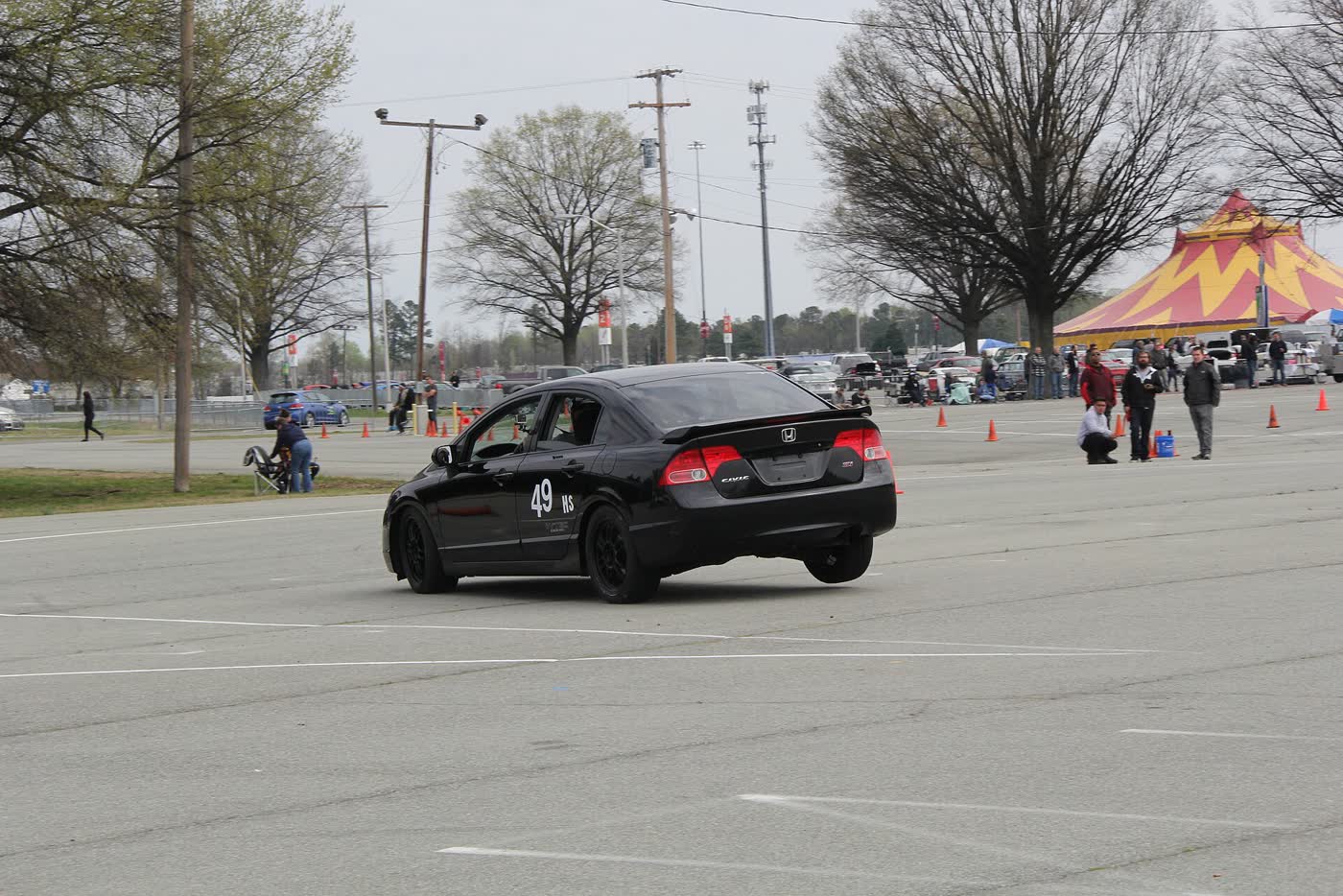
| SCCA Solo class | H Street (HS) | SCCA Solo Classification Assistant |
| Also eligible | DST, ESP, SMF, EP, XA | SCCA Solo Classification Assistant |
| Track hardware | Helical limited-slip differential, standard | Honda fact sheet |
| Max grip | 0.89 g, 2009 sedan on Michelin Pilot Exalto PE2 summer tires | Edmunds track test |
| Braking | 123 ft, measured 60-0 | Edmunds track test |
SCCA H Street · shared with the Fiesta ST, the Golf GTI, the Focus ST, the GTI Mk6 and the Mazdaspeed3 on this Board.
The Limit scores a 6, and the honest headline here is hardware rather than a number.
A standard helical limited-slip differential on a $7,760 car is unusual, and it matters more to how this car behaves when you push it than any skidpad figure would. It is the difference between a front-drive car that spins an inside wheel out of a tight corner and one that simply pulls. Honda fitted it to every Si, so you do not need to hunt for a trim or an options box.
Grip and braking read Not captured, because we found no instrumented figure for the car we are scoring and we will not model one.
On the class, we want to be more careful than usual. We have H Street from the SCCA's own classification assistant, which is a good source, but we could not read it out of the 2026 Appendix A in direct context the way we confirmed F Street for the 350Z and the G37. The entry we found in that PDF sits in a modified-category list with no usable running header, and we learned on the 350Z that only direct-context reads are trustworthy. So treat the class as solid but not yet settled, and we will confirm it against Appendix A before it goes in a ranking video.
| Path | What you get | Constraint |
|---|---|---|
| Chassis, tires, brakes | The best money on this car | None |
| NA bolt-ons | Small gains. The K20 is near its ceiling stock | Engine already close to its NA limit |
| Forced induction or a K24 swap | Real power, and the engine will take it | The gearbox will not |
The Mods scores a 7. The aftermarket for this car is elite, and there is a genuine engineering reason for that: the K-series has had two decades of development and the parts industry has had twenty years to build for it.
The catch is specific and it is worth understanding before you spend anything. The K20Z3 is already close to its naturally-aspirated ceiling in stock form, so intake and exhaust work returns very little. Real power means forced induction or a K24 swap, and the engine will take that. Its transmission is a different story: the gearbox is this car's one documented weak point, and adding power drives synchro wear directly.
So the answer to "does modifying this car accelerate its known failure" is partial, and that is a third distinct answer from the three budget cars we have scored. The NC Miata said no, because the engine is robust and mods only waste money. The 350Z said yes, because power drives the exact clutch component that already fails. The Si splits the difference: the engine tolerates it, the gearbox does not.
Practically, that means spend on the chassis first, and if you are going to chase power, budget for the transmission as part of the build rather than as a surprise afterwards. We are showing Not captured for cost per 100 wheel horsepower, because we did not source an installed price for either route.
Buy a 2009 or newer, and check the 2-to-3 shift cold. It scores 48 out of 70, which puts it level with a GR86 and a Supra, and it does that by winning the four categories that cost you money every month and losing every category about going fast. That is what our Board is built to reward, and this is the clearest example of it we have.
The condition is one sentence and one test drive. Get a 2009 or later car, and on the drive, with the engine cold, work the 2-to-3 upshift over and over. If it grinds or pops out, walk away. If it does not, you are buying a car whose worst realistic bill is a clutch.
This car is for you if you want something quick and engaging that will also carry four people and never surprise you. It is not for you if what you want is pace, because everything else in this tier is faster, or if you want rear-wheel drive, because this is emphatically not that.
So you wanna buy a Civic Si. Here is the short version, and it is unusually tidy buying advice: the extra money a 2009 costs over a 2008 is almost exactly what the 2008's known gearbox repair costs. You are spending that money either way. Spend it on the car and you get one that works. Spend it on the workshop and you also get the weeks without a car.
We scored it as a 2009 to 2011 sedan with the K20Z3 and the six-speed manual, and it landed at 48 out of 70. That puts a seven-thousand-dollar Honda level with a GR86 and a Toyota Supra, which sounds absurd until you look at how it gets there.
Seven thousand seven hundred and sixty dollars, for a Good-condition 2009 sedan at 120,000 miles, private party, which is the flat basis we price this whole tier on. The full condition range runs $6,285 to $8,135. That is one of the lower prices in our budget tier, and it still buys a car in the top half of our Board.
At 197 horsepower that works out to $39.4 per horsepower, which is actually slightly better value than the NC Miata's $41.8 for $775 more money. Both of them are miles behind the 350Z at $18.7, but neither of those cars is really competing on power per dollar and neither should be judged on it.
Now the number that should decide how you shop. A 2008 Si sedan sits at $4,090 to $5,440. A 2009 sits at $5,935 to $7,785. The premium for the later car is somewhere around $1,845 to $2,345. Remember that figure, because in a few minutes I am going to tell you that the repair the later car avoids costs $1,500 to $3,000.
That is not a coincidence and the market has not made a mistake. Cheaper Civic Sis exist, they are cheaper for a documented and expensive reason, and the price difference is the market pricing that reason in almost exactly.
One note on mileage. Unlike the Miata, where a 120,000-mile car is well above what the market offers, this is a car people actually drove. Most are on their second or third owner and 120,000 miles is completely ordinary. The basis is fair here.
Slower than you want, and more fun than that sentence suggests.
One hundred and ninety-seven horsepower, 139 pound-feet, 2,954 pounds, which comes out at 15.0 pounds per horsepower. That is a shade behind even the NC Miata's 14.9, and this is front-wheel drive where the Miata is rear. Zero to sixty in the high sixes. On paper it starts behind everything down here.
What rescues it is two pieces of hardware and one piece of character. The K20Z3 makes peak power at 7,800 rpm and wants to be worked all the way there. And every single Si came with a helical limited-slip differential as standard. Not an option, not a trim level, standard. Neither the NC Miata nor a base 350Z can say that. On a real road, out of a tight corner, the Si puts the power down where a normal front-drive car spins an inside wheel and goes nowhere.
So The Drive scores a 6. It is slow, and it is also a car you would enjoy on a twisty road at legal speeds, and both of those are true at once.
One thing we are not going to tell you is the redline. Our sources disagree between 8,000 and 8,300 rpm, and this is the exact stat this car is famous for. Getting it wrong on camera is the kind of small error that costs more than looking it up would have. What we can source, from Honda directly, is peak power at 7,800 rpm. However that resolves, this engine is doing its best work at revs where most of its rivals have already given up.
Mostly, yes. About $4,502 a year: roughly $2,000 of fuel, $1,902 of insurance, $200 of tires and $400 of service. That lands it between the GTI and the Veloster N, and the shape of it is friendly nearly everywhere. Ordinary 215-section tires cost very little. Honda service is cheap and every independent shop in the country already knows the car. No timing belt, no exotic fluids, nothing dealer-only.
Two things stop it scoring higher. It wants premium fuel, which surprises people about a Civic and costs you around $250 a year against running regular. And then there is insurance.
Full coverage runs $1,902 a year, which is 24.5 percent of what the car is worth. That is past the point where full coverage really makes sense, and it is the running lesson of this whole tier: sensible cars are not cheap to insure once they are only worth seven grand. To be fair to the Si specifically, a plain Civic of the same years runs about $145 to $150 a month on the same source, so the Si premium itself is small. It is the car's low value doing the damage, not its badge.
We owe you a correction on that figure. An earlier draft of ours put it at 28 percent and had it the wrong way round. That was calculated against a lower placeholder price, before we pulled the Blue Book value at our 120,000-mile standard. At the real price it is 24.5 percent, against the NC Miata's 21.6 and well clear of the 350Z's 34.1. We had it backwards, not just imprecise.
There is one limitation on the source worth naming. MoneyGeek breaks the Si out by trim but not by trim and year together, so this figure is blended across the whole generation rather than being specific to 2009 to 2011. We have tagged it as such rather than presenting it as tighter than it is.
A maintained car needs about $750 to $1,000. A typical one runs $2,050 to $2,450. A neglected one runs $3,050 to $3,450.
That is a narrow spread, and it is narrow for a structural reason rather than by luck. Because our scope excludes the one expensive failure, the worst case is just accumulated wear: a clutch, a suspension refresh, brakes, fluids, tires. Nothing on that list is a surprise and nothing on it is a grenade.
Put it next to the 350Z in the same tier, where a neglected example needs 94 to 135 percent of the purchase price and no inspection can protect you. Here the worst case is 44 percent of what you paid, and every line of it is visible before you hand over money. That difference is worth more than most of the scores on this page.
The Risk scores an 8, tying both Miatas at 8 on Risk.
The one expensive failure on this generation is the third-gear synchro. It grinds on the 2-to-3 upshift and eventually the car pops out of gear entirely, and it costs $1,500 to $3,000 to fix properly. It is notorious on 2006 to 2008 cars. Honda issued TSB 08-020 in April 2008 mandating replacement of the entire third gear set, synchros, springs and all, and cars built from 2009 onward are largely clear of it. That is exactly why our scope starts at 2009, and it is exactly why a 2008 is two thousand dollars cheaper.
And you can find it in five minutes. Drive the car with the engine cold and make the 2-to-3 upshift over and over. Any grind, any resistance, any tendency to jump back out, and you are looking at the gearbox. That is the single highest-value thing you can do on a test drive of this car, and it is why we put it in the verdict rather than burying it here.
Everything else is short and dull, which is the point. A clutch will want doing eventually. The air conditioning compressor is a known moderate item. And the K20Z3 itself has no documented catastrophic failure mode whatsoever, which is rare down here.
Now, the claim you will absolutely run into if you search for problems with this car, and it is backwards.
You will find the 2006 to 2009 Civic cracked engine block, and you will find that Honda's free-engine warranty extension excludes the Si. One aggregator we read described that exclusion as "particularly concerning" for Si buyers. It is the opposite of concerning. The cracked block is a defect in the R18, which is the 1.8-litre engine in ordinary Civics. The Si has the K20Z3, a completely different engine. The Si was left out of the warranty extension because it does not have the bad block, not because Honda refused to help.
If we had taken that at face value we would have put a phantom engine grenade into this section and scored the car several points below where it belongs. It is the fourth time in this project that an article covering a model across its full production run has blended engines or generations together, and the first where the contaminated source drew an explicit conclusion that pointed exactly the wrong way.
Yes, easily, and this is where a Civic quietly beats far more exciting machinery. The Daily scores a 7.
Five seats, four doors, a proper trunk, and Honda ergonomics that were class-leading when the car was new and still make sense now. Against the Miata's two seats and the 350Z's two seats, this is not a contest. It is a car in this tier we would call a credible only-car, and it is a Honda, so the running costs and parts availability match the practicality.
What keeps it at a 7 rather than higher is age and badge. There is no CarPlay, and aux and USB only turn up late in the run, so put $300 to $500 aside for a head unit. And the cabin is a sensible Honda interior rather than a nice one. The G37 has the same five seats and four doors with a luxurious interior around them, which is why that car takes an 8 and this one a 7. We also did not source a cargo figure, so our page says Not captured rather than carrying a number we invented.
If you are looking at the coupe instead, it is mechanically the same car with two doors, and it drops a point here.
It is good, and the reason is a part rather than a number. The Limit scores a 6.
A helical limited-slip differential, fitted as standard, on a car that costs $7,760. That is unusual and it matters far more to how this car behaves at the limit than any skidpad figure would. You do not have to hunt for a trim or an options box, because Honda put it on every Si.
Grip and braking read Not captured, because we could not find an instrumented figure for the car we are scoring and we are not going to model one.
On the class, we are being more careful than usual. We have H Street from the SCCA's own classification assistant, which is a good source. But we could not read it out of the 2026 Appendix A in direct context, the way we confirmed F Street for the 350Z and the G37. The entry we found in that PDF sits in a modified-category list with no usable header, and we learned on the 350Z that only direct-context reads are worth trusting. So take the class as solid but not yet nailed down, and we will confirm it before it appears in a ranking video.
Yes, but understand the constraint before you spend anything. The Mods scores a 7.
The aftermarket here is elite, and there is a real reason for it: the K-series has had two decades of development and the parts industry has had two decades to build for it.
The catch is specific. The K20Z3 is already close to its naturally-aspirated ceiling in stock form, so intake and exhaust work gives you very little back. Real power means forced induction or a K24 swap, and the engine will take that. The gearbox will not. The transmission is this car's one documented weak point, and adding power drives synchro wear directly.
So when we ask whether modifying a car accelerates its known failure, this one answers partially, and that is a third distinct answer from three budget cars. The NC Miata said no, because the engine is tough and mods only cost you money. The 350Z said yes, because power drives the exact clutch component that already fails. The Si splits it: the engine is fine, the gearbox is the limit.
In practice, spend on chassis, tires and brakes first. If you are going to chase power, budget the transmission into the build rather than discovering it later.
This is the same badge two decades apart, and the gap is about five times the money. The Type R costs roughly $37,000 and answers with 306 horsepower and genuine supercar-adjacent front-drive ability. The Si costs $7,760.
On our Board they finish one point apart, 50 to 49, and that gap is the whole philosophy of this ranking in one line. The Type R is unquestionably the better car. The Si may well be the better buy, because it gives up pace and prestige and takes back everything that costs you money: buy-in, running cost, and a gearbox we can actually price, which the Type R's synchro problem still is not.
If you can afford the Type R and you will use it, buy the Type R. If you are choosing with your head, the Si is a very hard car to argue against.
Buy a 2009 or newer, and check the 2-to-3 shift cold.
That is the entire review. Get the later car, because the money you save on an earlier one is money you will hand to a gearbox specialist instead. And on the test drive, with the engine cold, work second to third over and over. If it grinds or pops out, walk. If it does not, the worst realistic bill in front of you is a clutch.
The Civic Si finished at 48 out of 70, level with a GR86 and a Supra that cost several times as much. It got there by winning the four categories that cost you money every month and losing every single one about going fast. If you want something quick and engaging that will also carry four people and never surprise you, this is the shortlist. If what you actually want is pace, everything else in this tier is faster, and you should buy one of those instead.
Filming reference: cue sheet · for the hosts on set, not part of the review.
The frame that closes our video: the Civic Si at 48/70, with the Type R and the Miata NC alongside.