2013-2018 · 2.0 EcoBoost · 6MT (MMT6)
A benign failure list, and a $6,092 running cost against a $10,230 buy-in. Nothing on this car can break in a way that ends it, and it still costs sixty percent of its purchase price to keep every year. Get an insurance quote in your own name before you do anything else, because that one number is the whole verdict.
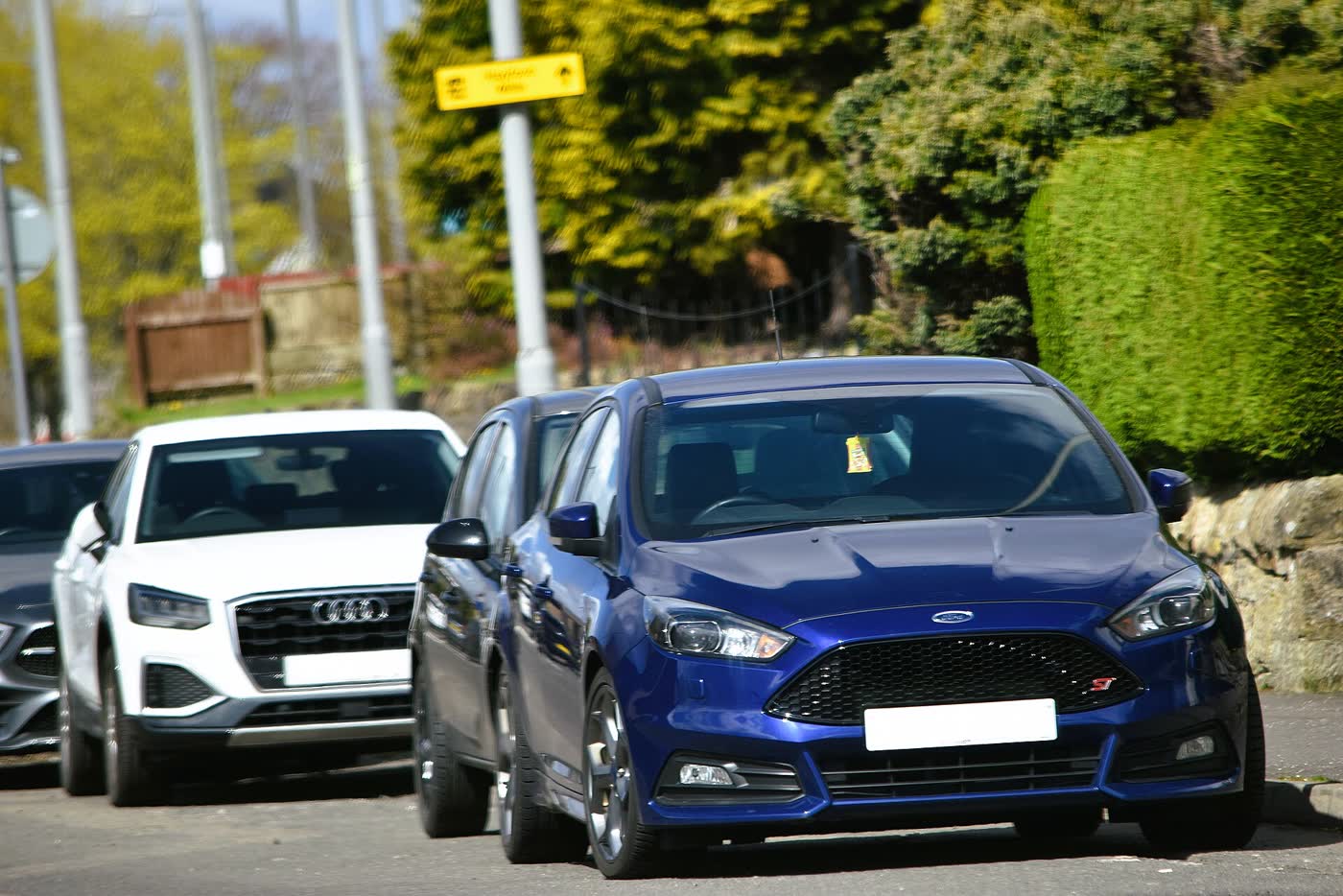
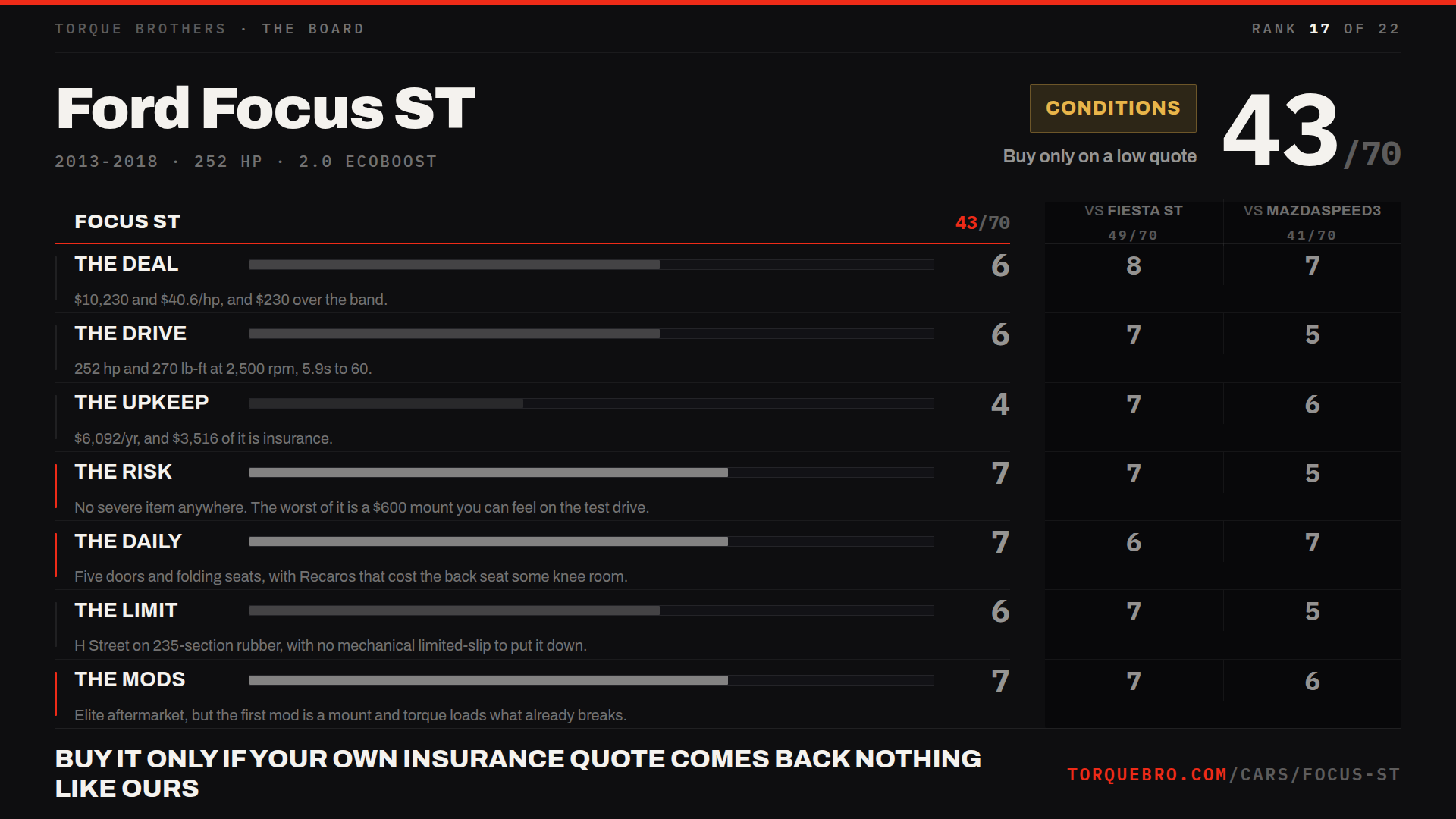
We scored the car as a 2013 to 2018 Focus ST with the 2.0 EcoBoost and the six-speed MMT6 manual, and it landed at 43 out of 70, with a verdict of Buy it only if your own insurance quote comes back nothing like ours.
This car is for someone who wants a roomy, quick front-drive hatch and has already checked what it costs to insure. That second clause decides the purchase, which is an unusual thing to say about a car whose failure list is this clean.
All money figures use a fixed set of assumptions so they can be compared to other cars we cover: 12,000 miles a year, premium fuel at $4.00 a gallon, and full coverage insurance. Prices are Kelley Blue Book private-party at 120,000 miles in Good condition, which is the flat basis this whole budget tier uses. Insurance is MoneyGeek at trim level, the same table and profile that priced the Fiesta ST, so those two are directly comparable.
| Figure | Focus ST (2013-2018, 2.0 EcoBoost, 6MT) | Source |
|---|---|---|
| Used buy-in, private party | $10,230, $230 over our $10k ceiling | KBB |
| Condition basis | 120,000 miles, Good | KBB |
| Full condition range | $7,955 to $10,780 | KBB |
| Dollars per horsepower | $40.6/hp | derived: $10,230 divided by 252 hp |
~ our estimate, not a measured or quoted figure · * there is a caveat, and the note under the table explains it. Why we mark figures
The Deal scores a 6, and there are two reasons rather than one.
The first is that this car does not fit the band we built the tier around. Our budget tier is $5,000 to $10,000 and this is $10,230. We kept it in deliberately, because $230 is not a reason to exclude a car people are cross-shopping, but the Deal score carries the overshoot rather than waiving it. If we had waived it, the rule would mean nothing the next time.
The second is what the money buys relative to its own sibling. The Fiesta ST is $7,800. This is $2,430 more for 55 more horsepower and a considerably roomier car, which is a defensible trade, and at $40.6 per horsepower it sits between the NC Miata's $41.8 and the Mazdaspeed3's $32.6. Nothing wrong with the arithmetic. It is just a lot of money in a tier where the whole point is that the money is small.
One figure we do not quote: a 2014 range of $4,300 to $6,000 turned up in research and it is not credible against $7,955 to $10,780 for a 2015 car. We flagged it as unresolved and left it out rather than publish a number we think is wrong.
Watch the listings against this figure too. Asking prices for this car sit well above the KBB private-party number, and those are two different things.
| Figure | Focus ST (2013-2018, 2.0 EcoBoost, 6MT) | Source |
|---|---|---|
| Power-to-weight | 12.8 lb per hp | derived from the figures below |
| Power | 252 hp at 5,500 rpm, rated on 93 octane | CJ Pony Parts |
| Torque | 270 lb-ft at 2,500 rpm | CJ Pony Parts |
| Curb weight | 3,223 lb | Edmunds |
| 0 to 60 mph | ~5.9 sec | CJ Pony Parts |
| Engine | 2.0 EcoBoost turbo, direct injection | Edmunds |
The Drive scores a 6. Five point nine seconds to 60 for a front-drive hatch is quick, and 270 lb-ft arriving at 2,500 rpm makes it feel quicker than that in the situations you actually drive in. Against the tier's rear-drivers it lines up sensibly: the G37 does 5.4 and the 350Z 5.6.
Two things to keep in proportion. The 0 to 60 figure is single-sourced, and the Mazdaspeed3's 6.2 seconds comes from a different source while having better power-to-weight at 12.5. Do not read the 0.3 second gap between those two cars as real. Treat them as level on pace.
And the horsepower number has a footnote most people never see: Ford rates 252 hp on 93 octane. It is a best-fuel figure. That matters if you were planning to run the cheap stuff, and it is part of a wider octane muddle we deal with in The Upkeep.
The chassis is well sorted, and the 2015 refresh brought new springs, stiffer dampers and recalibrated steering. What it does not have is a mechanical limited-slip differential, and that is the same hole the Mazdaspeed3 has: 270 lb-ft through the front wheels with brake-based torque vectoring standing in for a diff.
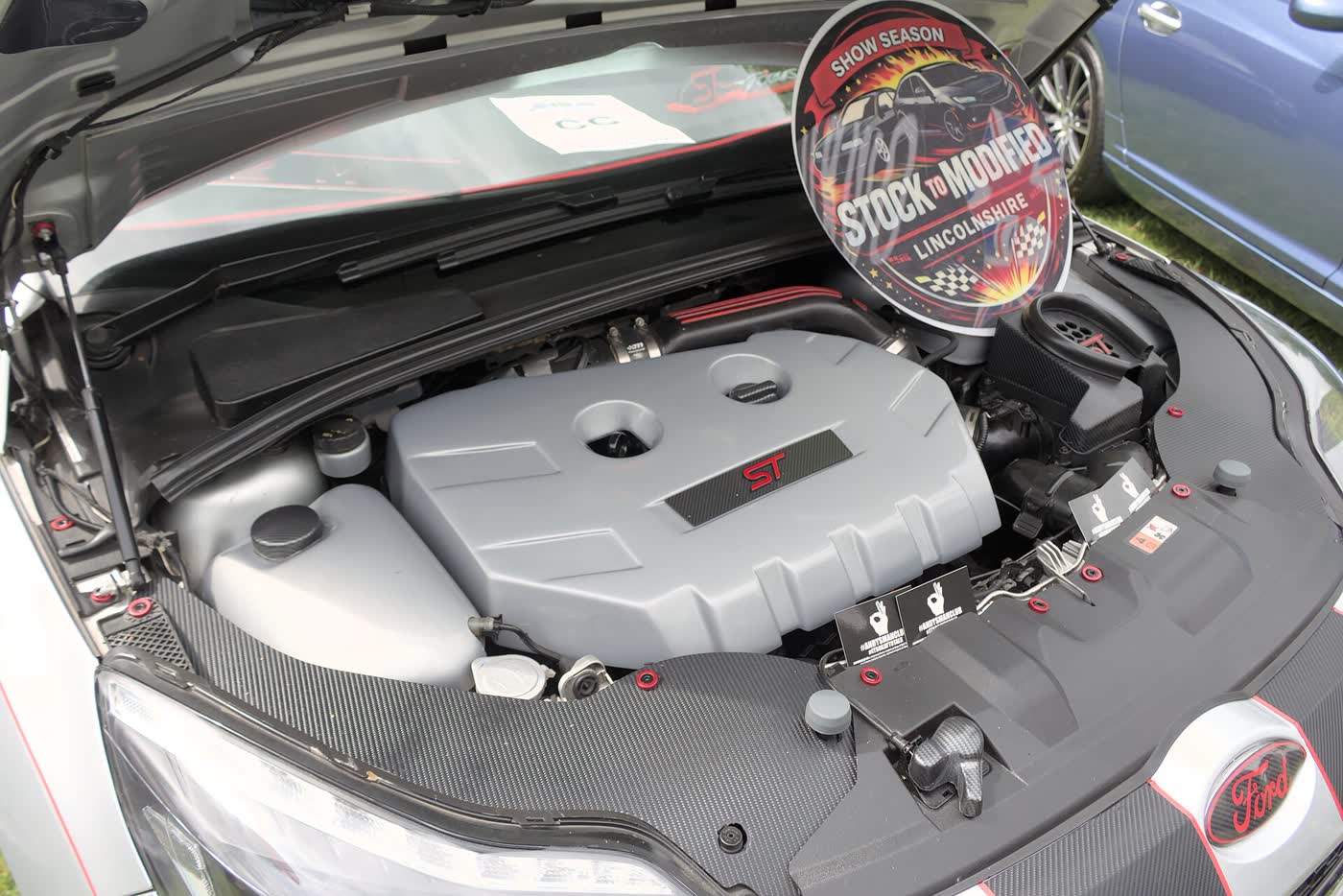
| Figure | Focus ST (2013-2018, 2.0 EcoBoost, 6MT) | Source |
|---|---|---|
| Total annual running cost | ~$6,092/yr | sum of the lines below |
| Insurance, full coverage | ~$3,516/yr ($293/mo) | MoneyGeek, ST Hatchback trim |
| Fuel | ~$1,846/yr | derived from our fixed assumptions |
| Tires, amortized | ~$280/yr | our estimate |
| Routine service | ~$450/yr | our estimate |
| Fuel economy | 26 mpg combined (23/31) | fueleconomy.gov |
| Octane | 91 premium * | three-way conflict, see below |
The Upkeep scores a 4, and this is the section that decides the car.
It costs $6,092 a year to keep, which is 60 percent of what it costs to buy. For scale inside this tier, the 350Z costs $5,200 a year. The fuel bill is not the problem: 26 mpg is respectable and $1,846 is unremarkable.
The insurance is the problem, and it is $3,516. That is 40 percent above the Fiesta ST's $2,508 and 59 percent above the GTI Mk6's $2,208, and it works out to 34.4 percent of the car's value every year. It is also the single figure that takes this car from a comfortable buy to a conditional one.
We want to be careful about how much weight that number can bear, because we are asking it to carry the verdict. It is trim-level, broken out for the ST Hatchback specifically at $293 a month, which is better sourcing than most of this tier gets. It comes from the same table and profile that gave the Fiesta ST its figure, so the comparison between the two Fords is fair. But it is not year-split: the same number covers a 2013 and a 2018 car. And MoneyGeek's own Focus trim table runs from $126 a month for a base model to $482 for the RS, so the ST sits near the top of a wide spread.
So get a quote in your own name before you do anything else. If yours comes back near $293 a month, believe the score. If it comes back near the Fiesta ST's $209, this car is considerably better than a 44 and you should buy it.
On the octane, there is a genuine three-way conflict and we would rather show it than hide it. Edmunds says premium recommended at trim level. fueleconomy.gov lists the 2.0 six-speed manual Focus, which can only be the ST, as regular. Ford rates the power on 93. We publish 91 because premium-recommended is how we handled the NC Miata and the Board should be consistent. The spread is $462 a year and it changes nothing: at 87 octane the annual is $5,861, at 93 it is $6,323. It stays above $5,800 whichever reading is right, which is why the conflict is worth stating and not worth waiting for.
| Figure | Focus ST (2013-2018, 2.0 EcoBoost, 6MT) | Source |
|---|---|---|
| Worst realistic repair | ~$1,600 clutch | our estimate |
| Motor mounts | $300 to $600, near-universal | Go-Parts and Focus ST Forum |
| Catastrophic failure mode | None | see below |
The Risk scores a 7, and the honest summary is that there is nothing here that can end the car. No pressure-fed timing chain, no paper gasket that takes the engine with it, no ringland. The failure list is ordinary.
What it does have is one near-universal, cheap, obvious wear item. The rear and lower motor mounts collapse, sometimes at low mileage, and you can find it from the passenger seat: vibration through the wheel and the seat at idle, and wheel hop under power. It is $300 to $600 to fix and it is the first thing you should budget for.
That is the same pattern the Mazdaspeed3 has, and the repetition is the interesting part rather than a coincidence. Two front-drive turbo hatches, 270 lb-ft and 280 lb-ft going through rubber mounts sized for an economy car, the same wheel hop, and the same correct first modification.
The gearbox deserves a test drive rather than a worry: the MMT6 has reported shift fork and synchro issues, so use all six gears and reverse before you buy, cold and warm.
One thing to say clearly, because our own site invites the mistake. Our Focus RS page is scoped to cars with verified head-gasket work under Ford's Program 17B32, and that is a real and documented fact about the RS. It does not transfer to the ST. Different engine, 2.3 litre against 2.0, different programme, and owners report the two are unrelated. If you came here from that page, the head gasket is not on your list.
| Figure | Focus ST (2013-2018, 2.0 EcoBoost, 6MT) | Source |
|---|---|---|
| Seats / doors | 5 / 4, five-door hatchback | Edmunds |
| Cargo | Not captured | no figure sourced |
| Infotainment | No CarPlay in these years | our estimate |
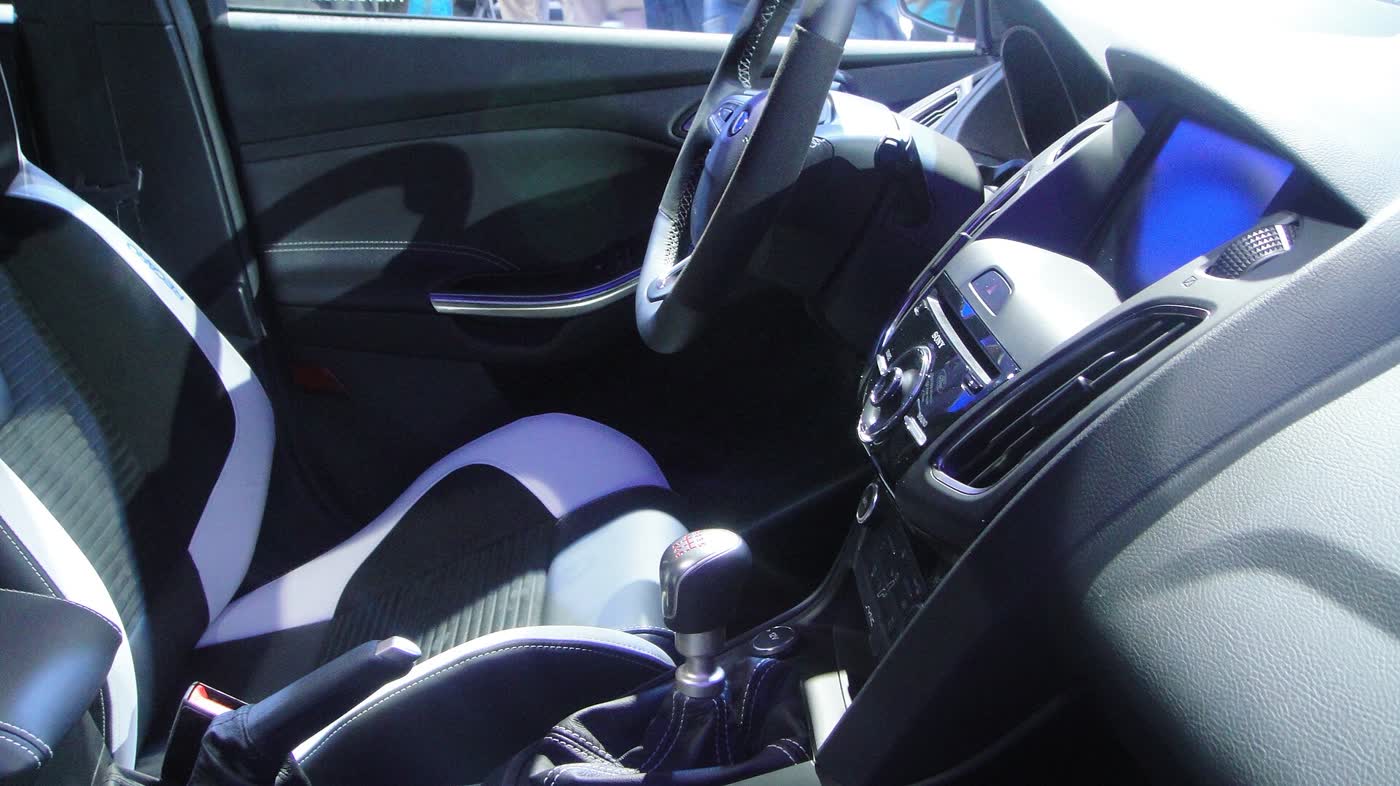
The Daily scores a 7. It is a proper five-door hatch with folding seats, and it belongs in the WRX and Mazdaspeed3 bracket rather than the coupe bracket. Against its own sibling it is roomier by a clear margin, which is most of what the extra $2,430 buys you.
The reason it is not higher is the seats. The Recaros are the car's signature and they are wonderful to sit in, but the fixed bolsters eat rear knee room that an ordinary Focus has. If you regularly carry adults in the back, sit in the back before you buy.
| Figure | Focus ST (2013-2018, 2.0 EcoBoost, 6MT) | Source |
|---|---|---|
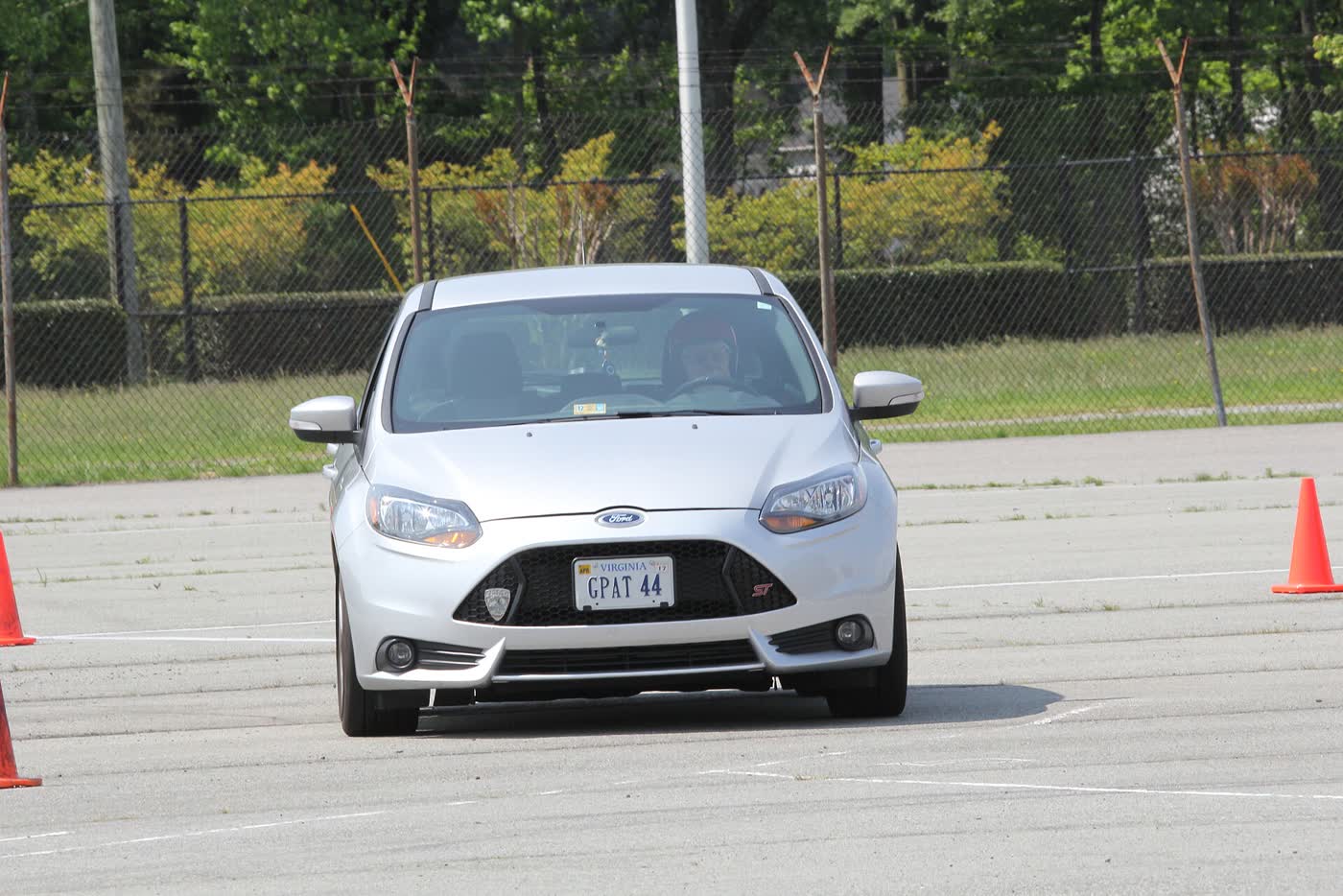
| SCCA Solo class | H Street (HS) * | 2026 SCCA Solo Rules, Appendix A: Focus ST (2013-18) is listed in H Street |
| Differential | OPEN, brake-based Torque Vectoring Control | CJ Pony Parts |
| Factory tire | 235/40R18 Goodyear Eagle F1 Asymmetric 2 | tiresize.com |
| Lateral grip | 0.93 g, 2013 car on Goodyear Eagle F1 Asymmetric 2 summer tires | Edmunds track test |
| Braking | 112 ft, measured 60-0 | Edmunds track test |
SCCA H Street · shared with the Fiesta ST, the Golf GTI, the Civic Si, the GTI Mk6 and the Mazdaspeed3 on this Board.
The Limit scores a 6, on hardware and reputation rather than on figures, because no instrumented grip or braking number for the scored car was found.
The chassis is well sorted and widely liked, and the factory rubber is serious: 235-section Goodyear Eagle F1s on 18-inch wheels is more tyre than most of this tier gets. What holds it to a 6 is 3,223 lb of curb weight and an open differential. Ford fits brake-based torque vectoring, which brakes the inside front wheel to imitate a limited-slip. It works, and it is not the same thing. The Civic Si has a helical limited-slip as standard equipment, and against that this car is asking the brakes to do the differential's job.
The class carries an asterisk because it comes from our tier brief rather than a direct read of the 2026 Appendix A, and it is part of a manual pass still pending across six cars in this tier. Check it before you enter anything.
| Figure | Focus ST (2013-2018, 2.0 EcoBoost, 6MT) | Source |
|---|---|---|
| Cost per +100 whp | Not captured | no installed figure sourced |
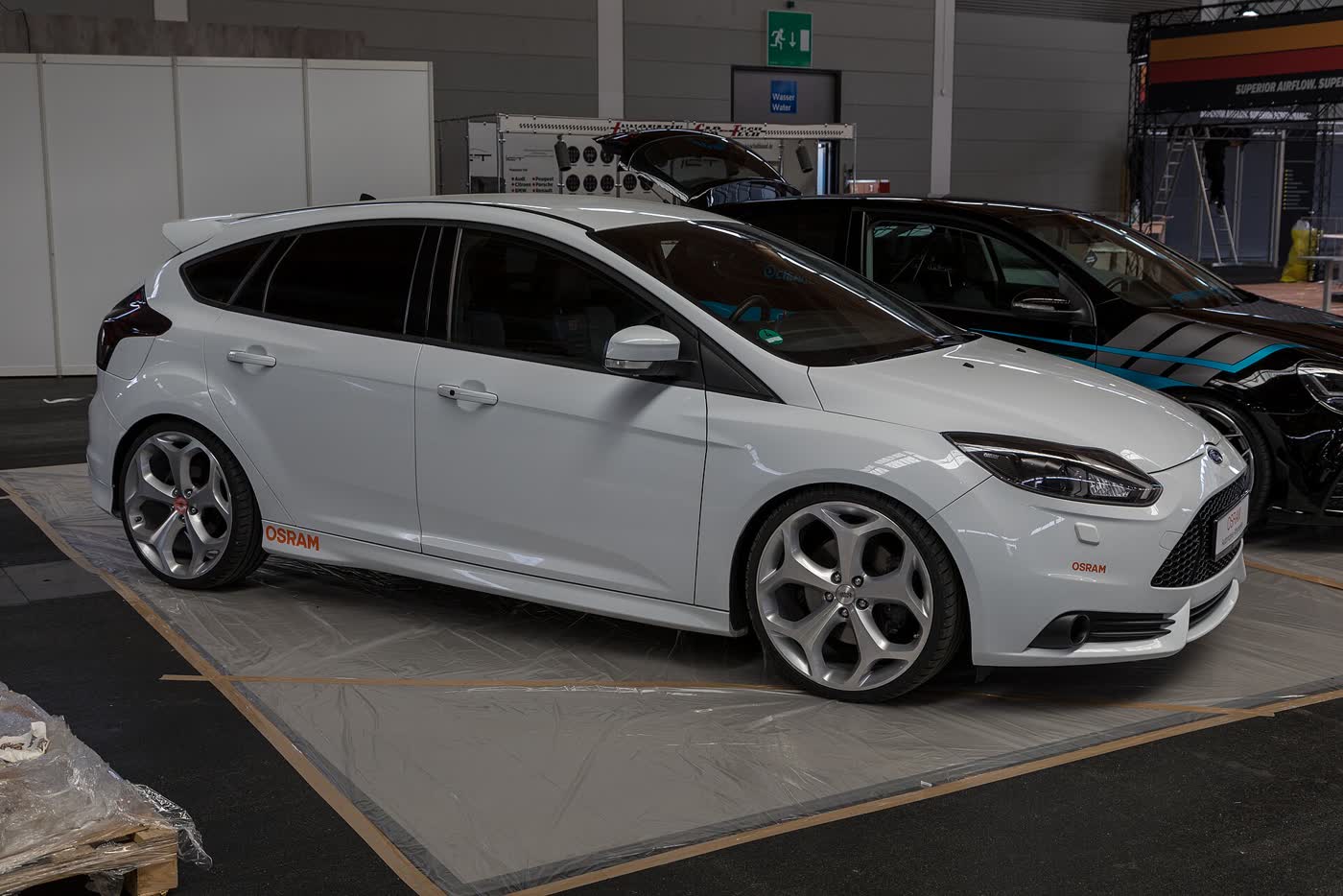
| Aftermarket | Elite, deep and mature | derived from the sources below |
The Mods scores a 7. The aftermarket is excellent and the 2.0 EcoBoost responds very well to a flash, so the ceiling and the parts availability are both there.
The first thing to buy is not power. It is the rear motor mount. That is the same answer the Mazdaspeed3 gets and for the same reason: the engine will happily take more, and the chassis hardware will not. Adding torque before the mount goes in sends it straight into the two things already known to fail, the mounts and the MMT6 gearbox.
So the modification path here is partially self-limiting rather than free. That is better than the WRX, where the enthusiasm and the failure are the same activity, and worse than a car where you can just add power and drive.
We publish no cost per 100 wheel horsepower, because no installed price for a flash plus the supporting work was sourced, and an invented figure would make a build look priced when it is not.
43 out of 70. Buy it only if your own insurance quote comes back nothing like ours.
This is the car the budget tier is supposed to reward. It is quick, it is roomy, the chassis is good, the aftermarket is deep, and the failure list holds nothing that can end it. On the things a car does, it is one of the better answers here.
It scores a 44 because of what it costs to keep. $6,092 a year, 60 percent of the purchase price, and $3,516 of that is insurance. Nothing the car does wrong causes that number, which is why the verdict is conditional rather than negative.
So the instruction is unusually simple. Get an insurance quote in your own name before you shop, not after. If it comes back anywhere near what MoneyGeek says, buy the Fiesta ST instead: it is $2,430 cheaper, insures for $1,008 a year less, and gives up 55 horsepower and some room. If your quote comes back nothing like ours, this car is better than its score and you should go and enjoy it.
Then, when you go to look at one: feel for vibration at idle through the wheel and the seat, and use all six gears and reverse.
We scored the Focus ST as a 2013 to 2018 car with the 2.0 EcoBoost and the six-speed manual, and it landed at 43 out of 70, with a verdict of Buy it only if your own insurance quote comes back nothing like ours.
Here is the short version, and it is an unusual one. This car does almost everything right. It is quick, it is roomy, the chassis is good, and its failure list contains nothing that can end it. It scores a 44 anyway, because it costs $6,092 a year to keep and $3,516 of that is insurance.
Nothing the car does causes that number. Which is why the verdict is conditional on a phone call rather than on a test drive.
Ten thousand two hundred and thirty dollars, for a 2015 ST hatchback in Good condition at 120,000 miles, private party, from Kelley Blue Book. The range runs $7,955 to $10,780.
Two things about that figure.
It is $230 over the ceiling of our own budget tier, which is $5,000 to $10,000. We kept the car in on purpose, because $230 is not a reason to exclude something people are cross-shopping, but we scored it on the overshoot instead of waiving it. A band you waive is not a band.
And it is $2,430 more than the Fiesta ST's $7,800. That buys 55 more horsepower and a noticeably roomier car, which is a fair trade on its face. Hold that thought until the insurance section, because it is where the two Fords stop being a fair fight.
At $40.6 per horsepower this sits between the NC Miata's $41.8 and the Mazdaspeed3's $32.6.
One number we saw and did not publish: a 2014 range of $4,300 to $6,000, which is not credible against $7,955 to $10,780 for a 2015 car. We left it out rather than repeat something we think is wrong.
Quick, and quicker than the numbers suggest in normal driving. Two hundred and seventy lb-ft at 2,500 rpm is the figure that shapes it: the torque is simply there, low down, all the time, and 5.9 seconds to 60 is the result.
For scale against the rear-drivers in this tier, the G37 does 5.4 seconds and the 350Z 5.6. Against its own kind, treat it as level with the Mazdaspeed3 rather than quicker: our 5.9 is single-sourced, the Mazdaspeed3's 6.2 comes from a different source, and that car has the better power-to-weight at 12.5 against 12.8. A 0.3 second gap across two sources is not a real gap.
The chassis is good, especially after the 2015 refresh brought new springs, stiffer dampers and recalibrated steering. What it lacks is a mechanical limited-slip differential: Ford fits brake-based torque vectoring, which brakes the inside front wheel to imitate one. It works well enough. It is not a diff, and 270 lb-ft through the front wheels finds the difference.
One footnote worth knowing before someone quotes the power figure at you: Ford rates 252 hp on 93 octane. It is a best-fuel number.
No, and this is the whole review.
About $6,092 a year, which is 60 percent of what the car costs to buy. The 350Z, a car with twice the cylinders, costs $5,200.
The fuel is fine. Twenty-six miles per gallon combined from fueleconomy.gov works out to $1,846 a year on our assumptions, which is unremarkable for the performance.
Insurance is $3,516, from MoneyGeek's trim-level figure of $293 a month for the ST Hatchback. That is 40 percent more than the Fiesta ST's $2,508, 59 percent more than the GTI Mk6's $2,208, and 34.4 percent of the car's value every single year.
We are leaning hard on one number to reach a verdict, so here is exactly how good it is. It is broken out at trim level rather than blended across the range, which is better than most of this tier gets. It comes from the same table and profile as the Fiesta ST's figure, so comparing the two Fords is fair. But it is not year-split, so a 2013 and a 2018 sit in the same number, and MoneyGeek's own Focus table spans $126 a month for a base car to $482 for the RS, which is a wide range for the ST to sit near the top of.
So make the call before you shop. Your own quote is the single most useful thing you can do about this car, and it takes ten minutes.
There is also a genuine octane conflict here that we could not resolve: Edmunds says premium recommended, fueleconomy.gov says regular for the same drivetrain, and Ford rates the power on 93. We publish 91 for consistency with how we handled the NC Miata. The spread is $462 a year and it does not change the conclusion, because the annual stays above $5,800 whichever answer is right.
Less drama than most of this tier, and that is the point.
There is no catastrophic failure to price in. What you should budget is the near-universal motor mount job at $300 to $600, a clutch at some point if the previous owner was hard on it, and then the ordinary running cost. Nothing here can turn into an engine-out weekend.
The running cost is what gets you, and it gets you every year rather than once.
Yes, in the way that matters: there is no catastrophic mode on this car at all. No pressure-fed timing chain like the GTI Mk6, no oil gallery gasket like the G37, no ringland like the WRX, no rotary service life like the RX-8. It is a benign list.
What it has instead is one thing that nearly every example needs. The rear and lower motor mounts collapse, sometimes early, and the symptoms are easy to catch: vibration through the steering wheel and the seat at idle, and wheel hop when you accelerate. Budget $300 to $600 and treat it as maintenance rather than a problem.
That is the same pattern the Mazdaspeed3 has, and the repeat is instructive. Two front-drive turbo hatches, 270 and 280 lb-ft, both sending it through rubber mounts sized for an economy car.
The other item to check yourself is the gearbox. The MMT6 has reported shift fork and synchro trouble, so use all six gears and reverse on the test drive, both cold and warmed up.
And one thing that is not on the list, despite what our own site might suggest. Our Focus RS page is scoped to cars with verified head-gasket work under Ford's Program 17B32. That is real, and it is about the RS. It does not carry over to the ST: different engine, 2.3 litre versus 2.0, different programme, and owners report the two are unrelated. If you clicked here from that page, take the head gasket off your worry list.
Comfortably. It is a five-door hatch with folding seats, and it sits in the same practical bracket as the WRX and the Mazdaspeed3 rather than with the tier's coupes. Against its own sibling it is roomier by a clear margin, and that is a real part of what the extra money buys.
The one caveat is the front seats. The Recaros are the best thing about sitting in this car and their fixed bolsters eat rear knee room that an ordinary Focus has. If adults ride in the back regularly, get in the back before you buy.
No CarPlay in these years, which is a phone mount rather than a dealbreaker.
It classes as H Street, and our Limit score of 6 rests on hardware and reputation, because no instrumented grip or braking figure for the scored car was found.
The hardware is good: 235-section Goodyear Eagle F1 Asymmetric 2 tyres on 18-inch wheels from the factory, and ST-specific suspension that got better in 2015. What holds it back is 3,223 lb and the open differential. The Civic Si has a helical limited-slip as standard, and this car is leaning on brake-based torque vectoring to do that job instead.
The class read comes from our tier brief rather than a direct Appendix A check, so verify it against the current rulebook before you enter.
Yes, and the order matters more than the parts.
The aftermarket is excellent and the 2.0 EcoBoost takes a flash very well, so power is easy and cheap to find. Buy the rear motor mount first anyway. The engine will take more than the chassis hardware will, and adding torque before the mount goes in loads the two things already known to fail: the mounts and the MMT6 gearbox.
That makes the modification path partly self-limiting, which is a better position than the WRX is in, where modifying is the main route to the catastrophic failure. Here you are managing wear rather than courting a grenade.
We have not published a cost per 100 wheel horsepower, because no installed price for a flash plus the supporting work was sourced.
Same brand, same era, same idea, and five points apart on our Board. Every one of those points is money rather than driving.
The Focus ST is $10,230 with 252 hp and a roomy cabin. The Fiesta ST is $7,800 with 197 hp and a small one. On the road, the Focus is quicker and more comfortable, and the Fiesta is the more playful car at 2,742 lb.
Then the running costs land. The Fiesta ST runs on regular and costs $4,556 a year all in. The Focus ST costs $6,092. The insurance line alone is $2,508 against $3,516.
So the Fiesta ST is the default answer, and the Focus ST is what you buy when you need the space, or when your own insurance quote comes back nothing like the published figure. Those are the two honest reasons, and they are both good ones.
Buy it only if your own insurance quote comes back nothing like ours. Forty-four out of seventy.
We want to be fair to this car, because a 44 undersells what it is. It is quick, it is practical, the chassis is sorted, the aftermarket is deep, and it has no catastrophic failure mode. Judged on what it does, it is one of the better cars in this tier.
Judged on what it costs to keep, it is $6,092 a year against a $10,230 purchase, and the insurance line is doing that on its own.
So the first thing to do is not a test drive. Get a quote in your own name. If it lands near $293 a month, buy a Fiesta ST and put the difference in the bank. If it lands nowhere near that, this car is better than its score says and you should go and buy one.
Then when you do: vibration at idle through the wheel and seat, and all six gears plus reverse.
Filming reference: cue sheet · for the hosts on set, not part of the review.
The frame that closes our video: the Focus ST at 43/70, with the Fiesta ST and the Mazdaspeed3 alongside.