2010-2014 · EA888 Gen 2 · 6MT
Six point seven seconds to sixty and $45.4 per horsepower, and still probably the one most people should buy. The catch is a timing chain due by VW's own schedule at exactly 120,000 miles, out of warranty on every car in the band. Start it stone cold and listen.
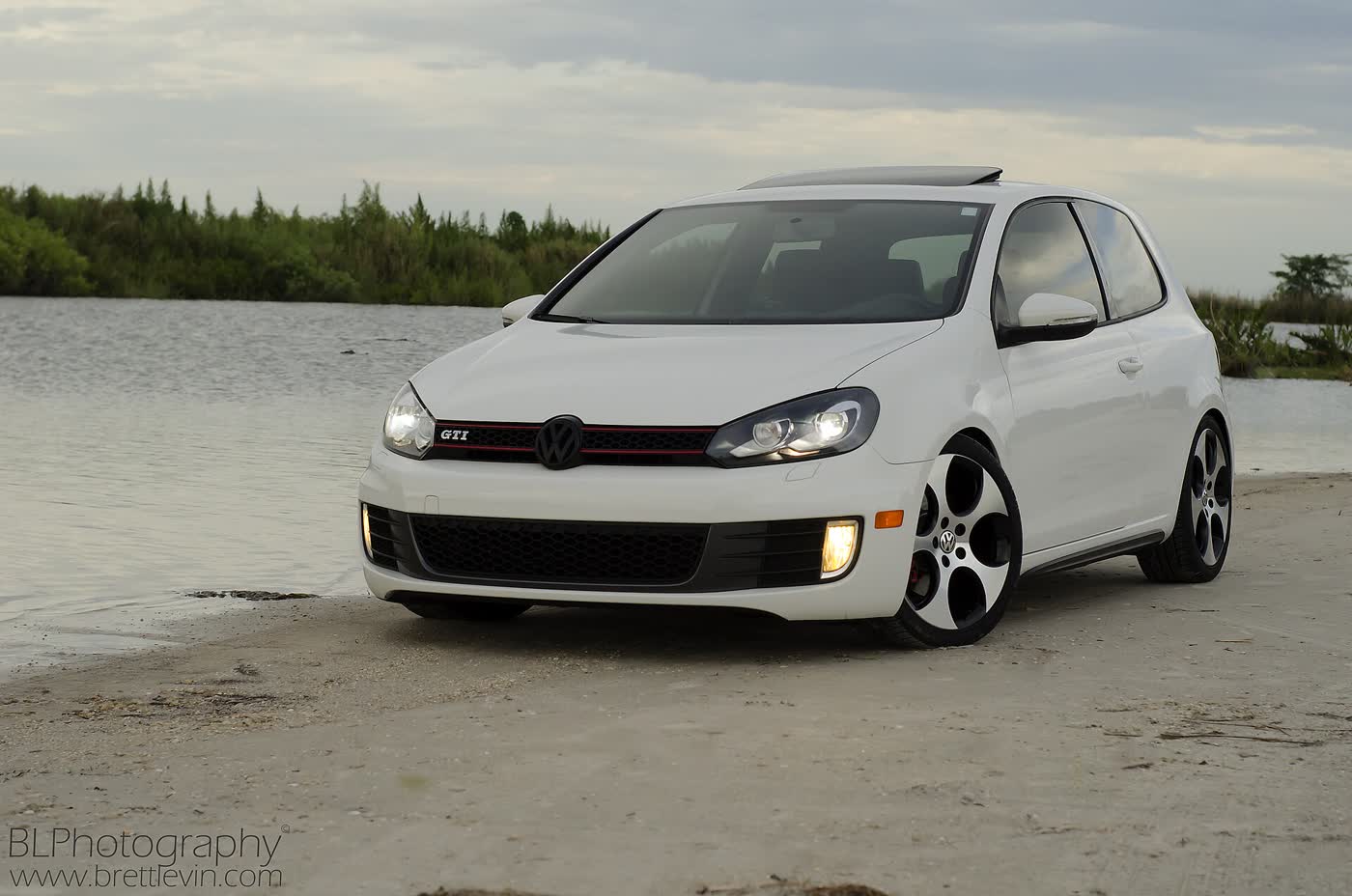
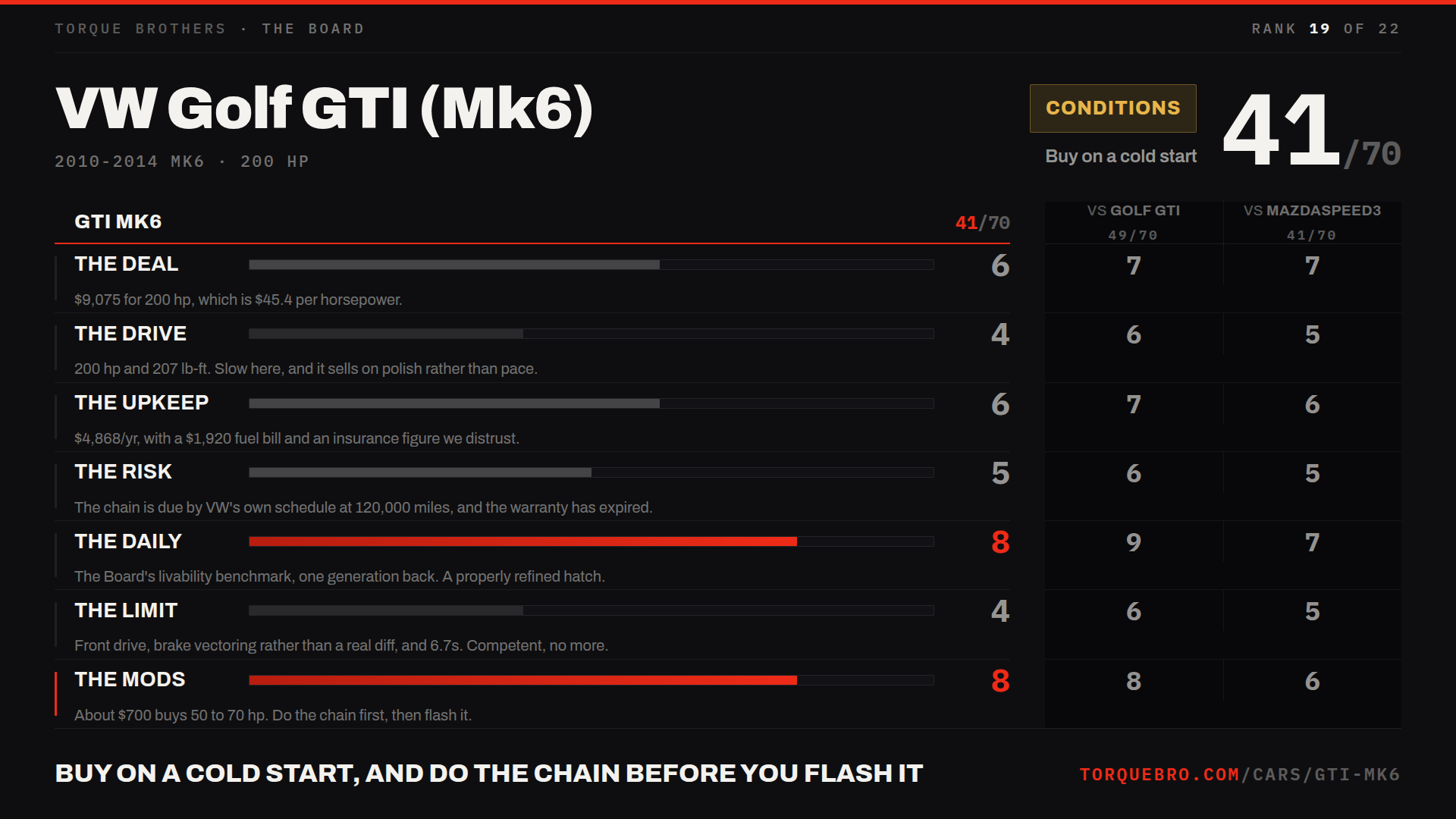
We scored the car as a 2010 to 2014 Mk6 GTI with the EA888 Gen 2 and the six-speed manual, and it landed at 41 out of 70, with a verdict of Buy on a cold start, and do the chain before you flash it.
This car is for someone who wants one car that is pleasant every day, quick enough, and cheap to make quicker. It is not fast for the money and this guide says so early, because the case for it is made in other categories entirely.
All money figures use a fixed set of assumptions so they can be compared to other cars we cover: 12,000 miles a year, premium fuel at $4.00 a gallon, and full coverage insurance. Prices are Kelley Blue Book private-party at 120,000 miles in Good condition, which is the flat basis this whole budget tier uses. The insurance figure on this car is one we do not fully trust, and The Upkeep explains why.
| Figure | GTI Mk6 (2010-2014, EA888 Gen 2, 6MT) | Source |
|---|---|---|
| Used buy-in, private party | $9,075 | KBB |
| Condition basis | 120,000 miles, Good | KBB |
| Full condition range | $7,250 to $9,550 | KBB |
| Dollars per horsepower | $45.4/hp, against the NC Miata's $41.8 | derived: $9,075 divided by 200 hp |
~ our estimate, not a measured or quoted figure · * there is a caveat, and the note under the table explains it. Why we mark figures
The Deal scores a 6, and we may as well be blunt about it. You are not buying this car for the numbers. Nine thousand and seventy-five dollars for 200 horsepower is $45.4 per horsepower, which is more than the NC Miata's $41.8 and a long way from what the tier's rear-drive coupes charge.
If your decision is being made on a spreadsheet, this car loses it, and the rest of this guide is the argument for why the spreadsheet is not the whole story.
One thing that is good here: the price band is tight. $7,025 to $9,375 across three model years, against the Mazdaspeed3's 3.5 times spread on a single year. GTIs hold value predictably, and that cuts both ways: you will not find a bargain, and you will not lose much either. It also means a cheap one is usually cheap for a reason rather than because somebody wanted rid of it.
A correction we owe you: our research file had this car and the NC Miata the wrong way round on dollars per horsepower. The figures above are the current ones.

| Figure | GTI Mk6 (2010-2014, EA888 Gen 2, 6MT) | Source |
|---|---|---|
| Power | 200 hp | Cars.com |
| Torque | 207 lb-ft | Cars.com |
| 0 to 60 mph | 6.7 sec | MyCarSpecs |
| Curb weight | 2,906 to 3,113 lb, unresolved | see below |
| Power-to-weight | Not captured | see below |
| Engine | 2.0T EA888 Gen 2 | Cars.com |
The Drive scores a 4, and this is the category where the car is outgunned. Six point seven seconds to 60 is not quick against this tier, and 200 horsepower is the smallest number in the budget group.
What it sells instead is torque delivery, chassis polish and an interior that feels a class above the price. It is a car that flatters you on an ordinary road at ordinary speeds, which is a real quality and one that does not show up on a stopwatch.
We publish no power-to-weight figure for this car at all, and that is deliberate. The curb weight is a three-way conflict: Edmunds gives 3,113 lb, other sources give 2,906 and 3,034. That is a 207 lb spread, and it moves power-to-weight from 14.5 to 15.6 lb per hp depending on which you believe. Edmunds is trim-level and US-market so it is probably the most trustworthy, but its page does not state which body style or transmission it is describing. Rather than pick one and present it as settled, the figure reads Not captured until somebody weighs one.
The engine and output figures come from Cars.com rather than VW's own media sheet, because that sheet is CAPTCHA-gated and we could not verify it.
| Figure | GTI Mk6 (2010-2014, EA888 Gen 2, 6MT) | Source |
|---|---|---|
| Total annual running cost | ~$4,868/yr | sum of the lines below |
| Fuel | ~$1,920/yr | derived from our fixed assumptions |
| Insurance, full coverage | ~$2,208/yr * | MoneyGeek |
| Tires, amortized | ~$240/yr | our estimate |
| Routine service | ~$500/yr | our estimate |
| Fuel economy, 6MT | 25 mpg combined (21/31) | fueleconomy.gov |
| Octane | 91, premium | fueleconomy.gov |
The Upkeep scores a 6, and the interesting thing is the shape of it rather than the total.
The fuel line is good. Twenty-five miles per gallon combined out of a 200 horsepower turbo works out to $1,920 a year, against the Focus ST's $1,846 on a bigger engine and the Fiesta ST's $1,448 on regular. For a car of this performance, that is the real efficiency story.
The insurance line is one we do not trust, and we would rather tell you than let it sit there looking authoritative. The $2,208 comes from MoneyGeek's GTI S trim table, which is Group A per our ratified ruling and keeps the whole tier on one basis. The problem is that the table blends Mk6, Mk7 and Mk8 cars, which is three generations spanning 2010 to 2025. Newer and more expensive cars inflate the average, and a 2013 Mk6 should insure below the Mk7 rather than above it.
That matters for one comparison in particular. The Mk6 versus Mk7 question is the whole reason people look at this car, and we cannot answer it in dollars. The Mk7 sits in a different insurance group on a different source, so putting the two figures side by side would be comparing methodologies rather than cars. We will say the Mk6 ranks below. We will not say by how much, and you should assume our figure overstates this car.
The upshot: the $4,868 total is real, and it is probably pessimistic.

| Figure | GTI Mk6 (2010-2014, EA888 Gen 2, 6MT) | Source |
|---|---|---|
| Worst realistic repair | ~$2,500 timing chain and tensioner | our estimate |
| VW tensioner interval | 120,000 miles, exactly our basis | VW Tuning |
| Detection | Cold-start rattle, free to check | VW Tuning |
| Warranty extension | Expired on every car in the band | see below |
The Risk scores a 5, and the reasoning is unusual: the failure here is catastrophic, and it is also scheduled maintenance.
The timing chain tensioner is the item. If it fails, the chain jumps, and the result is piston-to-valve contact and a replacement engine. There is a class-action settlement behind the design. VW issued a technical bulletin covering 2008 to 2013 cars and extended the warranty to 100,000 miles or 10 years.
Read that date carefully. A 2014 Mk6 turned ten in 2024, so every car in this band is now outside that coverage. There is no fallback. Whatever the previous owner did or did not do about it is now your problem.
And here is the part that turns this from a risk into arithmetic: VW's own maintenance schedule recommends replacing the tensioner every 120,000 miles, which is exactly the mileage this Board prices at. So on a car at our condition basis, this is not bad luck you might avoid. It is a job that is due by the manufacturer's own schedule, and you should treat it as a line item rather than a probability.
The good news is how cheap it is to check. A cold-start rattle and an intermittent low-oil-pressure warning are both free. This tier has three cars with a precursor-then-catastrophe pattern, and the tools get progressively simpler: the Mazdaspeed3 needs a laptop and a datalog, the WRX needs a compression tester, and this one needs a cold engine and a pair of ears.
So do not accept a pre-warmed car. If you turn up and the engine is already running or the bonnet is warm, come back another day. That is the single most useful thing you can do on this purchase, and a seller who will not accommodate it has told you something.
Behind the chain sits its root cause, a camshaft oil screen that can break loose. You cannot inspect for that, which is another reason the schedule matters more than the odds.
| Figure | GTI Mk6 (2010-2014, EA888 Gen 2, 6MT) | Source |
|---|---|---|
| Seats / doors | 5 / 4, hatchback | Edmunds |
| Cargo | Not captured | no figure sourced |
| Infotainment | No CarPlay | our estimate |
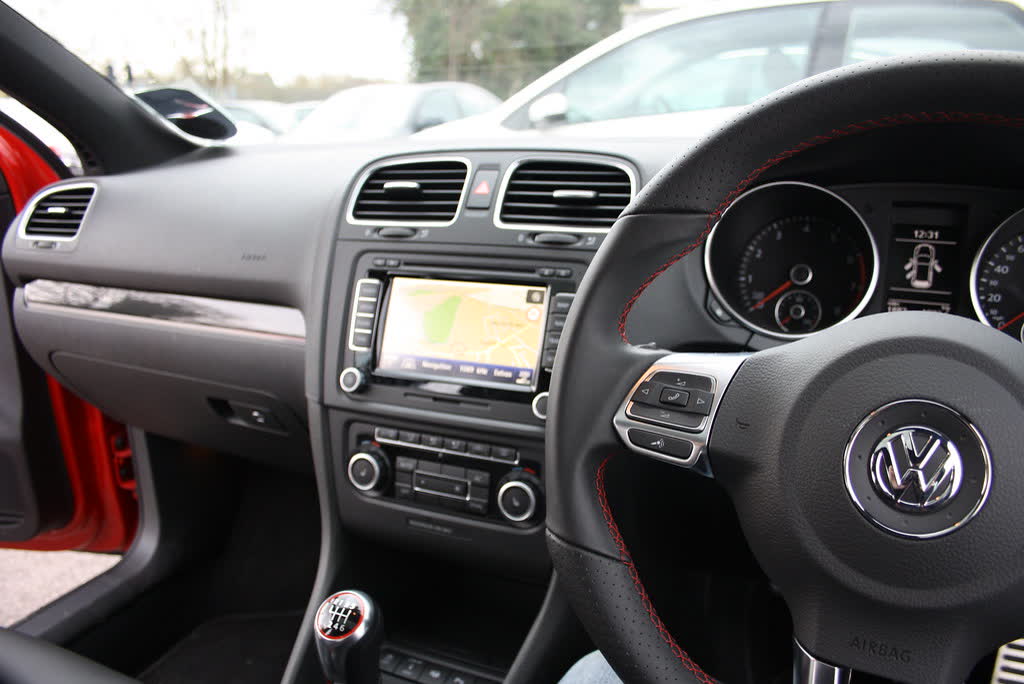
The Daily scores an 8, and this is the category that makes the case for the whole car.
It is a refined hatchback with a usable back seat, a good driving position and an interior that still feels expensive fifteen years on. Our Board already scores the Mk7 GTI a 9 here, and this is the same formula one generation back.
Against the tier's other practical cars it lands where you would expect. It is arguably ahead of the WRX hatch on refinement and behind it on all-weather ability, which is why the two score level. If your roads are dry and your priority is a car you enjoy sitting in every day, this is the answer. If they are not, the WRX is.
| Figure | GTI Mk6 (2010-2014, EA888 Gen 2, 6MT) | Source |
|---|---|---|
| SCCA Solo class | H Street (HS) * | SCCA Classification Assistant |
| Differential | XDS brake-based torque vectoring | see below |
| Lateral grip | 0.87 g, 2010 car on all-season Continentals | Edmunds track test |
| Braking | 130 ft, measured 60-0, all-season tires | Edmunds track test |
SCCA H Street · shared with the Fiesta ST, the Golf GTI, the Civic Si, the Focus ST and the Mazdaspeed3 on this Board.
The Limit scores a 4. The chassis is well sorted and the car is competent rather than exciting, and this is the one category where competent is not enough to carry it.
There is no mechanical limited-slip differential. VW fits XDS, which brakes the inside front wheel to imitate one; the Mk7's VAQ electronic diff arrived a generation later. We used to score that as the same arrangement the Focus ST and the Mazdaspeed3 have, and less of a problem here because 207 lb-ft is not 270 or 280. That reading gave the car credit for a weakness it merely suffers less from. Less torque to mishandle is not the same as handling it.
What it has to put against the tier is thin. 6.7 seconds to 60, against the Focus ST's 5.9 and the Mazdaspeed3's 6.2. No instrumented grip figure and no braking figure for the scored car. Brake-based vectoring instead of a differential. The Mazdaspeed3 turns up with an open diff, which is the worse hardware, and still takes this category 5 to 4 because it turns up with numbers.
The class carries an asterisk on top of that. The 2026 Appendix A extraction places the Golf GTI in a grouping with the Beetle, Passat, Jetta GLI, Scirocco and Toyota Yaris, which is unambiguously H Street company, but no running header was visible in context and we do not promote a class read on inference. There is also a separate Street Prepared listing for Limited Prep cars, which is a different category and not what most people are entering.
None of this argues against the car. It argues against taking it to an autocross and expecting the Deal, Daily and Mods scores to show up with you.
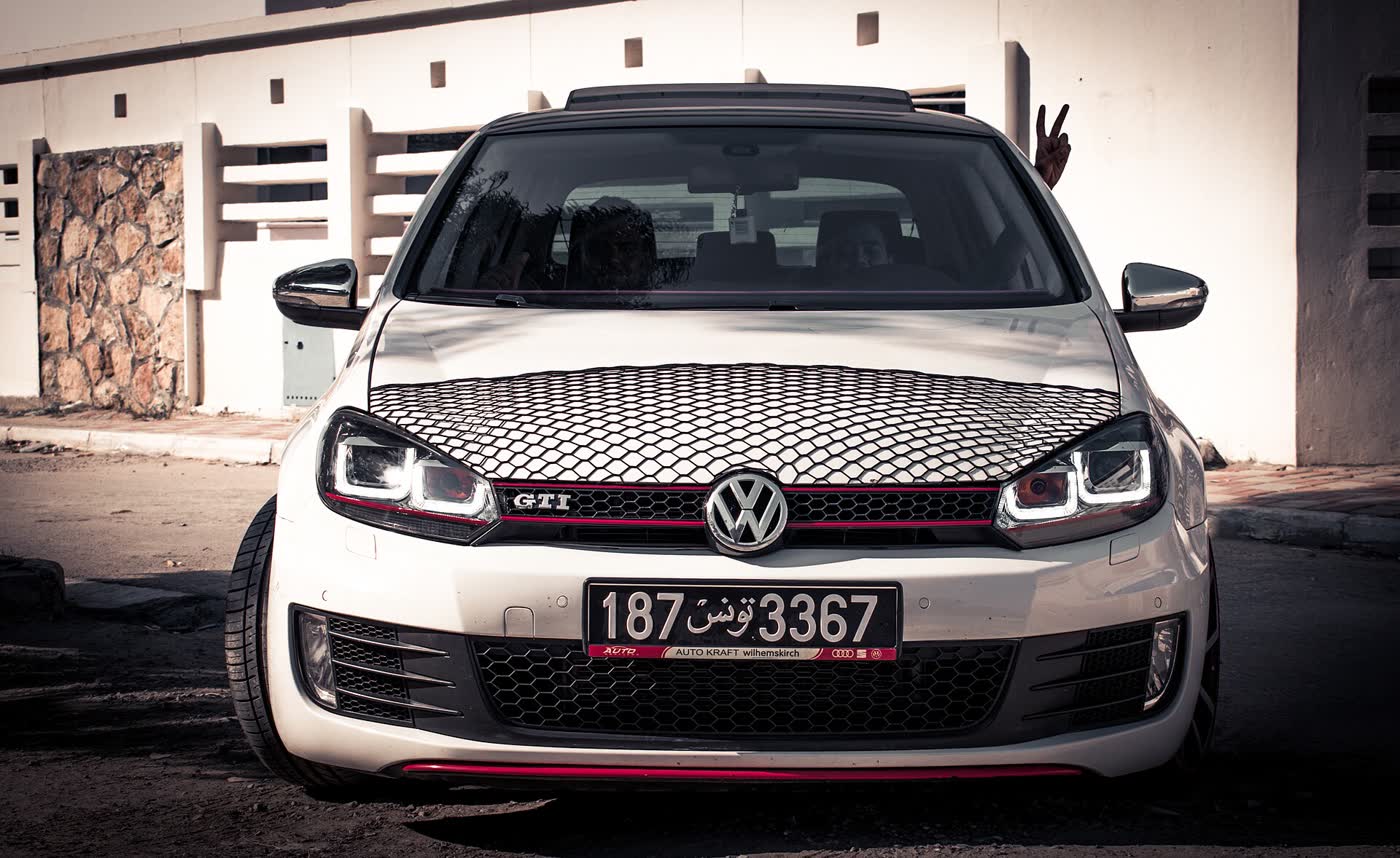
| Figure | GTI Mk6 (2010-2014, EA888 Gen 2, 6MT) | Source |
|---|---|---|
| Stage 1 flash | ~$700 for +50 to 70 hp | Board gti-mk7 node, same engine family |
| Aftermarket | Elite: APR, Unitronic, Integrated Engineering | derived |
The Mods scores an 8, and this is where the car answers The Deal's complaint.
About $700 buys 50 to 70 horsepower. On a $9,075 car that is cheap power by any measure, and a flashed Mk6 makes Mk7 numbers for a fraction of what a Mk7 costs. If the 200 horsepower figure was what put you off in The Drive, this is the section that fixes it.
With one prerequisite, and it is not optional. Do the chain first, then flash it. Adding 60 horsepower to an engine whose timing chain is out of warranty and due for replacement by the manufacturer's own schedule is spending money in the wrong order. This is the second time this tier has produced that answer, after the G37's steel-gasket-before-power advice, and it is the same logic both times.
To be precise about the risk, because it would be easy to overstate: more power does not obviously accelerate the chain failure itself, which is oil-screen and tensioner driven rather than load driven. The argument for doing the chain first is not that boost will break it sooner. It is that you are about to spend real money on a car with a known, scheduled, engine-ending job outstanding.
41 out of 70. Buy on a cold start, and do the chain before you flash it.
This car scores 43 while being slow for the money, and it is still probably the one most people reading this should actually buy. That tension is the review.
It wins the two categories that decide whether you are still happy in three years: livability, where it scores an 8, and modification, where $700 transforms it. It loses The Deal and The Drive on paper, and neither of those is what makes someone sell a car.
The catch is real and it is scheduled. The timing chain tensioner is due by VW's own maintenance schedule at exactly the mileage this Board prices at, the warranty extension that used to cover it has expired on every car in the band, and if it goes it takes the engine.
So: turn up to a stone-cold car and listen. Ask for tensioner history and for any record of intermittent low-oil-pressure warnings. Price the chain job into your offer if there is no paperwork. Then, once it is done, spend the $700 and enjoy a car that is considerably better than its 0 to 60 time suggests.
We scored the Mk6 GTI as a 2010 to 2014 car with the EA888 Gen 2 and the six-speed manual, and it landed at 41 out of 70, with a verdict of Buy on a cold start, and do the chain before you flash it.
Here is the short version, and it is a contradiction we are happy to defend. This is one of the slower cars in our budget tier and one of the more expensive per horsepower, and it is still probably the one most people should buy. It wins the categories that decide whether you are still happy with a car in three years, and it loses the ones that look good in a comparison table.
The catch is a timing chain, and the good news is that it costs nothing to check.
Nine thousand and seventy-five dollars, for a 2013 in Good condition at 120,000 miles, private party, from Kelley Blue Book. The range runs $7,250 to $9,550.
That is $45.4 per horsepower, against the NC Miata's $41.8. On the money-per-power measure this is a poor result and we are not going to dress it up.
What is good is the predictability. The price band runs about $7,025 to $9,375 across three model years, which is tight. For contrast, Edmunds appraises a single year of Mazdaspeed3 from $2,565 to $8,860. GTIs hold value in a boring, dependable way, so you will not find a steal and you will not take a bath either. It also means a suspiciously cheap one is usually cheap for a reason.
Pleasant, polished, and slower than you would like on paper. Six point seven seconds to 60, from 200 horsepower and 207 lb-ft.
Two hundred horsepower is less than the WRX's 265 and the Focus ST's 252, and this is a car that sells on something else entirely: the way the torque arrives, the way the chassis is damped, and an interior that feels a class above what you paid. It flatters you on an ordinary road at legal speeds. That is a real quality and it does not appear on any spec sheet.
We publish no power-to-weight figure for this car at all. The curb weight is a genuine three-way conflict: 2,906, 3,034 and 3,113 lb from different sources, which is a 207 lb spread that moves power-to-weight from 14.5 to 15.6 lb per hp. Edmunds is trim-level and US-market, so it is the one we would lean on, but its page does not say which body or gearbox. Picking one and presenting it as settled would be inventing precision, so the figure reads Not captured.
About $4,868 a year, and the shape of that is more interesting than the total.
The fuel line is the good news: 25 mpg combined from fueleconomy.gov on the manual, which works out to $1,920 a year. Getting 200 turbocharged horsepower and that economy out of the same car is the real efficiency story here, and it beats the Focus ST's $1,846 on a much bigger engine only narrowly while making less power.
The insurance line is $2,208, and we do not trust it. It comes from MoneyGeek's GTI S trim table, which is the right source under our ruling for keeping the whole tier on one basis. The problem is that the table blends Mk6, Mk7 and Mk8 cars, spanning 2010 to 2025. Newer, pricier cars pull that average up, and a fifteen-year-old Mk6 should insure for less than a modern Mk7, not more.
Which creates a limit on what we can tell you. The Mk6 versus Mk7 question is the reason most people end up on this page, and we cannot answer it in dollars. The two cars sit in different insurance groups on different sources, so putting the numbers side by side would compare methodologies rather than cars. The Mk6 ranks below. We are not going to say by how much.
Take the $4,868 as real and probably pessimistic.
There is one thing on this car that matters, and it is worth understanding properly rather than as a rumour.
The timing chain tensioner. If it fails, the chain jumps, the pistons meet the valves, and you need an engine. There is a class-action settlement behind the design, and VW issued a bulletin covering 2008 to 2013 cars with a warranty extension to 100,000 miles or 10 years.
Now check the arithmetic on that extension. A 2014 Mk6 turned ten in 2024. Every car in this band is outside that coverage, so whatever the previous owner did or did not do is now entirely your problem.
And here is the part that changes it from a worry into a line item. VW's own maintenance schedule recommends replacing the tensioner every 120,000 miles. Our whole budget tier prices cars at 120,000 miles. So at our condition basis this is not a risk you might dodge. It is a job that is already due by the manufacturer's schedule.
The check is free, and it is the whole pre-purchase inspection. Turn up to a cold car and listen for rattle on startup. Ask about any intermittent low-oil-pressure warnings. That is it.
Our budget tier has three cars where a cheap symptom precedes an expensive ending, and the tools get simpler as you go: the Mazdaspeed3 wants a laptop and a datalog, the WRX wants a compression tester, and this one wants a cold engine and your ears.
Do not accept a pre-warmed car. If you arrive and the engine is already running, or the bonnet is warm, arrange to come back. A seller who will not let you do a cold start has answered the question for you.
Behind the tensioner sits the root cause, a camshaft oil screen that can break loose, and that one you cannot inspect for at all. Which is another reason to treat the schedule as the authority rather than the odds.
If the chain has been done and there is paperwork, an ordinary year: consumables and the usual servicing.
If it has not, budget the chain and tensioner at around $2,500. That is our estimate rather than a quoted figure, and we would rather mark it than pretend to a precision we do not have. Either way, it belongs in your offer rather than in your hopes.
Yes, and this is the best thing about it. Five seats, four doors, a hatchback with folding seats, a usable back seat and a driving position that still feels properly sorted fifteen years on.
Our Board scores the Mk7 GTI a 9 on livability and this is the same formula one generation back, which is why it lands at 8. Against the WRX it is a close-run thing in both directions: this is the more refined car, that one works when the road is covered in snow. Pick on the basis of your weather.
No CarPlay in these years, which is a phone mount.
It classes as H Street, and our Limit score is 6: competent rather than exciting, which is a fair description of this car in general.
There is no mechanical limited-slip differential. VW fits XDS, which brakes the inside front wheel to imitate one, and the Mk7's proper VAQ diff came a generation later. The Focus ST and Mazdaspeed3 have the same arrangement, and with 207 lb-ft rather than their 270 and 280 it is much less of an issue here.
The class read wants an asterisk. The classification assistant puts the Golf GTI in with the Beetle, Passat, Jetta GLI, Scirocco and Yaris, which is H Street company beyond much doubt, but no running header was visible in the extraction and we do not promote a class on inference. There is a separate Street Prepared listing for Limited Prep cars, which is a different thing.
Yes, and this is where the car gets its own back.
About $700 buys 50 to 70 horsepower on this engine family. On a $9,075 car that is remarkable value, and a flashed Mk6 makes Mk7 power for a fraction of Mk7 money. If the 200 horsepower figure was what put you off earlier, this is the paragraph that fixes it. The aftermarket behind it is excellent: APR, Unitronic, Integrated Engineering.
Do the chain first. Not because boost breaks it, and we want to be precise here rather than scary: the tensioner failure is oil-screen driven rather than load driven, so more power does not obviously bring it forward. The reason is simpler. You are about to spend real money on a car that has a known, scheduled, engine-ending job outstanding, and doing them in the other order is how people end up with a very quick paperweight.
This is the second time our budget tier has produced that answer. The G37 wants its steel gasket before power for the same reason.
The WRX finishes 45 to this car's 43, and they are the tier's two practical, quick, five-door answers, so the choice is unusually clean.
The GTI is $9,075, 200 hp, 25 mpg, and the nicer place to sit. The WRX is $8,790, 265 hp, 21 mpg, and it has symmetrical all-wheel drive as standard.
If you live somewhere with real winters, buy the WRX and be relentless about whether it has ever been tuned. Nothing about the GTI's refinement helps you on a snowy hill.
If you do not, buy the GTI. It is the more pleasant car every day, the fuel bill is lower, the failure it carries is scheduled and free to check rather than statistical and invisible, and $700 closes most of the power gap.
Buy on a cold start, and do the chain before you flash it. Forty-three out of seventy.
The honest summary of this car is that it is slow for the money and it is still the sensible answer for most people. It scores an 8 on livability and an 8 on modification, which are the two things that decide whether you still like a car after three years, and it loses on the two things that look good in a comparison table.
The one real hazard is scheduled rather than random, and the inspection for it costs nothing. Show up to a stone-cold engine, listen for rattle, and ask for tensioner paperwork. If there is none, price the job in.
Then flash it, and stop worrying about the 6.7 seconds.
Filming reference: cue sheet · for the hosts on set, not part of the review.
The frame that closes our video: the GTI Mk6 at 41/70, with the Golf GTI and the Mazdaspeed3 alongside.