2007-2008 · VQ35HR · 6MT Coupe
$18.7 per horsepower, and a failure you cannot inspect your way past. Buy it only with the clutch, slave cylinder and gallery gasket already done. The skip case is needing it to be dependable.
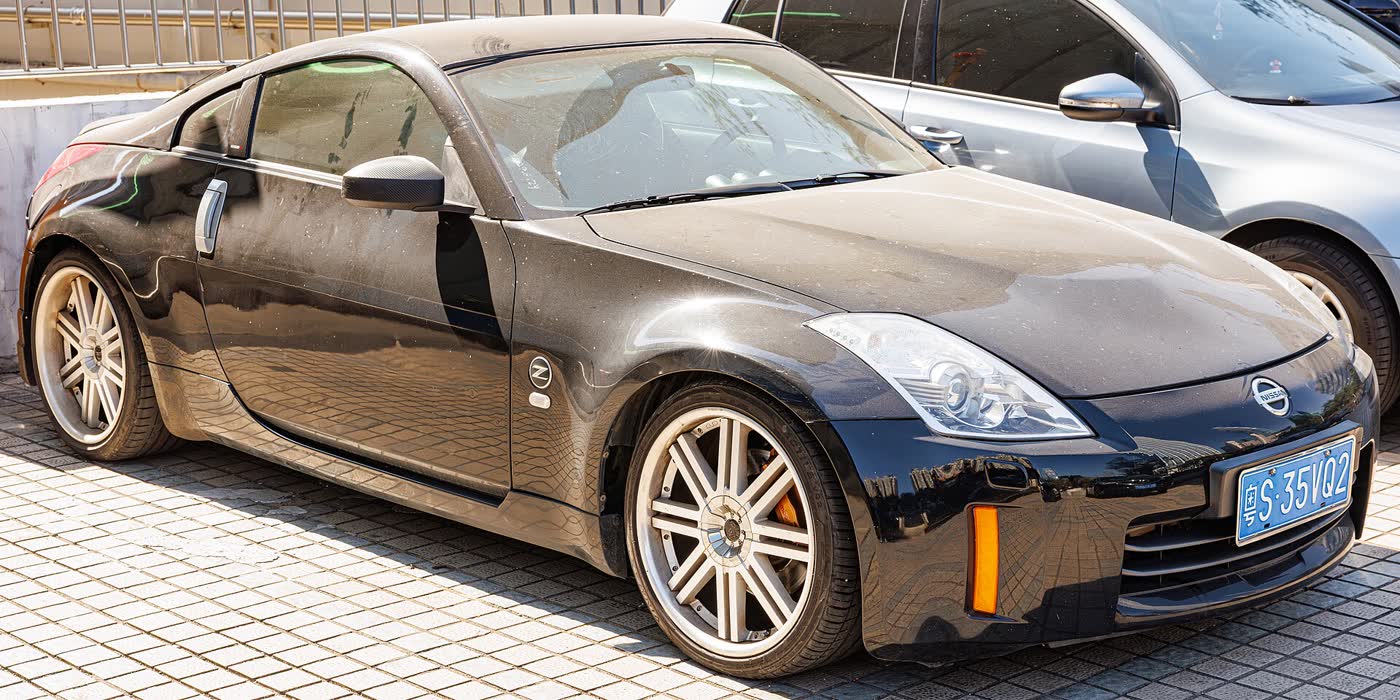
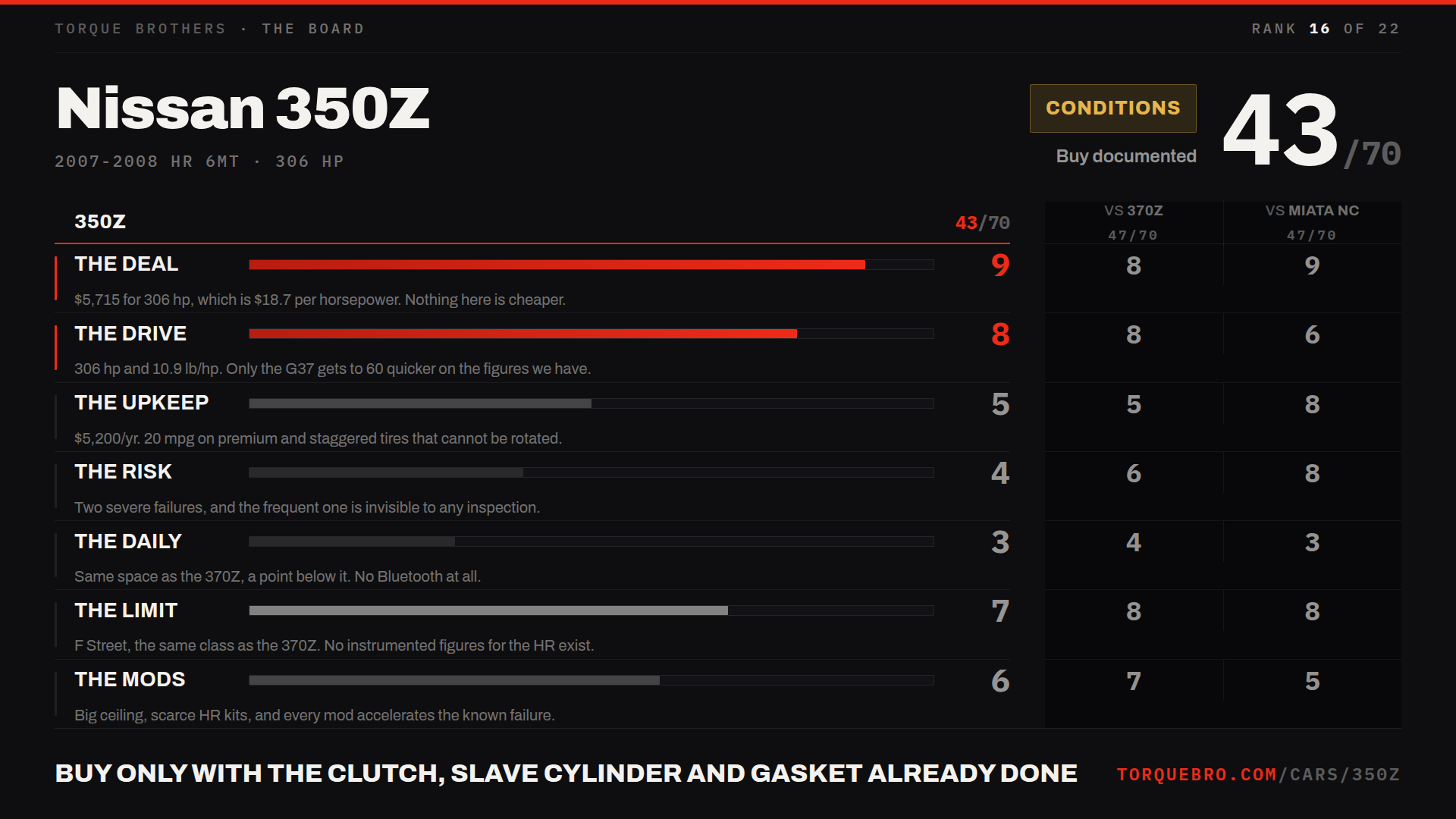
We scored the car as a 2007 or 2008 coupe with the VQ35HR engine and the six-speed manual, and it landed at 43 out of 70, with a verdict of Buy only with the clutch, slave cylinder and gasket already done.
This car is for someone who wants $18.7 per horsepower, and who understands that on this particular car a good inspection cannot protect them. If you were hoping to inspect your way to safety, read The Risk and then go and read our NC Miata review instead, because that car does exactly what this one cannot.
All money figures use a fixed set of assumptions so they can be compared to other cars we cover: 12,000 miles a year, premium fuel at $4.00 a gallon, and full coverage insurance. Prices are Kelley Blue Book private-party at 120,000 miles in Good condition, the flat basis this whole budget tier uses. Insurance is MoneyGeek, the same source and profile as the 370Z, so those two are directly comparable.
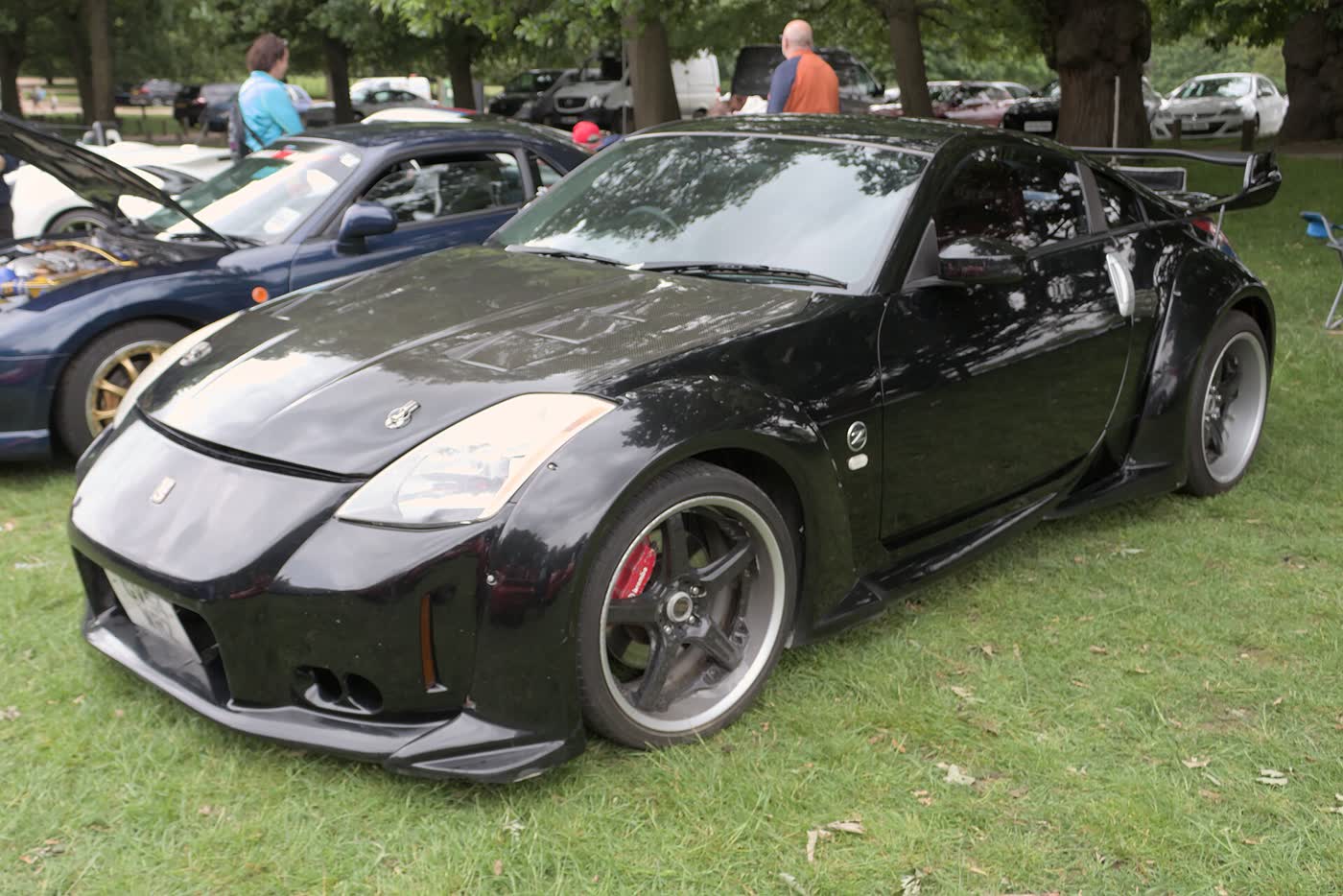
| Figure | 350Z (2007-2008 HR 6MT) | Source |
|---|---|---|
| Used buy-in, private party | $5,715 | KBB |
| Condition basis | 120,000 miles, Good | KBB |
| Full condition range | $4,590 to $6,540 | KBB |
| Dollars per horsepower | $18.7/hp | derived: $5,715 divided by 306 hp |
| KBB private-party, 2008 | $7,850 to $10,500 | KBB 2008 |
| KBB private-party, 2007 | $5,875 to $9,325 | KBB 2007 |
| Trims | Base, Enthusiast, Touring, Grand Touring, NISMO | KBB |
~ our estimate, not a measured or quoted figure · * there is a caveat, and the note under the table explains it. Why we mark figures
The Deal scores a 9, level with the NC Miata despite being a completely different argument. The Miata's case is the price of the car. This car's case is the price of the horsepower. Three hundred and six horsepower for $5,715 works out to $18.7 per horsepower, against the G37's $21.2. The NC Miata is $41.8, the GR86 is $103, the Supra is $110. If what you want is speed per dollar, the search ends here.
There is a real catch and we will spend most of this review on it, but it belongs in this section too, because it changes what the price actually means. A neglected example needs somewhere between $5,400 and $7,700 of work in its first year. That is 94 to 135 percent of what you paid for the car. You can buy this car twice: once from the seller, and once from a workshop. The whole job of this review is helping you avoid the second purchase.
One number on the page is inconsistent and we are flagging rather than hiding it. KBB's 2007 Enthusiast Coupe range comes out at $8,780 to $10,980, which sits above KBB's own stated overall range for 2007 cars of $5,875 to $9,325. A trim or body-style artifact, most likely, but a figure that contradicts its own source is a figure we will not quote until we have resolved it.
Unlike the Miata, the 120,000-mile basis is fair to this car. These were driven. A 120,000-mile 350Z is an ordinary 350Z, so nothing in the numbers below needs discounting for an unrealistic mileage assumption.
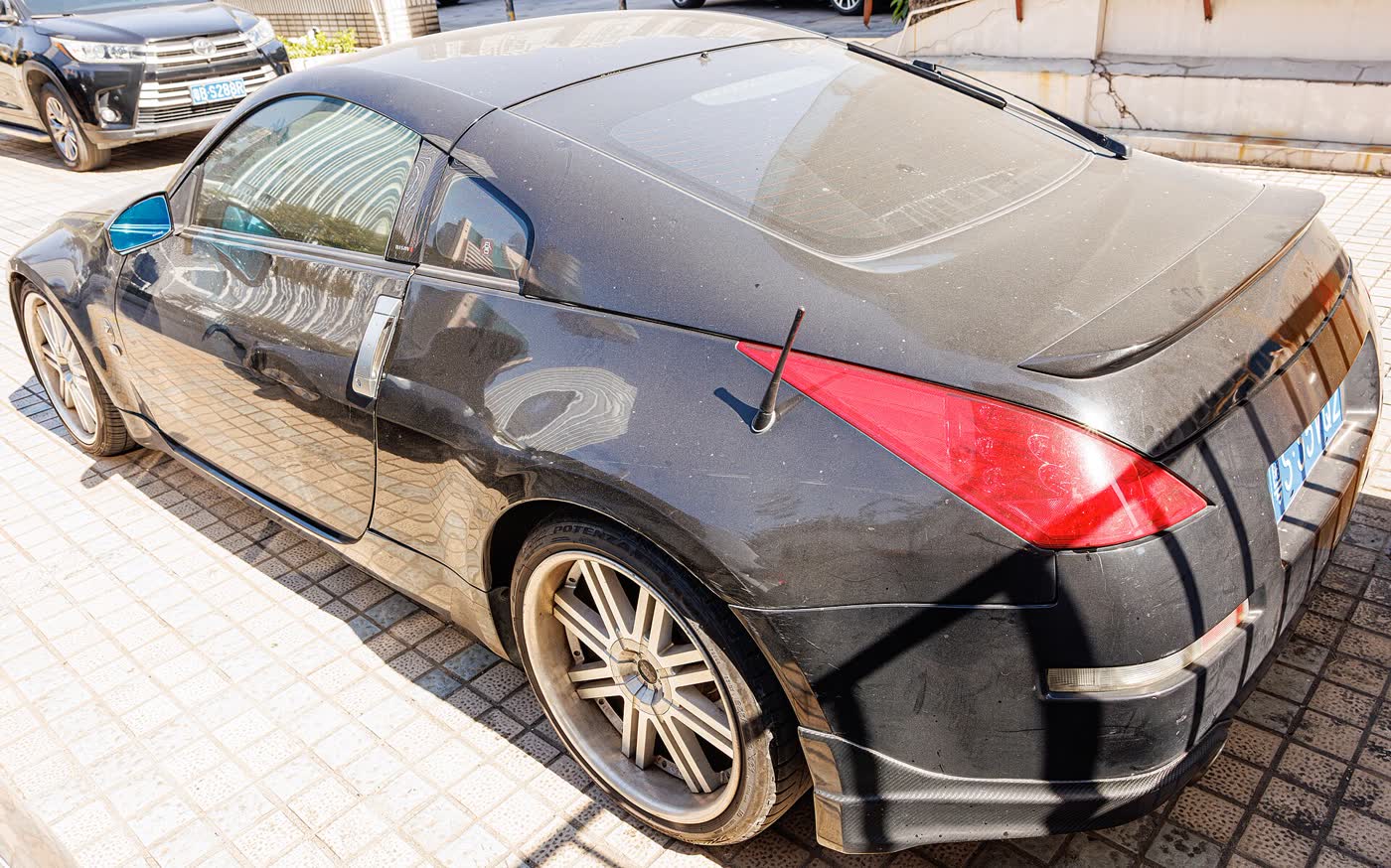
| Figure | 350Z (2007-2008 HR 6MT) | Source |
|---|---|---|
| Power-to-weight | 10.9 lb per hp | derived from the figures below |
| Power | 306 hp at 6,800 rpm | Nissan press kit |
| Torque | 268 lb-ft at 4,800 rpm | Nissan press kit |
| Curb weight | 3,320 lb | Edmunds |
| 0 to 60 mph | 5.6 sec | The Car Connection |
| Redline | 7,500 rpm | engine-specs |
| Engine | 3.5L VQ35HR V6 | engine-specs |
The Drive scores a 8, and this is the half of the car that needs no defending. 10.9 pounds per horsepower beats the GR86 at 12.4, both Miatas, and every other car in the budget tier. Five point six seconds to 60 from a car that costs five and a half thousand dollars is an absurd piece of value, and the VQ35HR revs to 7,500 with real appetite rather than tailing off the way the older engine did.
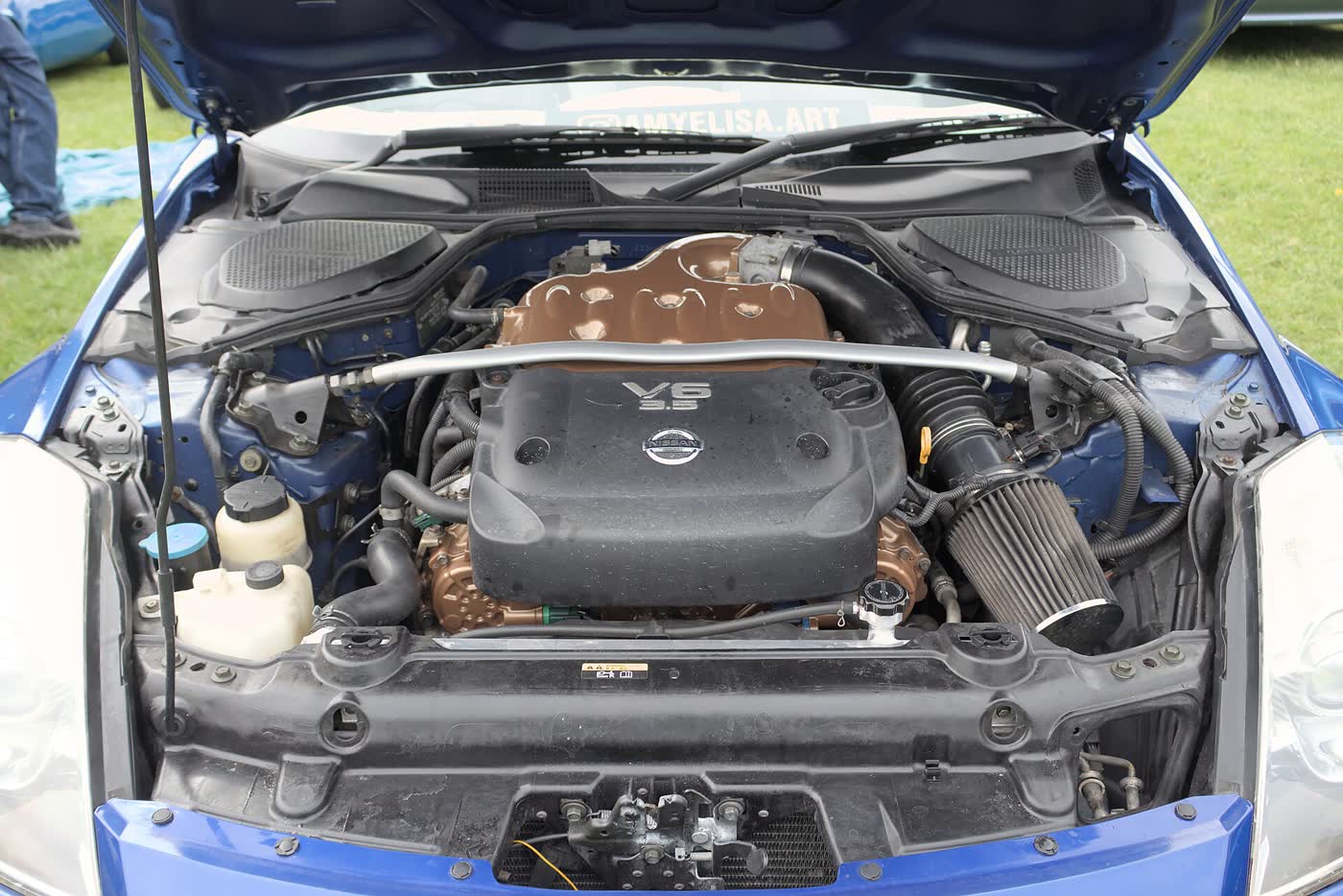
The engine is worth understanding, because Nissan fitted three different ones to this car and only one of them is the one you want. The 2003 to 2005 cars have the original VQ35DE. The 2006 has the "Rev-Up" version, which is the one with the oil consumption reputation. From 2007 the car got the VQ35HR, which is a substantially revised engine with a higher redline, more power, and none of the consumption problem. Our scope starts at 2007 for a boring reason, that the earlier cars are now twenty years old, but it lands on the best engine by accident and that is worth knowing.
Why a 7 and not higher, when it out-guns cars scoring 8? Because we score The Drive on feel and refinement rather than on the stopwatch, and this is a heavy, slightly blunt car by modern standards. It is fast in a straightforward way. The steering does not have the delicacy of a Miata and the chassis does not have the polish of anything built a decade later. It ties the 370Z, which is the same idea executed a generation later, and that feels about right.
| Figure | 350Z (2007-2008 HR 6MT) | Source |
|---|---|---|
| Total annual running cost | ~$5,200/yr | sum of the lines below |
| Fuel | ~$2,400/yr | derived from our fixed assumptions |
| Insurance, full coverage | ~$1,950/yr | MoneyGeek |
| Tires, amortized | ~$350/yr | our estimate, from a ~$700 staggered set |
| Routine service | ~$500/yr | our estimate |
| Fuel economy | 20 mpg combined | fueleconomy.gov |
| Octane | 91, premium required | fueleconomy.gov |
| Tire sizes | 225/45R18 front, 245/45R18 rear | tiresize.com |
The Upkeep scores a 5. About $5,200 a year, which is roughly $390 less than the 370Z and the comparison is a legitimate one: both insurance figures come from the same source on the same driver profile, so we are not comparing apples to oranges. Almost the entire gap is insurance. On fuel the older car is actually slightly worse.
Twenty miles per gallon on premium is the headline problem, and it is not going to improve. The second problem is less obvious and more annoying: the tires are staggered, 225 section at the front and 245 at the rear, which means they physically cannot be rotated. Owners report front tires gone by 18,000 miles. At roughly $700 a set that is a set every two years, as a structural feature of the car rather than as bad luck.
Then there is insurance, and here the number does something worth pausing on. Full coverage at $1,950 a year is 34.1 percent of what the car is worth. You would pay for this car, in insurance, roughly every three years. Our Board assumes full coverage on everything so cars stay comparable, but almost nobody rationally carries it on a $5,715 car, and in the real world most owners run liability only. Take the $5,200 as a ceiling rather than a forecast.
This is the most important table on the page and it is why the verdict reads the way it does.
| Scenario | Year-one cost | As a share of a $5,715 buy-in |
|---|---|---|
| Maintained, slave cylinder, clutch and gasket all documented | ~$1,000 to $1,400 | 17 to 25 percent |
| Typical, gasket history unknown | ~$3,600 to $5,800 | 63 to 101 percent |
| Neglected, gasket, slave cylinder, clutch and suspension all due | ~$5,400 to $7,700 | 94 to 135 percent |
The lines behind those totals: the oil gallery gasket at $1,200 to $2,800 in labour plus parts, the slave cylinder and clutch together at $1,500 to $1,800 because the transmission comes out either way, a staggered tire set at around $700, a suspension refresh at around $800, brakes at around $500, fluids, plugs and filters at around $400, and a cam or crank position sensor at around $300.
Here is the difference between this car and the NC Miata, and it is the whole reason they finish five points apart. On the Miata, a careful inspection moves you from the neglected column to the maintained one. On this car it does not. The slave cylinder fails regardless of history, so even a fully documented 350Z carries an unhedgeable exposure of around $1,650. The spread on this page is not something you can inspect your way out of.
| Item | Severity | How often | Can a PPI catch it? |
|---|---|---|---|
| Concentric slave cylinder | Moderate, $1,500 to $1,800 with the clutch | High, and mileage-blind | No. Nothing predicts it |
| Oil gallery gasket | Severe, $1,200 to $2,800 labour | Every pre-2013 HR, so every car in scope | Partially, scan for P0011 and P0021 |
| Front tire wear | Low | High, gone by 18,000 miles | Yes |
| Cam/crank position sensor stall | Low to moderate | Common 2003-2007, recalls issued | Partially |
| Throttle body, fuel dampers | Low to moderate | Moderate | Partially |
| Oil consumption | Not applicable to this scope | None. The HR is clean | n/a |
The Risk scores a 4, and the reason is not the size of the bills. They are moderate. The reason is that the failure you are most likely to meet is one no inspection can find.
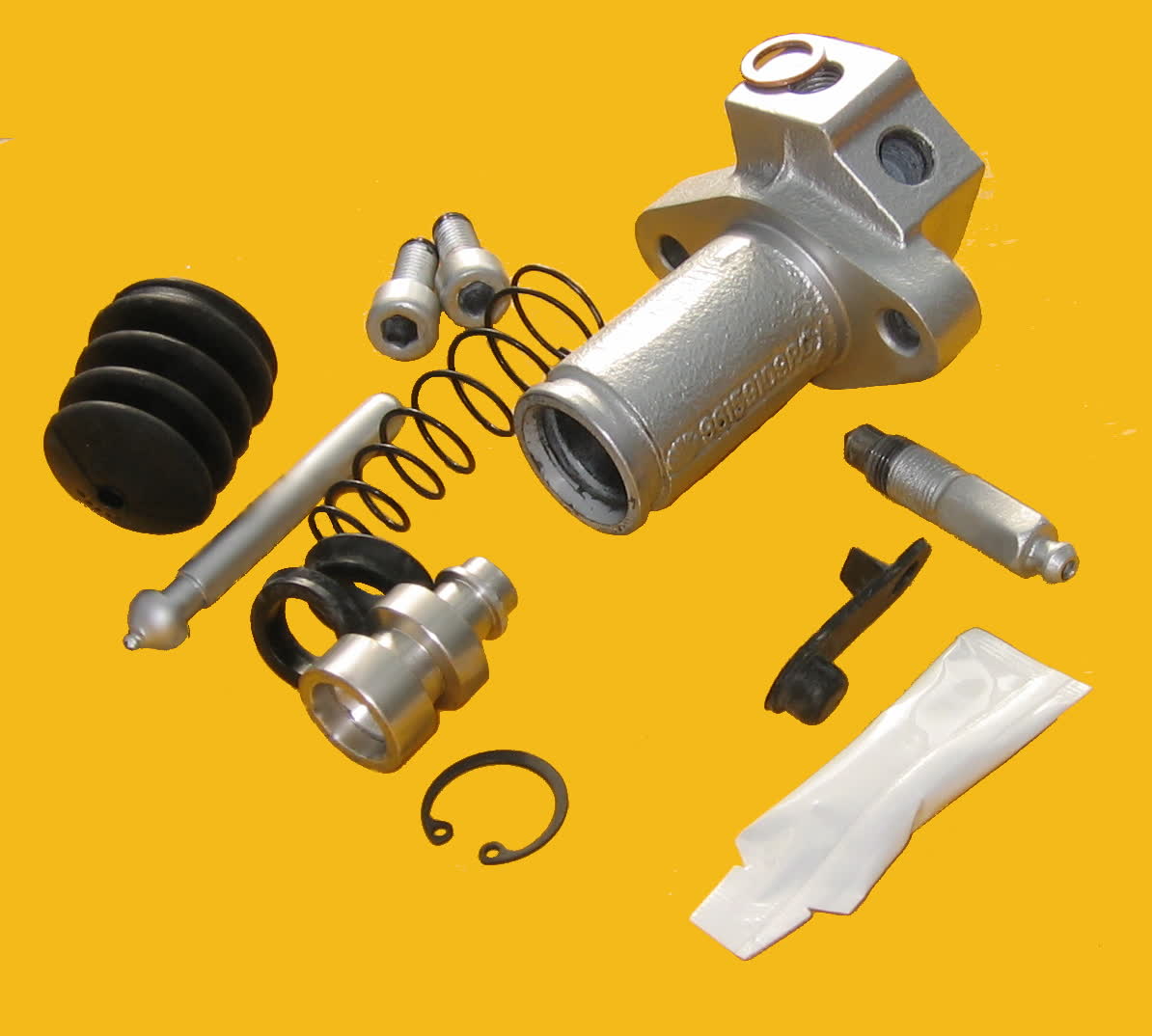
From 2007 Nissan moved to an internal concentric slave cylinder, which is the part that actuates the clutch. It is a documented design flaw rather than a wear item, and Nissan revised the part more than once without curing it. A car with 50,000 miles and full history is no safer than one with 150,000. Nissan issued a customer service program, NTB08-002, covering all 2007 cars, and the same part later drove a class action over the 370Z. When it goes, the pedal drops to the floor and the car will not shift. Because it is internal, fixing it means pulling the transmission, which is why any sensible shop does the clutch at the same time and why the bill is $1,500 to $1,800 rather than the price of the part.
A warning about the number you will find online. RepairPal quotes $181 to $216 for a slave cylinder on this car. That estimate does not include transmission removal, and an internal slave cylinder cannot be reached without it. Taking that figure at face value understates this car's defining failure by roughly nine times. The estimator was not lying; it was pricing a different job on a different design.
The second severe item is the oil gallery gasket, and we found it late. It was not in our first pass on this car at all. It surfaced while we were verifying a citation for a different vehicle, on a page describing the same failure across Nissan's V6 family. The gaskets are paper, they fail on pre-2013 engines, and every car in our scope is pre-2013. Symptoms are low oil pressure and the codes P0011 and P0021, and the guidance on those codes is blunt: do not drive it. Repair is ten hours of labour, $1,200 to $2,800.
We want to be precise about how well-evidenced that is, because it matters. The published cost figure comes from a single source, and that source is focused on the later VQ37 engine and describes the evidence for our VQ35HR as less documented. So treat the dollar figure as provisional. What is not provisional is that the failure happens: Ramon has had this exact gasket fail on his own car. That is first-hand rather than sourced, and it is what moved this score from a 5 to a 4.
The good news, such as it is: unlike the slave cylinder, the gasket is partially detectable. An OBD scan for P0011, P0016 and P0021 before you hand over money is five minutes and it is the single most valuable thing on the checklist below.
One myth to kill while we are here. You will read that the 350Z burns oil, quoting a quart every 1,000 to 2,000 miles. That is the 2006 Rev-Up engine, and only the 2006 Rev-Up engine. Owners of the VQ35HR report consumption that is practically nonexistent, corroborated across three independent owner communities. A general "350Z reliability" article had blended three different engines into one model-wide claim, which is the same mistake that produces the phantom timing belt on Miata pages. Our scope excludes the Rev-Up, so this is not your problem.
| Figure | 350Z | Source |
|---|---|---|
| Cargo volume, coupe | 6.8 cu ft (roadster 4.1) | CarBuzz |
| Seats | 2 | Edmunds |
| Doors | 2 | Edmunds |
| Infotainment | None. No Bluetooth | Edmunds |
| Head-unit retrofit | ~$300 to $500 | our estimate |
The Daily scores a 3, and this car is the reason we changed how we score this category at all. Its 6.8 cubic feet is functionally identical to the 370Z's 6.9. Two seats each, two doors each, same shape, same job. On space alone they tie exactly, and our old rubric would have given them the same number.
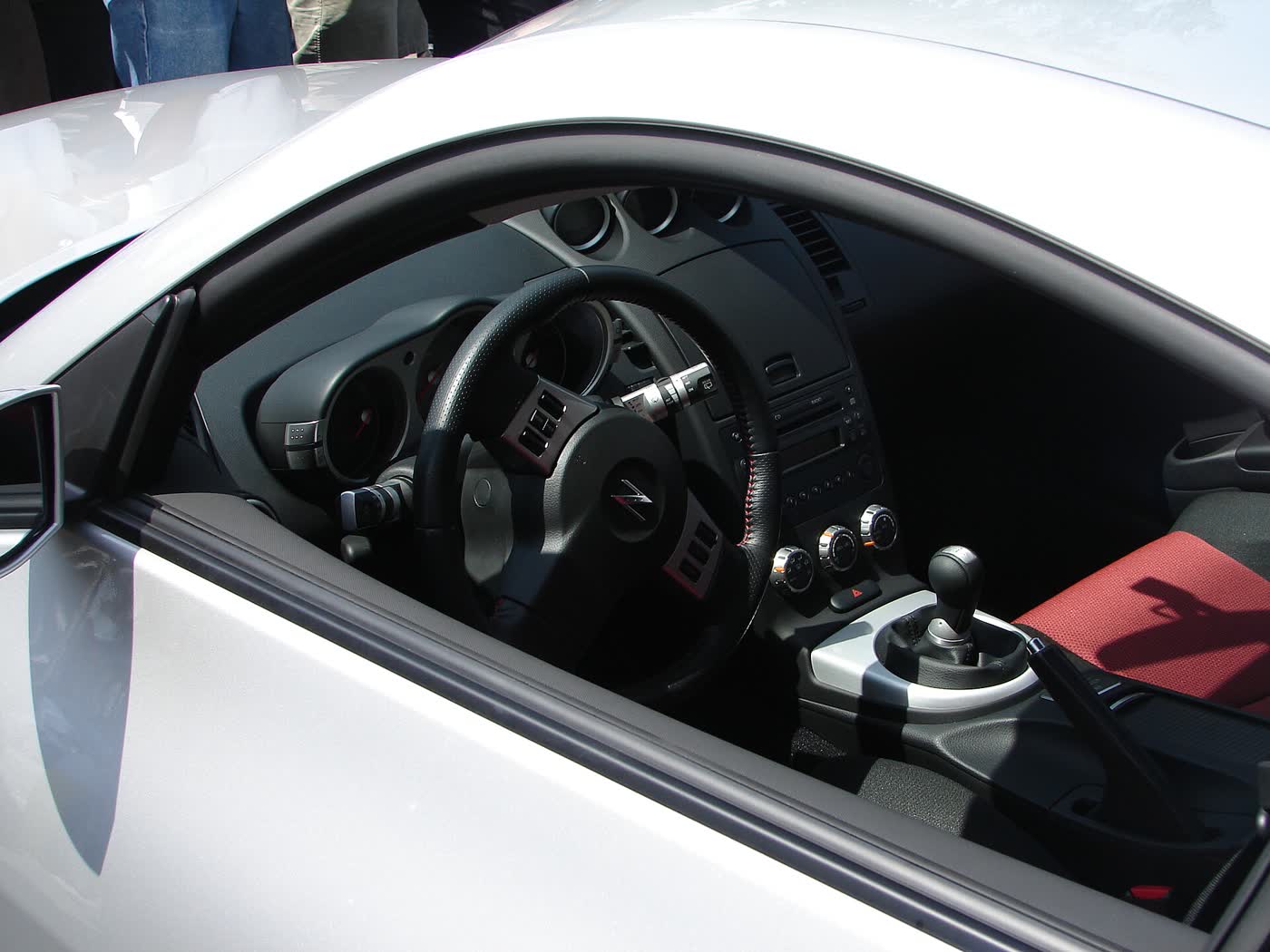
They should not get the same number. The 370Z has a modern-ish cabin and Bluetooth. The 350Z has neither: it predates Bluetooth adoption entirely, so pairing a phone means buying a head unit, and the interior plastics are of their era in a way you notice every time you get in. Scored on livability rather than cubic feet, it lands a point below its replacement, and that is the honest answer.
Budget $300 to $500 for a head unit and treat it as part of the purchase price rather than a surprise. Beyond that, this is a two-seat coupe with a decent hatch, and it is a weekend car. Judged as your only vehicle it fails, but it was never trying to be one.
| Figure | 350Z (2007-2008) | Source |
|---|---|---|
| SCCA Solo class | F Street (FS) | 2026 Solo Rulebook, Appendix A |
| NISMO, for contrast | B Street (BS) | same |
| Max grip | Not captured | see below |
| Braking | Not captured | see below |
SCCA F Street · shared with the G37, the 370Z, the Mustang GT, the 340i, the Camaro SS, the 335i F30, the 335i, the Charger R/T and the Genesis Coupe on this Board.
The Limit scores a 7, and this section is deliberately short on numbers, because the honest numbers do not exist.
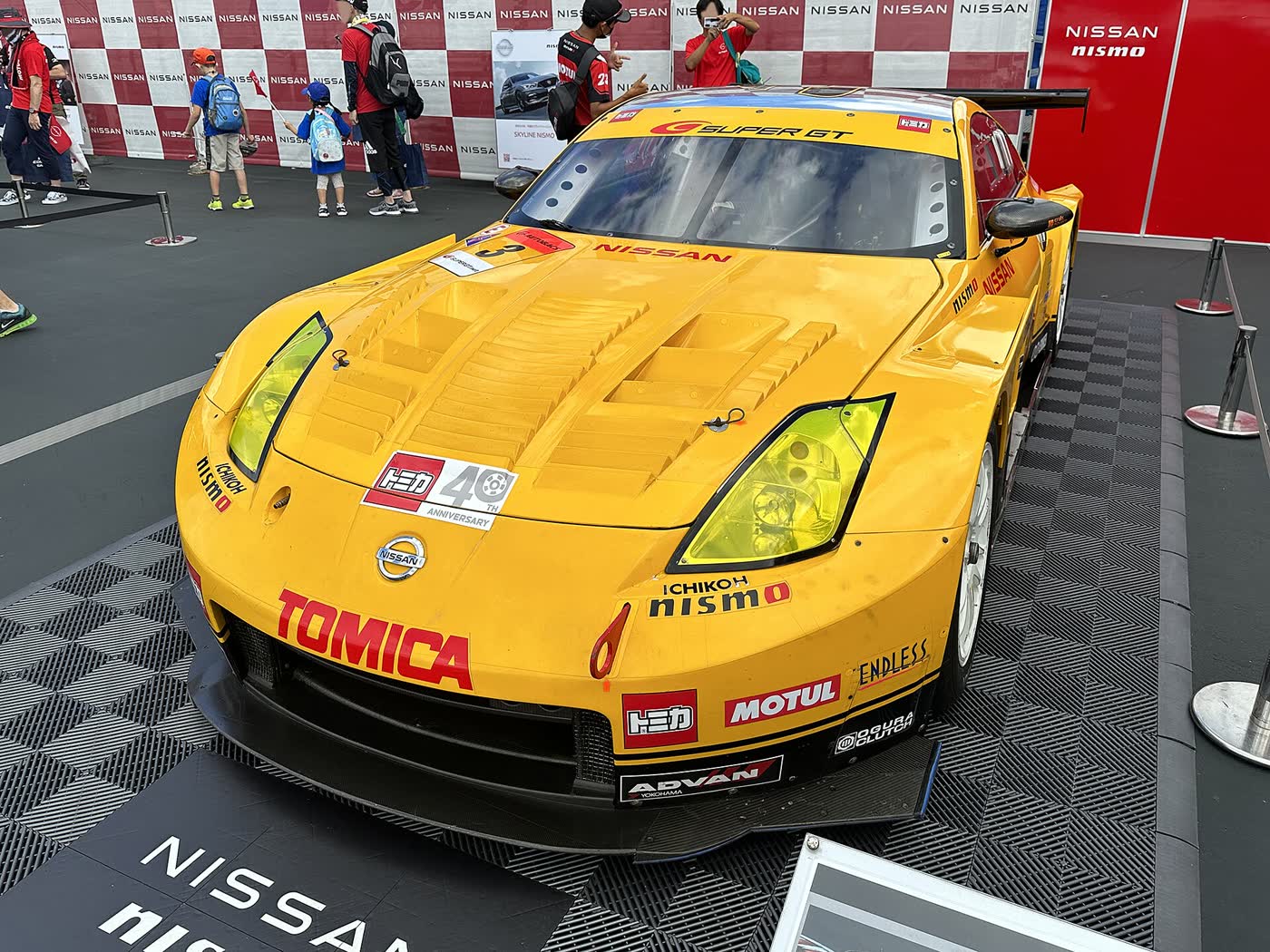
The class is solid and current. In SCCA Solo the non-NISMO 350Z runs F Street, read directly out of the 2026 Appendix A alongside the Mustang Shelby GT350, the C63 AMG, the Lexus IS F, the G37 and the 370Z. That last one is worth sitting with: the old Z and the car that replaced it are in the same class, so if you want to race one against the other, you can, and it will cost you a third as much to turn up.
On grip and braking we are rendering Not captured, and we want to explain why rather than quietly leaving a gap. There is a widely-quoted pair of figures, 164 feet from 70 and 0.88 g, and they trace back to a forum post dated 2002 describing a VQ35DE car. That is not the engine or the suspension we are scoring. The only other instrumented figure we could find is Edmunds' 109 feet from 60, measured on a NISMO, which has different suspension and different tires, on a different braking protocol. Converting that into a 70-to-0 equivalent so it could sit next to the ND Miata's 170 feet would be manufacturing a comparison that does not exist. We would rather show you an empty cell.
What the score rests on instead is chassis character, which is the thing our Limit score is actually about. Rear-wheel drive, a willing engine to 7,500 rpm, and a car with genuine autocross pedigree. It sits a point below the 370Z because the newer car's Sport trim brings hardware this one does not have, and because we have seat time in a 370Z and none in this.
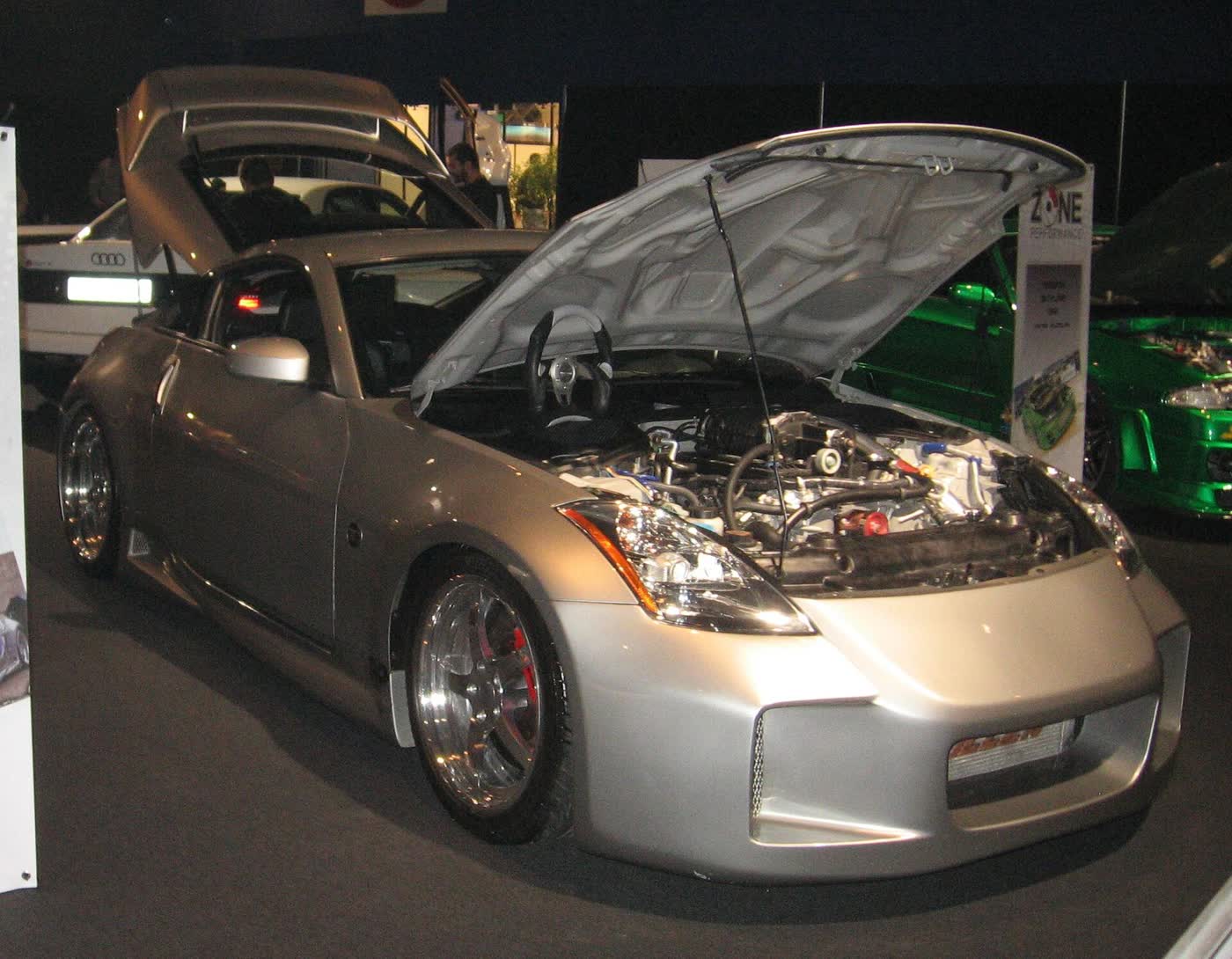
| Path | Cost | What you get | Risk |
|---|---|---|---|
| Handling and bolt-ons | ~$1,000 to $3,000 | The safest money on this car | Low to moderate |
| Low boost, fuel and tune | not published | ~370 to 400 bhp on stock internals | High |
| Stillen supercharger | not published | 450 hp / 375 whp | High |
| Twin turbo, installed | ~$16,000 | around 500 whp | Severe |
The Mods scores a 6. There is a real ceiling here: 370 to 400 bhp on stock internals with low boost, fuel and a tune, and around 500 whp if you commit to a twin-turbo build at roughly $16,000 installed. Normalised the way we now score this category, that works out to somewhere near $6,700 per 100 wheel horsepower, though we would ask you to treat that as directional rather than sourced, because both the installed price and the stock wheel figure carry estimates.
Two things drag it down from what the platform's reputation would suggest. The first is a genuine irony: the better engine has the worse aftermarket. Most forced-induction kits for this car were built for the VQ35DE, and the major names list DE-specific systems. The HR's dual throttle body needs HR-specific kits, and there are fewer of them. You buy the 2007-plus car for the engine and you pay for it in parts selection.
The second is more serious. On this car, modifying it accelerates the exact failure it is already known for. The signature weakness is a clutch-actuation component, and adding a hundred horsepower drives clutch and slave cylinder failure directly. That is the opposite of the answer we gave on the NC Miata, where the engine is robust enough that the only thing you risk is wasting money. Here you are not just spending, you are shortening the fuse on the one part you cannot inspect.
So the honest advice: spend on tires, pads and suspension, enjoy 306 horsepower that already costs less per unit than anything else we have scored, and think hard before you go looking for more.
Buy only with the clutch, slave cylinder and gasket already done. It scores 43 out of 70, which puts it at the bottom of our Board, and that position needs explaining because it is simultaneously $18.7 a horsepower. It lands level with the NC Miata on the Deal and posts a strong Drive, then gives all of it back on a Risk score of 4.
The condition is unusually specific and unusually important. Get the OBD scan for P0011, P0016 and P0021. Get documentation for the slave cylinder and clutch. Then set aside money for a gasket you cannot see, because even a documented car carries exposure you cannot inspect away.
This car is for you if you want maximum speed per dollar, you can absorb a four-figure surprise without it ruining your year, and you find the machine worth the gamble. It is not for you if this is your only car, if a sudden repair would be a genuine problem, or if what you actually wanted was a cheap car you could de-risk with a careful inspection. That car exists, it is in this same tier, and it is the NC Miata.
So you wanna buy a 350Z. Three hundred and six horsepower for five thousand seven hundred dollars is eighteen dollars and seventy cents a horsepower, and the part most likely to strand you is a part that no inspection on earth will warn you about. Whether you should buy one comes down entirely to whether you can live with that second sentence.
We scored it as a 2007 or 2008 coupe with the VQ35HR engine and the manual gearbox, and it landed at 43 out of 70, which is last on our Board. Do not read that number as "bad car." Read it as a car that wins the categories you notice on day one and loses the ones you notice in year one.
Five thousand seven hundred and fifteen dollars, for a Good-condition car at 120,000 miles, private party, which is the flat basis we price this whole budget tier on. The full condition range runs $4,590 to $6,540. That is cheap for a car we would put on the Board at all.
But the number that matters more is what you get for it. Three hundred and six horsepower at $5,715 works out to $18.7 per horsepower. The nearest thing to it is the G37 at $21.2. The NC Miata in this same tier is $41.8 per horsepower, a GR86 is $103, a Supra is $110. If your question is "how much engine can I buy for how little money," this review is the answer and you can stop shopping.
Now the number that should worry you, and it belongs right here next to the price rather than buried later. A neglected example needs $5,400 to $7,700 of work in its first year. On a $5,715 car that is 94 to 135 percent of the purchase price. You can buy this car twice, once from the seller and once from a workshop, and the entire purpose of this review is to help you avoid the second one.
One honest flag on the pricing. KBB's own 2007 Enthusiast Coupe range comes out at $8,780 to $10,980, which is higher than KBB's stated overall range for 2007 cars of $5,875 to $9,325. A figure that contradicts its own source is not a figure we are going to quote at you, so we have left it flagged rather than picked whichever one suited the story.
Unlike the Miata, the 120,000-mile basis is fair here. Nobody garaged these. A 120,000-mile 350Z is just a 350Z.
Fast, and cheap, and that combination is the whole appeal. Three hundred and six horsepower, 268 pound-feet, 3,320 pounds, which comes out at 10.9 pounds per horsepower. That beats the GR86 at 12.4, it beats both Miatas, and it beats everything else in the budget tier. Zero to sixty in 5.6 seconds. For five and a half grand.
The engine deserves a minute of your attention because Nissan fitted three of them to this car and only one is the one you want. The 2003 to 2005 cars got the original VQ35DE. The 2006 got the "Rev-Up," which is the version with the oil-burning reputation. From 2007 the car got the VQ35HR, a properly revised engine with a 7,500 rpm redline, more power, and none of the consumption problem. Our scope starts at 2007 because the older cars have crossed twenty years old, and it turns out that cutoff also lands us on the best engine. Happy accident, but a real one.
So why does The Drive score an 8 on a car this old and this blunt? Because we score this category on how it feels rather than what it does on a stopwatch, and we now score feel in two halves: the hydraulic steering is communicative, and the VQ has real character. It is a heavy machine by modern standards and neither half is perfect, but both are good. It goes hard in a straight, uncomplicated way. The steering has none of a Miata's delicacy and the chassis none of the polish of something built ten years later. It ties the 370Z, which is the same idea done a generation later, and that feels right to us.
Cheaper than the 370Z, and still not cheap. About $5,200 a year: roughly $2,400 of fuel, $1,950 of insurance, $350 of tires and $500 of service. That is about $390 less than the 370Z, and almost all of the difference is insurance. On fuel the older car is actually a little worse.
Twenty miles per gallon on premium is the obvious problem. The less obvious one is the tires. They are staggered, 225 wide at the front and 245 at the rear, which means they cannot be rotated, and owners report fronts gone by 18,000 miles. At around $700 a set, that is a set every two years, built into the car rather than down to how you drive it.
And then insurance does something worth stopping on. Full coverage at $1,950 a year is 34.1 percent of what the car is worth. Every three years or so, you pay for the car again in premiums. Our Board assumes full coverage on everything so that cars stay comparable to one another, but almost nobody rationally carries it on a $5,715 car, and most real owners run liability only. So take the $5,200 as a ceiling.
A car with the slave cylinder, clutch and gasket all documented needs about $1,000 to $1,400. A typical one, where the gasket history is simply unknown, runs $3,600 to $5,800. A neglected one, where everything is due, runs $5,400 to $7,700.
We revised those numbers upward after the fact, and we would rather tell you that than quietly publish the new ones. Our first pass on this car missed the oil gallery gasket entirely, which understated the middle and worst cases by somewhere between $1,200 and $2,800. The failure turned up while we were checking a citation for a different car.
Here is the part that separates this car from every other cheap car we have reviewed. On the NC Miata, a careful inspection moves you from the worst column to the best one, which is why we recommend it the way we do. On this car, it does not. The slave cylinder fails regardless of history, so even a fully documented 350Z carries about $1,650 of exposure you cannot inspect away. The spread on this page is not a spread you get to choose your position in.
The Risk scores a 4, and the reason is not that the repair bills are enormous. They are not, individually. The reason is that the failure you are most likely to meet is one that no inspection can predict.
From 2007, Nissan moved to an internal concentric slave cylinder, the part that actuates the clutch. It fails regardless of mileage: a 50,000-mile car with full history is no safer than a 150,000-mile one. Nissan issued a customer service program covering all 2007 cars, and the same component later drove a class action over the 370Z. When it goes, the pedal drops to the floor and the car will not shift. Because it sits inside the bellhousing, fixing it means pulling the transmission, which is why any sensible shop replaces the clutch while they are in there and why the bill is $1,500 to $1,800 rather than the price of a part.
Do not trust the estimator number on this one. RepairPal quotes $181 to $216 for a slave cylinder on this car. That price does not include transmission removal, and an internal slave cylinder cannot be reached without it. Taking it at face value would understate the defining failure of this car by about nine times. The estimator was not lying to you. It was pricing a completely different job on a completely different design, and that is a trap worth knowing about generally, not just here.
Then there is the second one, the oil gallery gasket. The gaskets are paper, they fail on pre-2013 engines, and every car in our scope is pre-2013. Symptoms are low oil pressure and the codes P0011 and P0021, and the guidance on those codes is not subtle: do not drive the car. Repair is ten hours of labour, $1,200 to $2,800.
We want to be straight about the evidence here, because it is thinner than we would like. The published cost figure comes from a single source, and that source is mainly about the later VQ37 engine and openly says the evidence for our VQ35HR is less documented. So treat the dollar figure as provisional. What is not provisional is that it happens, because Ramon has had this exact gasket fail on his own car. That is first-hand rather than researched, and it is the thing that moved this score from a 5 down to a 4.
The one piece of good news is that unlike the slave cylinder, the gasket can be caught. An OBD scan for P0011, P0016 and P0021 takes five minutes and it is the highest-value thing you will do before handing over money.
Finally, a myth worth killing. You will read that the 350Z drinks oil, a quart every 1,000 to 2,000 miles. That is the 2006 Rev-Up engine and nothing else. Owners of the VQ35HR report consumption that is practically nonexistent, and that holds up across three independent owner communities. A general "350Z reliability" article had blended three different engines into a single model-wide claim, which is exactly the same error that puts a phantom timing belt on Miata pages. Our scope excludes the Rev-Up, so it is not your problem, but you will meet the claim and now you know what to do with it.
No. It scores a 3 on The Daily, and this car is the reason we changed how we score that category.
Here is the situation. The 350Z has 6.8 cubic feet of cargo. The 370Z has 6.9. Two seats each, two doors each, same shape, same job. On space they are the same car, and our old rubric would have handed them the same number and moved on.
That would have been wrong, because they are not the same to live with. The 370Z has a reasonably modern cabin and Bluetooth. The 350Z has neither. It predates Bluetooth adoption completely, so connecting a phone means buying a head unit, and the interior materials are of their moment in a way you notice every single time you sit in it. Scored on livability rather than on cubic feet, it lands a point below the car that replaced it. Budget $300 to $500 for a head unit and treat it as part of what you are paying.
Yes, and it has a class to prove it, though it does not have the numbers you might expect us to quote.
In SCCA Solo the non-NISMO 350Z runs F Street, read straight out of the 2026 Appendix A, in a list that also contains the Mustang Shelby GT350, the C63 AMG, the Lexus IS F, the G37 and the 370Z. Sit with that last one for a second: the old Z and the car that replaced it compete in the same class, and turning up in the old one costs you a third as much.
On grip and braking we are showing you Not captured, and that is a decision rather than an oversight. The figures you will find quoted, 164 feet from 70 and 0.88 g, trace back to a forum post from 2002 describing a VQ35DE car. Different engine, different suspension, not what we are scoring. The only other instrumented number we could find is Edmunds' 109 feet from 60, measured on a NISMO with different suspension and tires, on a different protocol. Converting that so it could sit tidily next to the ND Miata's 170 feet would be inventing a comparison. We would rather show you an empty box and tell you why it is empty.
What the 7 rests on is chassis character, which is what our Limit score is about anyway. Rear-wheel drive, an engine that wants 7,500 rpm, and genuine autocross pedigree. It sits a point under the 370Z because that car's Sport trim brings hardware this one does not, and because we have seat time in a 370Z and none in this.
Carefully, and probably less than you were planning. The Mods scores a 6.
The ceiling is real. Low boost with fuel and a tune gets you 370 to 400 bhp on stock internals, and a twin-turbo build at around $16,000 installed will see roughly 500 wheel horsepower. Normalised the way we score this category now, that is somewhere near $6,700 per hundred wheel horsepower, and we would ask you to treat that as directional rather than sourced, because both ends of the sum carry estimates.
Two things pull it down from what the platform's reputation suggests. The first is a genuine irony: the better engine has the worse aftermarket. Nearly all the forced-induction kits for this car were designed for the VQ35DE, and the big names still list DE-specific systems. The HR's dual throttle body needs HR-specific kits and there are simply fewer of them. You buy the 2007-plus car for the engine, and you pay for it at the parts counter.
The second is worse. Modifying this car accelerates the exact failure it is already famous for. The signature weakness is a clutch-actuation part, and another hundred horsepower drives clutch and slave cylinder failure directly. On the NC Miata we said the opposite: that engine is tough enough that the only thing modifying it costs you is money. Here you are shortening the fuse on the one component you cannot inspect.
So: spend it on tires, pads and suspension, enjoy 306 horsepower that already costs less per unit than anything else we have scored, and think hard before chasing more.
They share a class, so this is a fair fight on paper. The 370Z is the same idea done properly a generation later: more power, a better cabin, Bluetooth, and a 2013-or-newer scope that steps around the gallery gasket entirely. It costs about $18,000 against this car's $5,715.
What you are really deciding is whether three times the money buys you three times the car. On the numbers, the 370Z finished 46 to this car's 42, and the four points are almost entirely risk and livability. The 350Z carries the same slave cylinder failure the 370Z does, which is the part that drove the class action, plus a gasket problem the newer car's scope avoids. If you can stretch, stretch. If you cannot, know exactly what you are taking on.
Buy only with the clutch, slave cylinder and gasket already done. That is not a hedge, it is the whole review compressed into one line, and if a seller cannot produce that paperwork then the price you are being quoted is not the price you are going to pay.
Three things, and the first one takes five minutes. Scan for P0011, P0016 and P0021. Get documentation for the slave cylinder and clutch work. Then put money aside for a gasket you cannot see, because even a documented car carries exposure you cannot inspect away.
The 350Z finished at 43 out of 70, at the bottom of our Board, and it is still $18.7 a horsepower. Both of those things are true at once and neither cancels the other. Buy it if you want maximum speed per dollar and you can absorb a four-figure surprise without it wrecking your year. Do not buy it if it has to be your only car, if a sudden bill would be a real problem, or if what you actually wanted was a cheap car you could make safe with a careful inspection. That car exists. It is in this same tier, it costs $1,270 more, and it is the NC Miata.
Filming reference: cue sheet · for the hosts on set, not part of the review.
The frame that closes our video: the 350Z at 43/70, with the 370Z and the Miata NC alongside.