2013-2016 facelift · 3.8 Lambda II RS · 6MT
No design defect at all. Its primary risk is a valve adjustment the manufacturer specified at 60,000 miles and owners skip, and at 120,000 miles it is twice overdue. Listen for ticking, get the service record, and the rest of the car is sound.
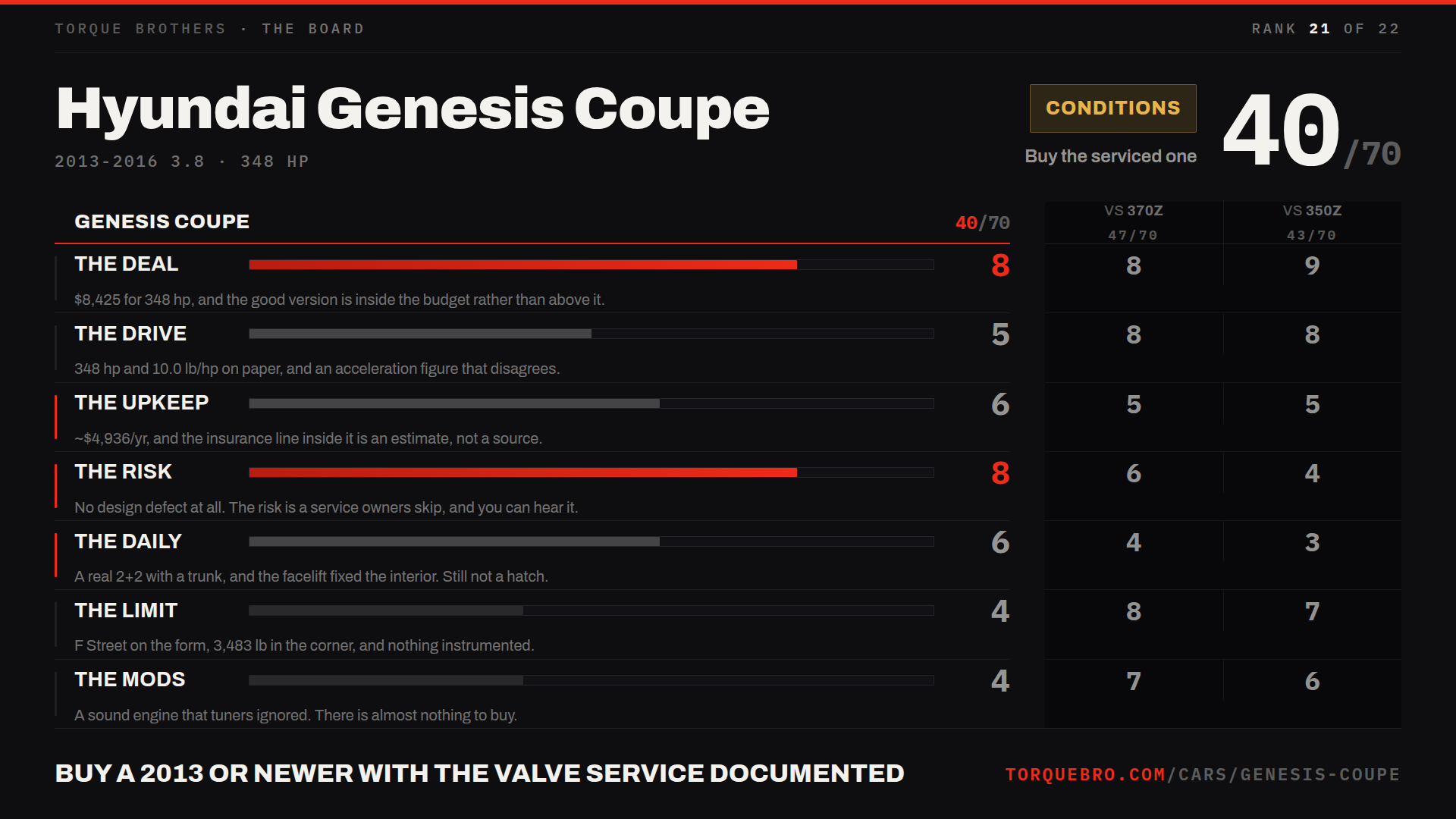
We scored the car as a 2013 to 2016 facelift with the 3.8 V6 and the six-speed manual, and it landed at 40 out of 70, with a verdict of Buy a 2013 or newer with the valve service documented.
This car is for someone who wants 348 horsepower and rear-wheel drive for under nine thousand dollars, and who is willing to check a service record rather than inspect around a design defect.
That distinction is the interesting thing about this car, and it runs the opposite way to everything else in this tier. Most of these cars are good cars with a flaw you have to work around. This is a sound car that owners neglected. That is a much easier problem for a buyer to solve.
All money figures use a fixed set of assumptions so they can be compared to other cars we cover: 12,000 miles a year, premium fuel at $4.00 a gallon, and full coverage insurance. Prices are Kelley Blue Book private-party at 120,000 miles in Good condition, which is the flat basis this whole budget tier uses. The insurance figure on this car is our own estimate with no source behind it, and The Upkeep explains why.
| Figure | Genesis Coupe 3.8 (2013-2016, 6MT) | Source |
|---|---|---|
| Used buy-in, private party | $8,425 | KBB |
| Condition basis | 120,000 miles, Good | KBB |
| Full condition range | $6,725 to $8,875 | KBB |
| 2011 3.8 R-Spec, for contrast | $3,060 to $3,985 | KBB |
| Dollars per horsepower | $24.2/hp, against the G37's $21.2 | derived: $8,425 divided by 348 hp |
~ our estimate, not a measured or quoted figure · * there is a caveat, and the note under the table explains it. Why we mark figures
The Deal scores an 8. Three hundred and forty-eight horsepower and rear-wheel drive for $8,425 works out to $24.2 per horsepower, which sits just behind the G37's $21.2 and ahead of the Mazdaspeed3's $32.6.
The best thing about this car's pricing is that the good version is inside the budget. That is not true everywhere: the Mustang GT priced out of this tier entirely, and the G37's best years did too. Here the 348 horsepower facelift with the revised interior fits in the band, so you are not choosing between the car you want and the car you can afford.
Now the number you should sit with. A 2011 R-Spec is $3,060, which is below the floor of our own tier, and the same model two years later is nearly triple that. That gap is the buying opportunity and the resale warning in one figure. This car depreciates steeply, which is why it is cheap now, and it will keep doing that while you own it. Buy it because you want to drive it, not because you think it will hold.
A correction we owe you: our research file's own dollars-per-horsepower figure was right, but the comparisons around it were computed against placeholder prices for the G37 and 350Z. The comparisons above are the current ones.
| Figure | Genesis Coupe 3.8 (2013-2016, 6MT) | Source |
|---|---|---|
| Power | 348 hp (the pre-facelift car makes 306) | Cars.com |
| Torque | 295 lb-ft at 5,100 rpm | single-sourced, no live page |
| Curb weight | 3,483 lb | Edmunds |
| Power-to-weight | 10.0 lb per hp * | derived, see below |
| 0 to 60 mph | Not captured | see below |
| Engine | 3.8 Lambda II RS, direct injection | Cars.com |
The Drive scores a 5. A naturally aspirated 3.8 litre V6 making 348 horsepower in a rear-drive coupe is a straightforward, likeable thing, and the facelift is the version to have: the earlier car makes 306.
Now the part where we decline to make a claim the arithmetic seems to support. On paper this car works out to 10.0 lb per hp, which reads better than the 350Z's and the G37's 10.9. But the published 0 to 60 figure of 5.9 seconds is slower than the 350Z's 5.6, and those two facts cannot both be true unless the car simply cannot deploy what it has. To make it worse, the source for that 5.9 is dead.
So we did the only honest thing available: the acceleration figure reads Not captured, and we do not air any power-to-weight claim for this car. One of those two numbers is wrong and we cannot tell you which. A claim a viewer could disprove with a stopwatch is exactly the kind we would rather not make.
What we can say is that it is a big, comfortable, powerful rear-drive coupe at 3,483 lb, and it drives like one. The torque figure is single-sourced.
| Figure | Genesis Coupe 3.8 (2013-2016, 6MT) | Source |
|---|---|---|
| Total annual running cost | ~$4,936/yr | sum of the lines below |
| Fuel | ~$2,286/yr | derived from our fixed assumptions |
| Insurance, full coverage | ~$1,900/yr | our estimate, no source |
| Tires, amortized | ~$300/yr | our estimate |
| Routine service | ~$450/yr | our estimate |
| Fuel economy, 6MT | 21 mpg combined (18/27) | Cars.com |
| Octane | 91, premium recommended | Edmunds |
The Upkeep scores a 6, and we have to start with a correction to our own work.
This car's original headline finding was that it runs on regular unleaded. That was wrong and we withdrew it. Edmunds, read at trim level, states premium recommended. So there is no fuel advantage here: at $2,286 a year it lands exactly level with the turbocharged cars in this tier. Twenty-one miles per gallon out of a 3.8 litre V6 is the trade, and it is a fair one.
The insurance line is an estimate with no source at all, and we want that in bold rather than in a footnote. MoneyGeek, which anchors insurance for most of this tier, publishes no Genesis Coupe page: both plausible URLs return a 404. So we bounded our figure using the two rear-drive V6 coupes MoneyGeek does cover, the 350Z at $1,950 and the 370Z at $2,324, and adjusted down for a lower insured value and a badge that is not a performance marque.
That has a consequence worth naming. The obvious cross-shop for this car is the 370Z, and the 370Z is in the group we cannot compare against in dollars. We can tell you where this ranks. We cannot tell you the gap, and anyone who does is comparing two different methodologies. Get your own quote.
| Figure | Genesis Coupe 3.8 (2013-2016, 6MT) | Source |
|---|---|---|
| Worst realistic repair | ~$1,500 oil leaks | our estimate |
| Valve adjustment interval | 60,000 miles, twice overdue at our basis | 8020 Automotive |
| Detection | Audible, valve ticking at operating temperature | 8020 Automotive |
| Design defect | None | see below |
The Risk scores an 8, and the reason is the inversion we opened with.
Look at what the rest of this tier asks you to inspect around. The 350Z has a slave cylinder that fails regardless of how the car was treated. The G37 has a paper gasket. The Mazdaspeed3 has a fuel pump, the WRX has ringlands, the GTI Mk6 has a timing chain, the Civic Si has a synchro. This car has none of that. There is no design defect anywhere on it.
What it has instead is a maintenance item the manufacturer specified and owners skipped. The Lambda II RS needs a valve adjustment at 60,000 miles. Our tier prices cars at 120,000, so at our own basis that service is twice overdue by definition, and it is routinely neglected.
Which is a much better problem to have as a buyer, for two reasons. It is audible: valve ticking at operating temperature is the check, and it costs nothing. And it is fixable: a documented valve service turns this from a question mark into a sound car, whereas nothing you can do converts a 350Z's slave cylinder into a non-issue.
So the instruction is simple. Listen at operating temperature, and ask for the 60,000-mile service record. No record means assume about $1,000 and put it in your offer.
Behind that, the list is ordinary: oil leaks at the valve cover, oil pan or main seal at the top end of $1,500. Nothing here can end the car.
| Figure | Genesis Coupe 3.8 (2013-2016, 6MT) | Source |
|---|---|---|
| Seats / doors | 4 / 2, coupe with a real trunk | Edmunds |
| Cargo | Not captured | no figure sourced |
| Infotainment | Navigation on Grand Touring trims. No CarPlay | derived |
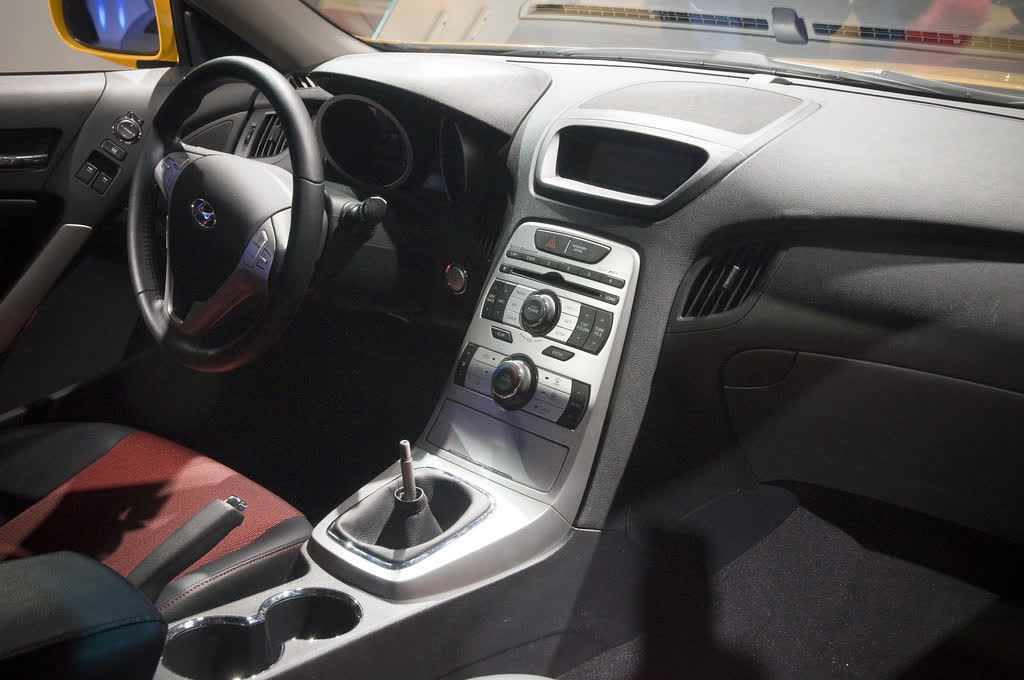
The Daily scores a 6. It is a genuine 2+2 with a usable trunk, which puts it clearly ahead of the two-seat Miata and 350Z, and well behind the WRX hatch, the Civic Si and the Mazdaspeed3 on real practicality. A coupe is a coupe.
The facelift matters here more than anywhere else on the car. The pre-facelift cabin was this model's most-criticised feature, and the 2013 revision fixed it. That is a real reason not to buy the cheaper years, on top of the 42 horsepower.
| Figure | Genesis Coupe 3.8 (2013-2016, 6MT) | Source |
|---|---|---|
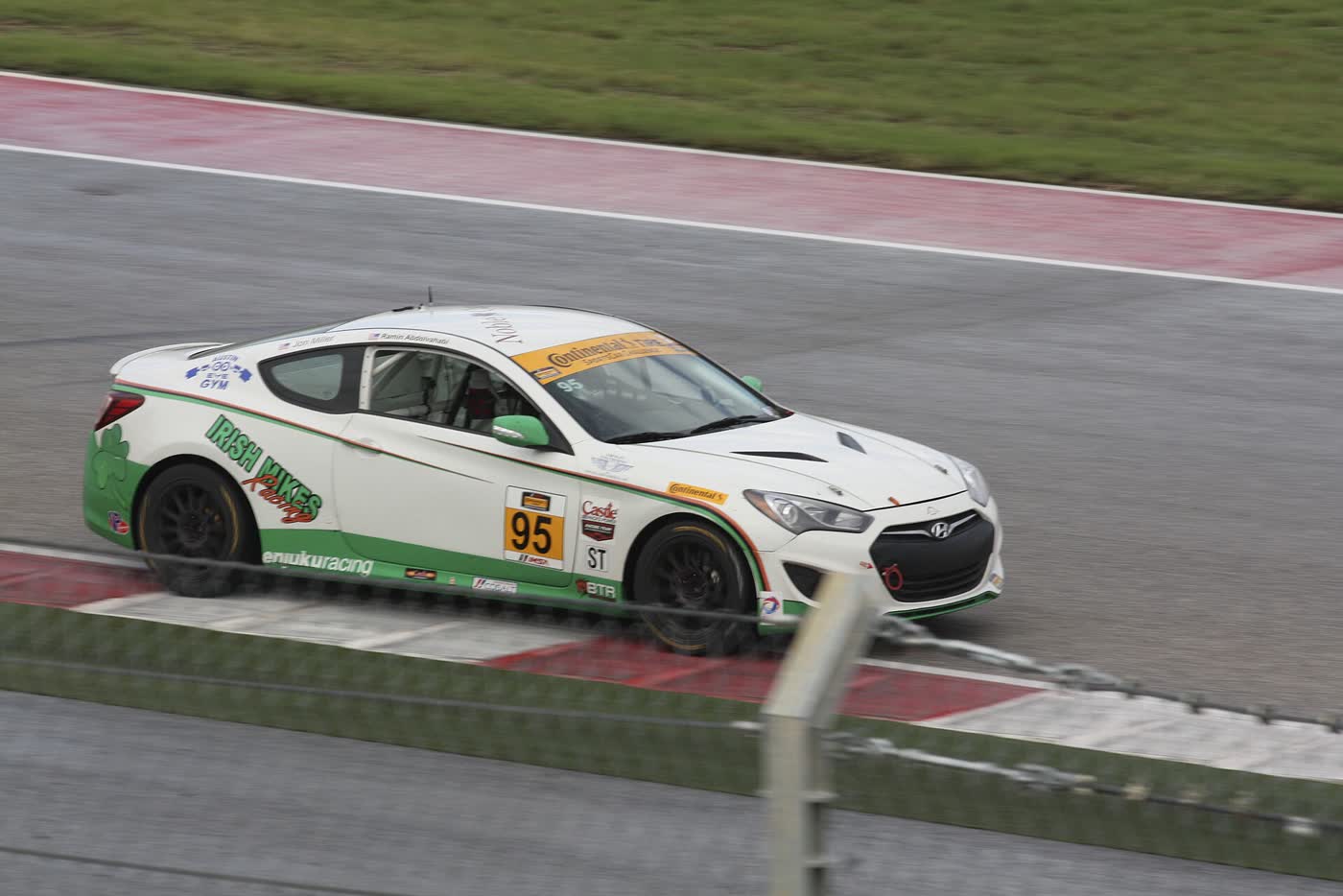
| SCCA Solo class | F Street (FS), verified in direct context | 2026 Solo Rulebook, Appendix A |
| Lateral grip | Not captured | no instrumented figure sourced |
| Braking | Not captured | no instrumented figure sourced |
SCCA F Street · shared with the G37, the 370Z, the Mustang GT, the 340i, the Camaro SS, the 335i F30, the 335i, the 350Z and the Charger R/T on this Board.
The Limit scores a 4, on 3,483 lb of curb weight, no instrumented figures, and a class entry that reads better on paper than it runs.
The class read here is better sourced than most of this tier gets, and that is exactly the problem. "Genesis Coupe (V6) (2013-15)" appears in the 2026 Appendix A F Street list, read in direct context, alongside the 350Z, the G37, the Shelby GT350 and the C63 AMG. It is a verified read rather than the asterisked inference the Civic Si, Mazdaspeed3, WRX and both Fords carry, and a verified class is a verified run sheet. This is the company you are entered against on a Sunday morning.
That company is where the score comes from. The 370Z pulls 0.94 g and stops from 60 in 148 feet, and it scores The Limit 8. The 350Z carries 3,320 lb, 163 pounds less than this car, and scores 7. The G37 scores 6. This car turns up 3,483 lb heavy with no grip figure and no braking figure of its own to argue back with, which is why we put it at 4. Verified into the class is not the same as competitive in it.
There is still a bonus in that entry, and it belongs to the scope rather than the score. Appendix A's own year range is 2013 to 2015, which independently backs up our decision to scope this car to the facelift. The SCCA treats the 348 horsepower car as a different animal from the 306 horsepower one, and so do we.
Four cars on our Board now share F Street: this, the 350Z, the G37 and the 370Z. Three of them are the reason this one scores a 4.
| Figure | Genesis Coupe 3.8 (2013-2016, 6MT) | Source |
|---|---|---|
| Cost per +100 whp | Not captured | no forced-induction route with a price was sourced |
| Aftermarket | Thin | derived |
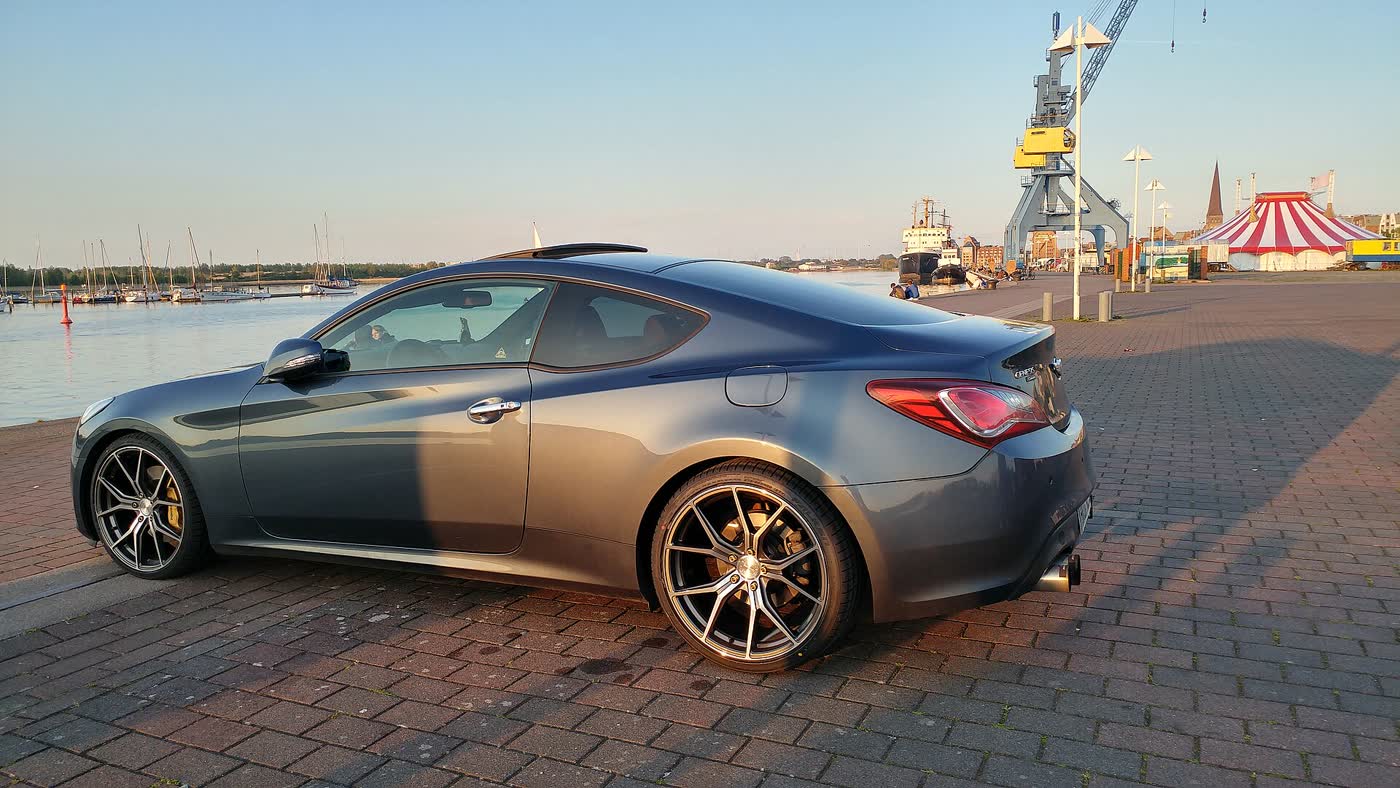
The Mods scores a 4, and for once the reason is not fragility. It is that almost nobody makes the parts.
The Lambda II RS is naturally aspirated and direct injected, and it was simply never adopted by tuners the way Nissan's VQ, Subaru's EJ or Honda's K-series were. There is no established forced-induction route with an installed price we could source, because the aftermarket that would sell you one does not meaningfully exist.
That is a distinct kind of "no" from the others in this tier. The NC Miata's answer is no because the engine is robust enough that modifying it mostly wastes money. The Civic Si's is a partial no because the engine tolerates power and the gearbox does not. This one is no because there is nothing to buy.
The honest conclusion is not a hedge, it is the finding: this is a car to enjoy stock. Spend on tyres and brakes and leave the engine alone.
40 out of 70. Buy a 2013 or newer with the valve service documented.
This is the tier's inversion, and a straightforward purchase. There is no design defect to inspect around, no precursor chain to learn, no laptop required. The question is simply whether the previous owner did the servicing, and a ticking noise at operating temperature answers it for free.
Buy the facelift. The 348 horsepower and the revised interior are worth the money over the 306 horsepower car, the SCCA agrees that they are different animals, and the good version fits inside the budget anyway.
Get the 60,000-mile valve service record. If there is none, assume about $1,000 and offer accordingly.
And go in with your eyes open about two things: it depreciates steeply, so buy it to drive rather than to keep, and there is almost no aftermarket, so the car you buy is the car you will have.
We scored the Genesis Coupe as a 2013 to 2016 facelift with the 3.8 V6 and the six-speed manual, and it landed at 40 out of 70, with a verdict of Buy a 2013 or newer with the valve service documented.
Here is the short version, and it is the opposite of every other review in this budget tier. Most of these cars are good cars with a design defect you have to inspect around. This is a sound car that owners neglected. There is nothing wrong with how it was built. The only question is whether the person before you did the servicing, and you can answer that by listening to it.
Eight thousand four hundred and twenty-five dollars, for a 2013 3.8 Grand Touring in Good condition at 120,000 miles, private party, from Kelley Blue Book. The range runs $6,725 to $8,875.
That is $24.2 per horsepower for 348 horsepower, sitting just behind the G37's $21.2.
Two things about that price are worth pulling out.
The version you want is inside the budget. That is not something this tier always offers: the Mustang GT priced out of it entirely and the G37's best years did too. Here the 348 horsepower facelift with the fixed interior fits, so you never have to choose between the good one and the affordable one.
And a 2011 R-Spec is $3,060, which is below the floor of our own tier, for a car two model years older. That gap is the buying opportunity and the resale warning in a single number. This thing depreciates hard. It is why you can afford it, and it is what will happen to your money too. Buy it to drive.
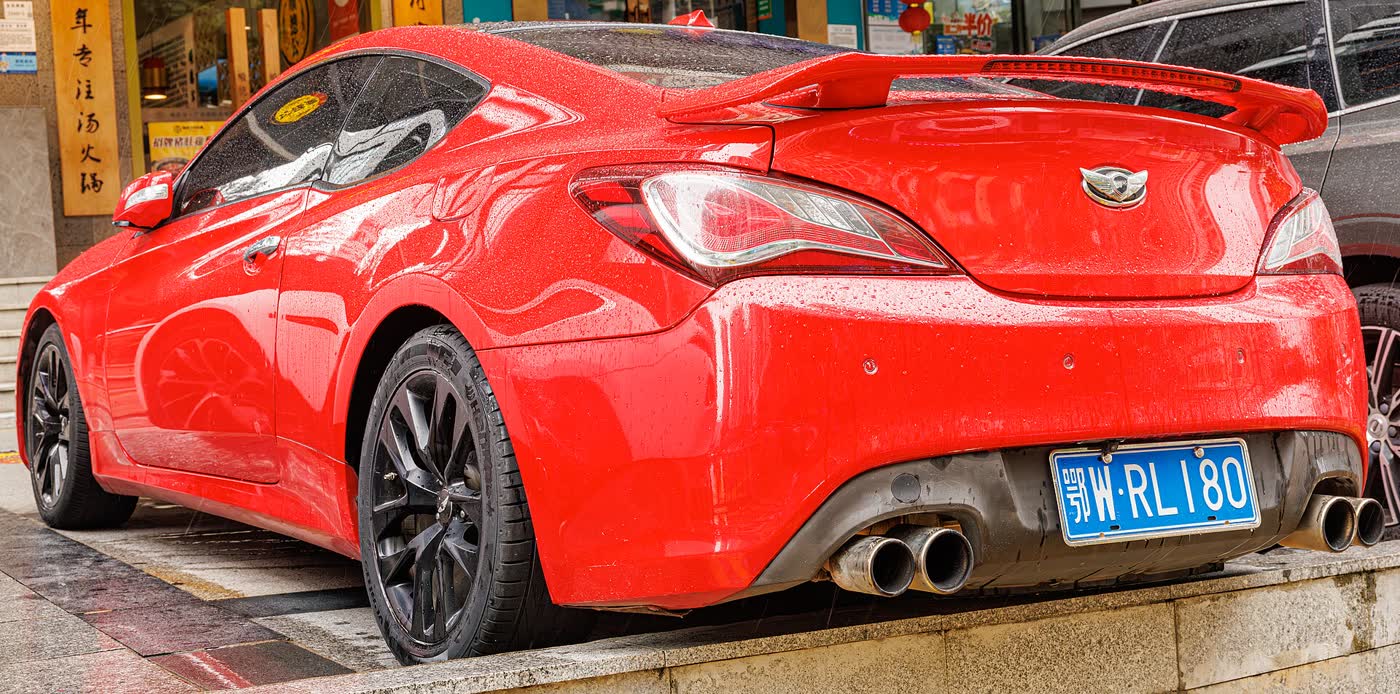
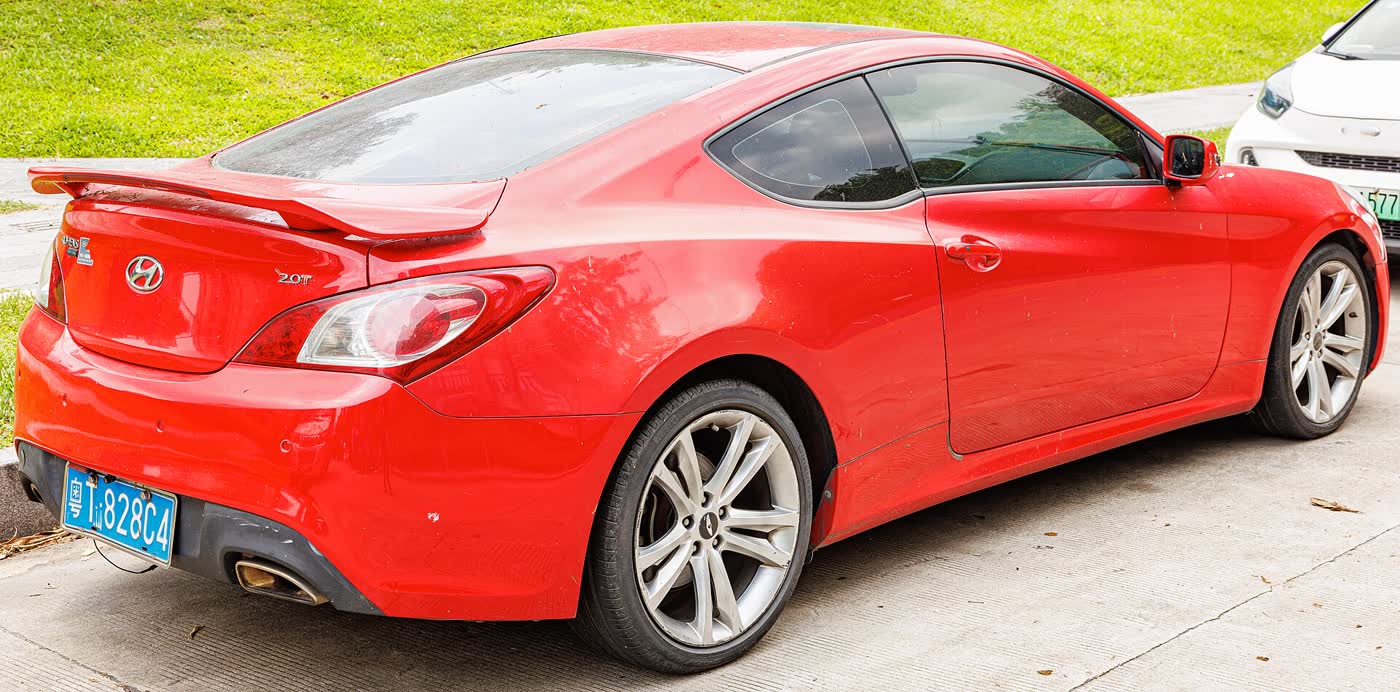
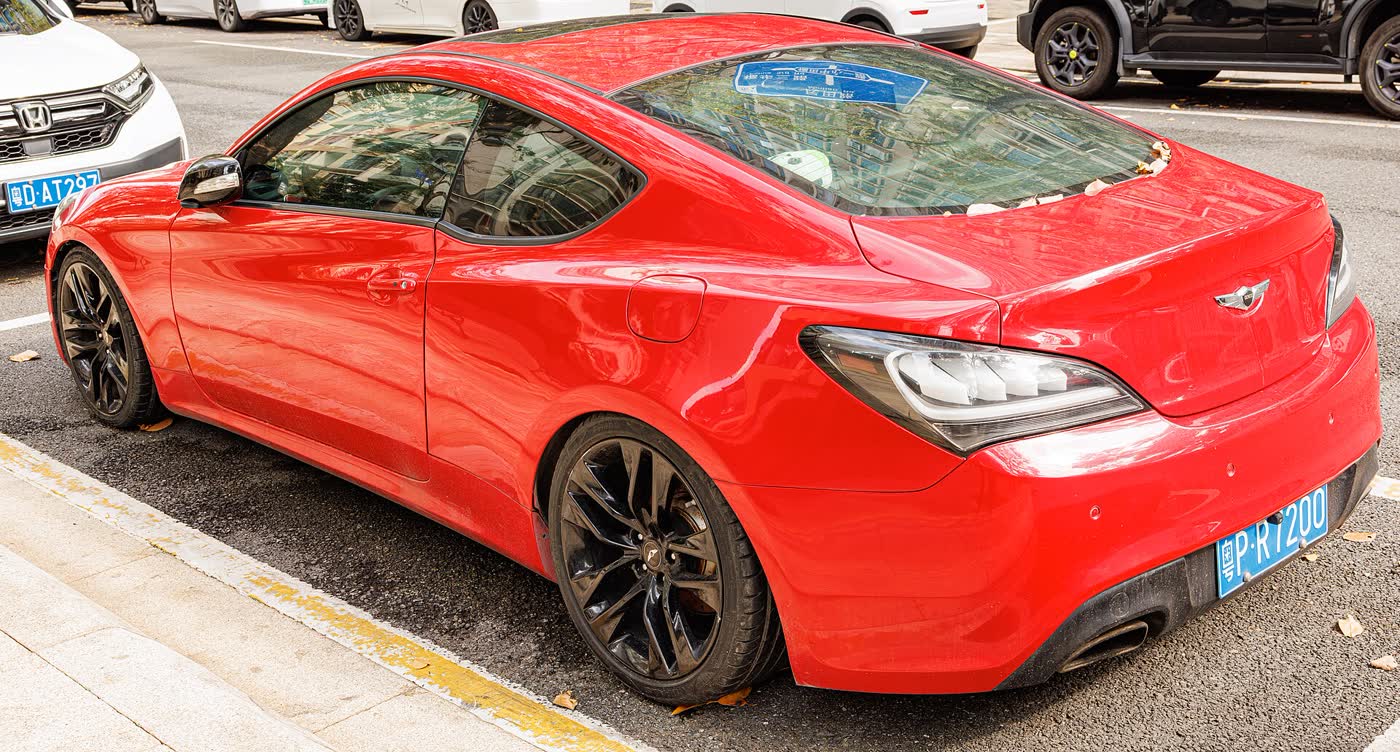
A big, comfortable, naturally aspirated rear-drive coupe: 348 horsepower from a 3.8 litre V6, in a car weighing 3,483 lb. The facelift is the one to have, because the earlier car makes 306.
Now the thing we will not tell you, and why. On paper this works out to 10.0 lb per horsepower, which is a better figure than the 350Z's and the G37's 10.9. It would be an easy line to put on camera.
The problem is that the published 0 to 60 time is 5.9 seconds, and the 350Z does 5.6. Those two facts cannot both be true unless this car simply cannot put its power down, and the source for the 5.9 is dead so we cannot even interrogate it.
So the page reads Not captured for acceleration, and we make no power-to-weight claim for this car at all. One of those numbers is wrong, we do not know which, and a claim that a viewer could disprove with a stopwatch is not one worth making.
The torque figure of 295 lb-ft is single-sourced, for the same family of reasons.
About $4,936 a year, and we have to correct ourselves before anything else.
Our original headline for this car was that it runs on regular unleaded. It does not, and we withdrew that. Edmunds, read at trim level, says premium recommended. So the fuel bill is $2,286 a year, exactly level with the turbocharged cars in this tier. Twenty-one miles per gallon from a 3.8 V6 is neither a bonus nor a penalty. It is just the deal.
The insurance number is our own estimate and has no source behind it. MoneyGeek publishes no Genesis Coupe page at all: both plausible URLs return a 404. We bounded ours between the two rear-drive V6 coupes MoneyGeek does cover, the 350Z at $1,950 and the 370Z at $2,324, and adjusted down for the lower value and the non-performance badge, landing at about $1,900.
Which creates a specific limitation. The car most people cross-shop this against is the 370Z, and the 370Z sits in the group we cannot compare against in dollars. We can tell you this ranks below. We cannot tell you the gap without pretending two different methodologies are one. Get a quote in your own name.
Less unpredictable than most of this tier, because there is no catastrophic mode to price in.
Budget the valve adjustment at around $1,000 unless the seller can show you it was done. Beyond that, oil leaks at the valve cover, oil pan or main seal run to about $1,500 at the top end, and that is the ceiling on this car's bad day.
Compare that to the tier's other worst cases and you can see why the Risk score is an 8. There is no $7,000 short block here and no $4,499 engine.
Yes, and understanding why is the whole point of this review.
There is no design defect on this car. Not a slave cylinder that fails whatever you do like the 350Z's, not a paper gasket like the G37's, not a fuel pump like the Mazdaspeed3's, not ringlands like the WRX's, not a timing chain like the GTI Mk6's. Nothing built into it is waiting to fail.
What it has is a service owners skip. The Lambda II RS needs a valve adjustment at 60,000 miles. Our tier prices cars at 120,000 miles, so by our own basis that job is twice overdue on the average example, and it is neglected routinely.
Left alone it produces loud ticking and eventually real damage. Which is exactly why it is a good problem to have:
It is audible. Listen at operating temperature. That is the entire pre-purchase inspection and it costs nothing.
And it is fixable. A documented valve service converts this from a question into a sound car. There is nothing you can do to a 350Z that makes its slave cylinder stop being a risk, and that difference is worth more than a couple of points on a scorecard.
So: listen for ticking, ask for the 60,000-mile record, and if there is none, assume about $1,000 and say so when you make the offer.
At a push. It is a real 2+2 with a usable trunk, so it is clearly more useful than the two-seat Miata and 350Z, and clearly less useful than the WRX hatch, the Civic Si or the Mazdaspeed3.
Buy the facelift for this reason as much as for the power. The pre-2013 interior was the car's most-criticised feature and the revision fixed it. If you are going to sit in something every day, that matters more than 42 horsepower does.
No CarPlay. Navigation on Grand Touring trims.
It classes as F Street, and this class read is verified in direct context, which most of this tier's are not.
"Genesis Coupe (V6) (2013-15)" appears in the 2026 Solo Rulebook Appendix A F Street list, read in direct context, in company with the 350Z, the G37, the Shelby GT350 and the C63 AMG. Most of the cars in this tier carry an asterisk on their class because we could only infer it. This one does not.
There is a nice bonus buried in that entry: Appendix A's own year range is 2013 to 2015, which independently confirms our decision to scope this review to the facelift. The SCCA treats the 348 horsepower car as a different animal from the 306, and so do we.
Our Limit score of 6 reflects 3,483 lb and the fact that we captured no instrumented grip or braking figures.
Four cars on our Board now share F Street: this, the 350Z, the G37 and the 370Z.
Realistically, no, and it is not because the engine is delicate.
It is that almost nobody makes the parts. The Lambda II RS is naturally aspirated and direct injected, and tuners never adopted it the way they adopted Nissan's VQ, Subaru's EJ or Honda's K-series. We could not source a single forced-induction route with an installed price, because the aftermarket that would sell one barely exists.
That is a different kind of "no" from the rest of the tier. The NC Miata's engine is robust enough that modifying it mostly wastes money. The Civic Si's engine will take power and its gearbox will not. Here there is simply nothing on the shelf.
So enjoy it stock. That is the finding rather than a hedge. Put the money into tyres and brakes.
Both are cheap rear-drive coupes with six cylinders, they share an SCCA class, and they answer the same question in completely different ways.
The 350Z is $5,715 and $18.7 per horsepower, which is the better buy on paper. But its signature failure is invisible to any inspection and it scores a 4 on Risk. You cannot inspect your way to a good one.
This is $8,425 and $24.2 per horsepower, with no design defect at all and one audible service item. You can inspect your way to a good one in about thirty seconds, with your ears.
So it comes down to what you want to spend your attention on. If you enjoy the hunt and can absorb a surprise bill, the 350Z is more car for less money. If you would rather buy a car and get on with owning it, this is the one, and the $2,710 is what that peace of mind costs.
Buy a 2013 or newer with the valve service documented. Forty-five out of seventy.
This is a straightforward purchase. There is no defect to inspect around, no precursor chain to learn, and no special tool required. Just listen to it at operating temperature and ask for one service record.
Buy the facelift for the 348 horsepower and the fixed interior. Get the 60,000-mile valve record, or assume $1,000 and offer accordingly.
Then go in knowing two things. It depreciates steeply, which is why you can afford it and what will happen to your money. And there is almost no aftermarket, so the car you buy is the car you keep. Neither of those is a reason not to buy it. They are just the terms.
Filming reference: cue sheet · for the hosts on set, not part of the review.
The frame that closes our video: the Genesis Coupe at 40/70, with the 370Z and the 350Z alongside.