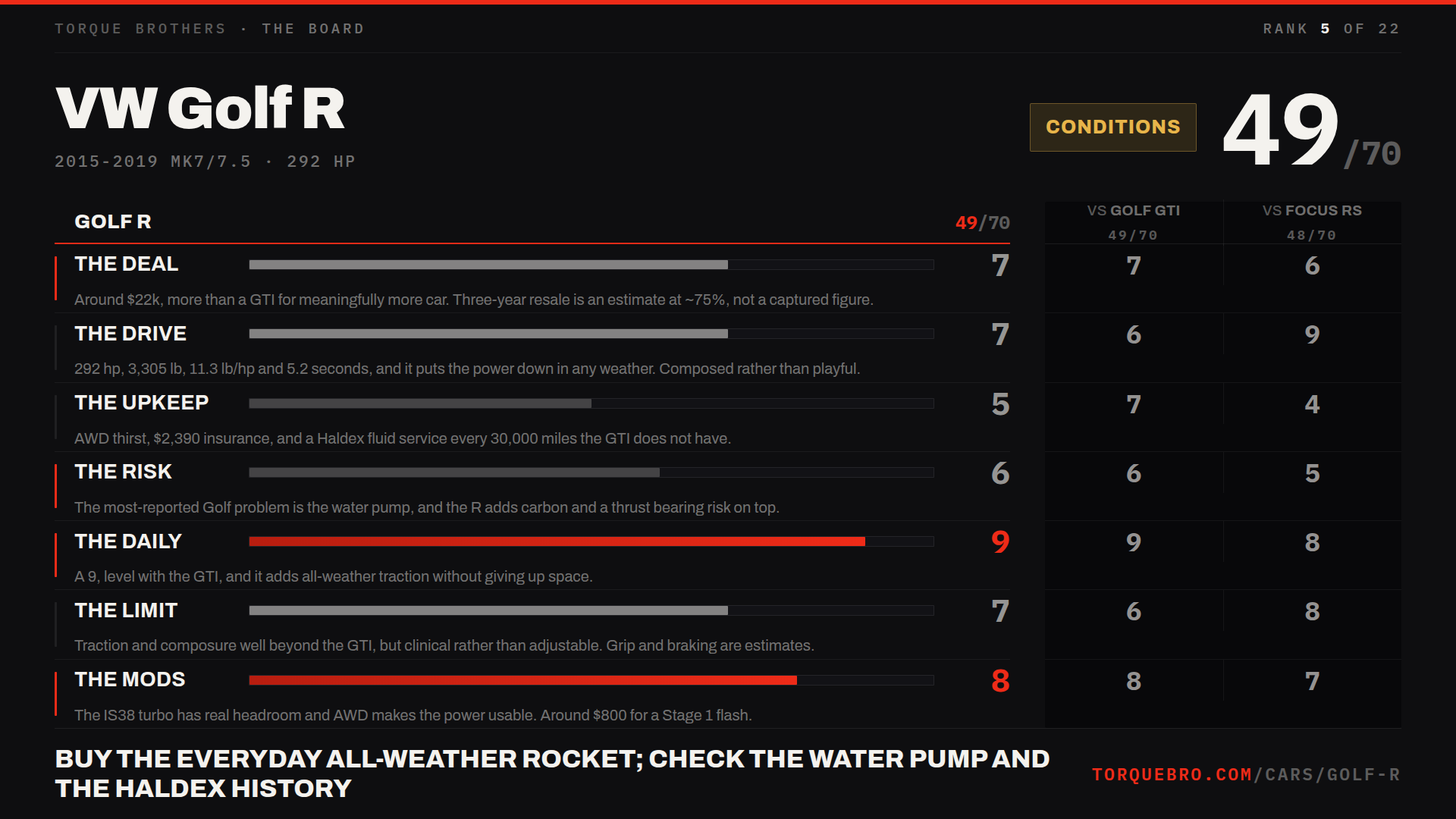
2015-2019 · Manual · Haldex AWD
First-hand: we have driven a Golf R.
Buy the everyday all-weather rocket. Verify the water pump and thermostat housing history and the Haldex fluid service before you hand over a dollar.
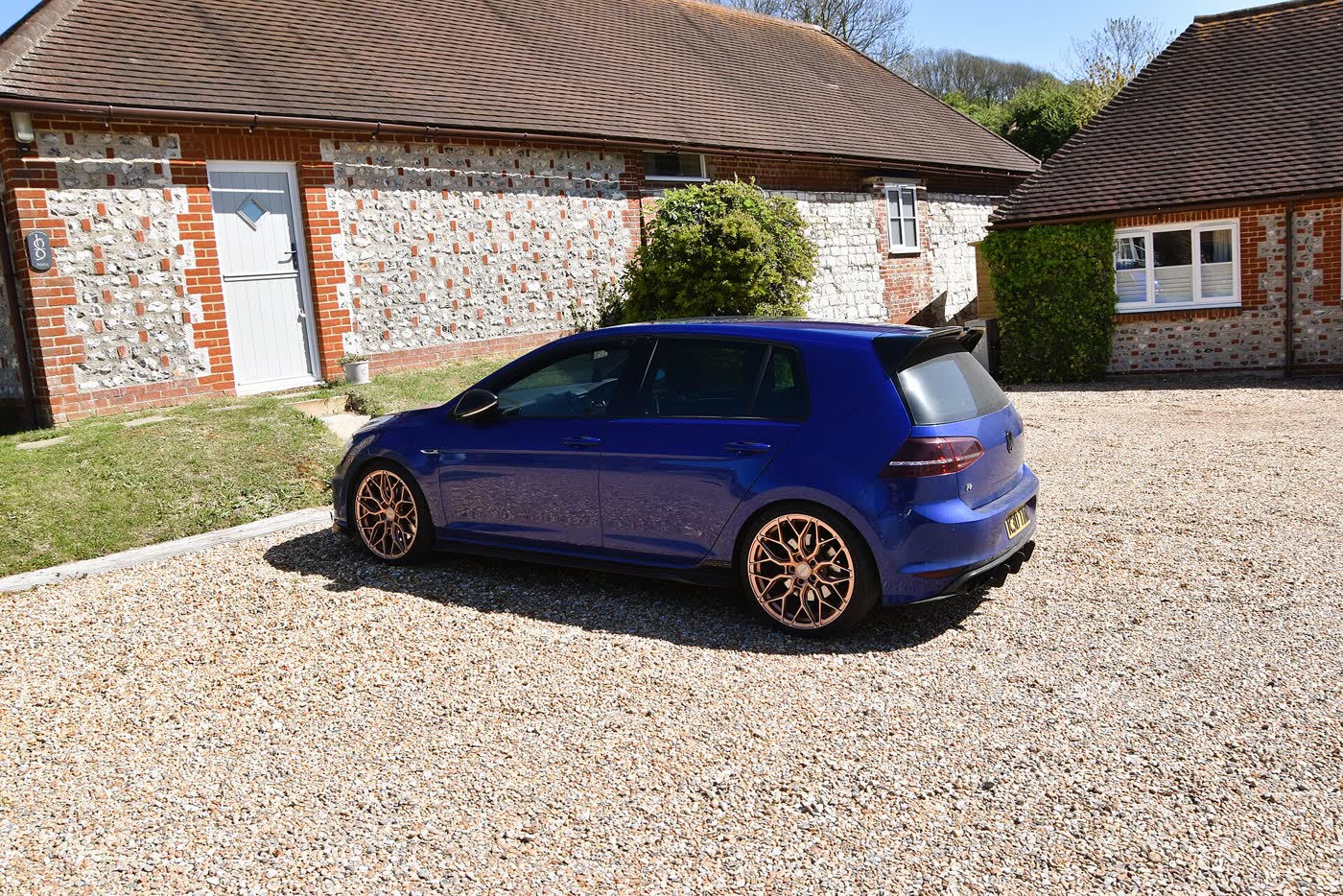
We scored the car as a 2015 to 2019 Mk7 or Mk7.5 with the manual, and it landed at 49 out of 70 with a verdict of Buy, with conditions.
This car is for someone who wants a single car that is quick in every weather, invisible to attention, and comfortable, and who does not need the car to entertain them at the limit. If you want a hot hatch with personality, skip to The Limit, because that is where this car is honest about what it is not.
All money figures use a fixed set of assumptions so they can be compared to other cars we cover: 12,000 miles a year, premium fuel at $4.00 a gallon, and insurance for a 35-year-old driver with a clean record and full coverage. Insurance numbers are published averages, not personal quotes. Prices are from Kelley Blue Book.
| Figure | Golf R (2015-2019 manual) | Source |
|---|---|---|
| Used buy-in (KBB private-party) | ~$22,000 | we found no published source for this figure |
| Verified range | $17,500 to $27,000 | we found no published source for this figure |
| Sample listing (2015, 90,501 mi) | $17,499 | dealer listing seen during research and no longer retrievable; we found no published source for this figure |
| Sample listing (2017, 71,818 mi) | $25,298 | dealer listing seen during research and no longer retrievable; we found no published source for this figure |
| 3-year resale retention | ~75% (estimated) | our estimate: interpolated from the GTI's 72% three-year retention and stepped up because the R is the halo Mk7. Not a captured figure. |
| Price trend | Mk7 R values firming alongside the GTI | our read of the used market; we found no published source for this figure |
~ our estimate, not a measured or quoted figure · * there is a caveat, and the note under the table explains it. Why we mark figures
The Golf R sits in an unusual spot: about $3,000 more than a GTI, but well under a Focus RS at $28,000 or a Civic Type R at roughly $37,000. For that you get 64 more horsepower than the GTI and all-wheel drive, which is a lot of car for the step up. The verified spread runs from $17,500 for a high-mile 2015 to around $27,000 for a clean late car.
One figure to read carefully: the three-year resale retention of about 75 percent is our estimate, not a captured number. We arrived at it by starting from the GTI's verified 72 percent and stepping it up, because the R is the lower-volume halo car in the same range and firms harder. That reasoning is sound but it is still reasoning, so treat the 75 as directional. If a properly sourced figure comes in materially higher, this 7 has room to move up.
One sourcing note worth stating out loud, because it changes what you should believe: some sites quote a $25,000 to $32,000 range for these cars. That figure comes from an affiliate wheel-shop blog and is contradicted by actual Kelley Blue Book listings, so we have disregarded it. If a seller quotes you that range as justification for their price, they are quoting marketing, not market.
| Figure | Golf R (2015-2019) | Source |
|---|---|---|
| Power | 292 hp, 280 lb-ft | VW 2017 Golf R technical specifications |
| 2019 model year | 288 hp | KBB, 2019 Golf R |
| 0 to 60 mph | 5.2 sec (manual, Car and Driver) | Car and Driver test of a 2016 Golf R manual, via Wayback |
| Curb weight | 3,305 lb manual / 3,362 lb DSG | VW 2017 Golf R technical specifications |
| Power-to-weight | 11.3 lb/hp | derived: 3,305 lb manual curb weight divided by 292 hp = 11.3 lb/hp (weight per VW 2017 Golf R technical specifications) |
| Engine | 2.0T EA888 Gen3, Haldex AWD | VW 2017 Golf R press release (2.0-liter EA888 TSI); Car and Driver, via Wayback (Haldex all-wheel drive) |
| Transmission | 6-speed manual or DSG dual-clutch | VW 2017 Golf R press release |
| Drivetrain behaviour | Front-drive default, up to 100% to the rear on demand | we found no published source for this figure |
| Race mode | Stiffens suspension, allows full traction control defeat | we found no published source for this figure |
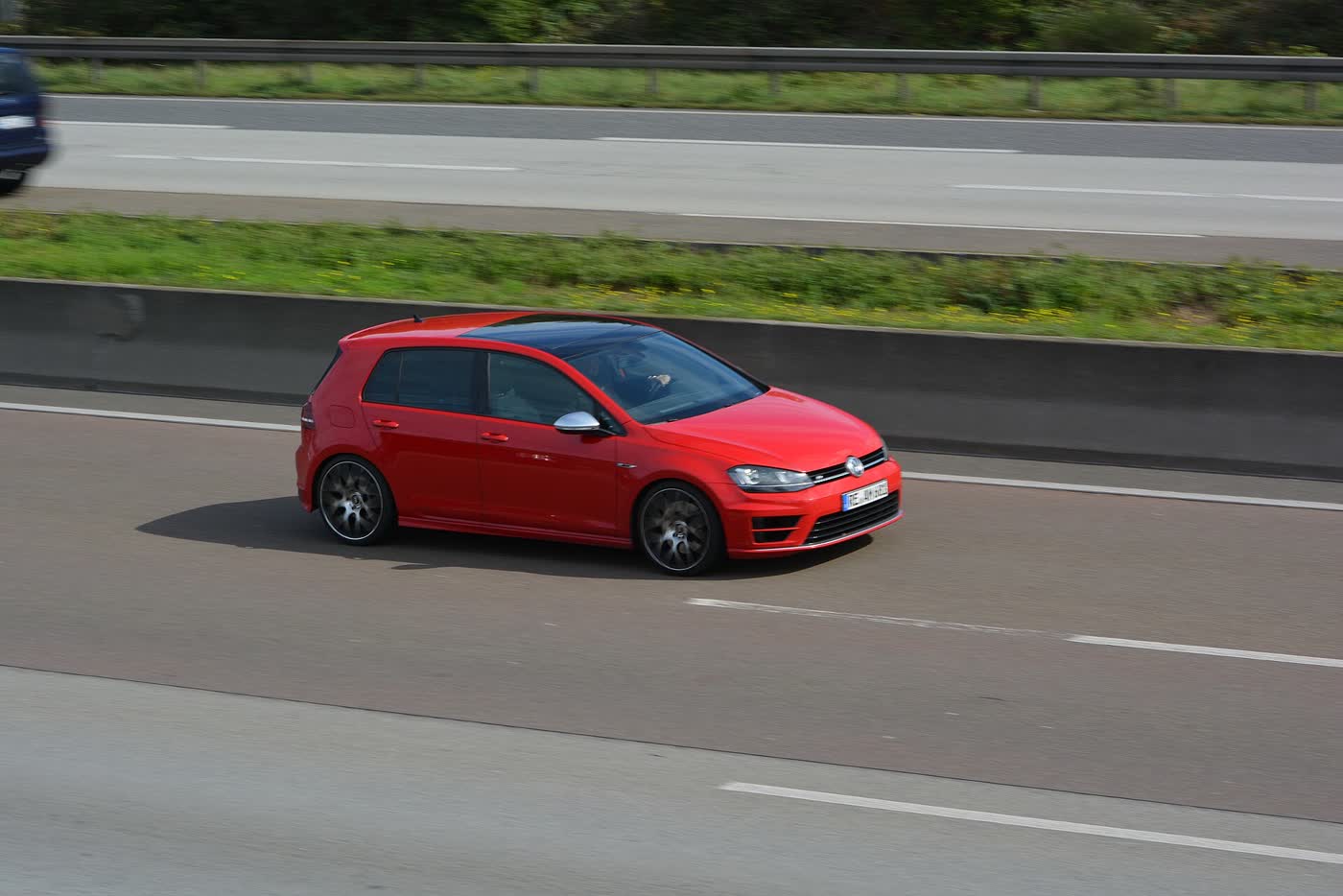
Two hundred and ninety-two horsepower and a 5.2 second run to 60 makes the R quicker than a GR86, quicker than a GTI by a wide margin, and slower only than the Focus RS among the hot hatches. More to the point, all-wheel drive means it delivers that pace in the rain, in the cold, and from a standstill without drama. This is a car that is fast on a Tuesday morning in February, which very few fast cars are.
The character is where it separates from the Focus RS. Haldex is front-biased by default and sends torque rearward on demand, so the R feels planted, composed, and effortless rather than lively. The RS's rear-biased system will rotate and play. The R grips and goes. Whether that is a strength or a weakness is a matter of what you want, and it is the single biggest question to ask yourself before choosing between them.
One number to get right before you repeat it: do not use 296 horsepower. That is the European figure. United States cars are 292 horsepower for 2015 through 2018 and 288 for 2019. Volkswagen's own technical specifications put the manual at 3,305 pounds and the DSG at 3,362, which works out to 11.3 pounds per horsepower. That is identical to the Veloster N and a long way off the Civic Type R's 10.2, which tells you most of what you need to know about where the R's speed actually comes from: traction, not lightness.
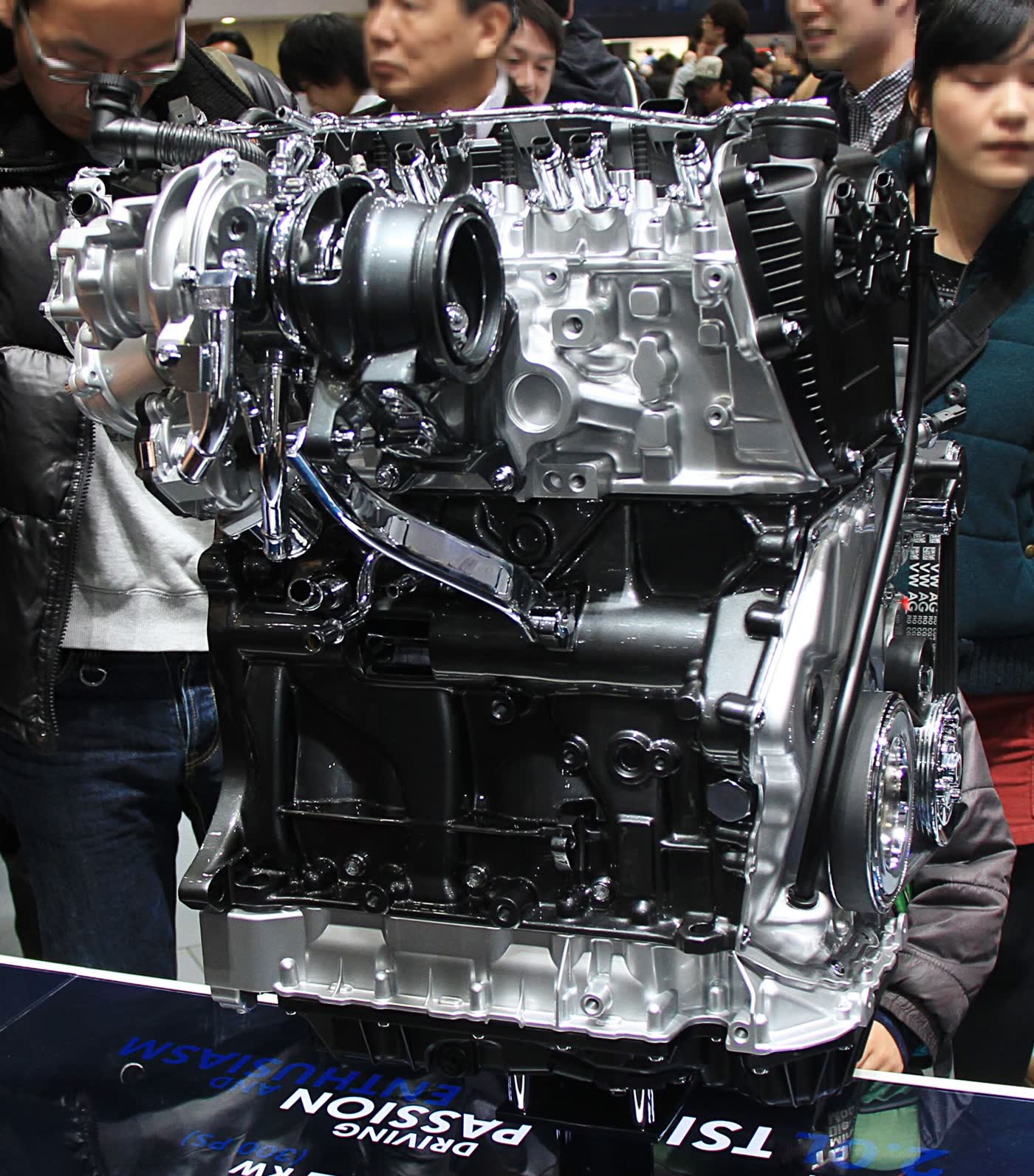
| Figure | Golf R (2015-2019) | Source |
|---|---|---|
| Total annual running cost | ~$5,250/yr | derived: insurance $2,390 plus fuel $1,920 plus tires $380 plus service $560 |
| Insurance | $2,390/yr (sourced, The Zebra) | The Zebra: $199 a month average for the Golf R, times 12 is $2,388, rounded to $2,390. An estimate across model years, not a quote. |
| Fuel | $1,920/yr (sourced, 25 mpg combined) | derived: 12,000 miles a year at 25 mpg combined (fueleconomy.gov, 2017 manual) is 480 gallons, at $4.00 a gallon for premium |
| Tires | ~$380/yr (estimated, 235/35R19) | our estimate for a set of 235/35R19 summer tires, the 19-inch size on the VW 2017 Golf R technical specifications |
| Service | ~$560/yr (estimated) | our estimate |
| Haldex fluid | Every 30,000 miles, plus a 3-year component | VW 2018 maintenance schedule (all-wheel-drive clutch fluid every 3 years); DAP service schedule (30,000 miles, a parts retailer's recommendation) |
| DSG service | 40,000 mi on Mk7, 80,000 mi on Mk7.5 | VW 2018 maintenance schedule (6-speed DSG every 40,000 miles; 7-speed DSG every 80,000 miles, Golf R only); DAP service schedule (40,000 miles on the Mk7 Golf R) |
| Spark plugs / air filter | 60,000 miles | we found no published source for this figure |
| Oil | 10,000 factory; many owners run 5,000 | VW 2018 maintenance schedule (oil service at every 10,000 miles); DAP service schedule (many owners change it every 5,000) |
| Brake fluid | First at 3 years, then every 2 | VW 2018 maintenance schedule |
Roughly $5,250 a year, which puts the R between the GTI at $4,380 and the Focus RS at $8,866. Two of those four lines are now sourced rather than modelled. Insurance is The Zebra's $199 a month on our standard profile. Fuel comes from Volkswagen's own 25 mpg combined rating for the manual, run through the same 12,000 miles a year at $4.00 a gallon that every other car on this Board uses, which lands at $1,920 and is the identical figure the Supra carries for the identical mileage. The tire and service lines are still estimates: $380 for a set of 235/35R19s amortised out, and $560 for service including the Haldex fluid. Treat those two as directional, and the total as a real sum rather than a guess at a total.
What is well documented is the service schedule, and there is one line in it that should shape which car you buy. The DSG service interval is 40,000 miles on the Mk7 but 80,000 miles on the Mk7.5. That is a genuine ownership cost difference inside what most people think of as one model, and it means a facelift car with the dual-clutch is meaningfully cheaper to keep than a pre-facelift one. If you are buying DSG, buy the Mk7.5.
The other thing the GTI does not have is the Haldex fluid service, due every 30,000 miles plus a three-year time component. It is not expensive on its own, but it is a recurring job that comes with the all-wheel drive, and a car with no record of it having been done is a car whose coupling has been running on old fluid. Ask for the history.
| Figure | Golf R (2015-2019) | Source |
|---|---|---|
| Worst realistic repair | ~$900 (water pump + thermostat housing) | we found no published source for this figure |
| Dominant failure | Most-reported problem across 2,651 surveyed Golfs (TrueDelta) | TrueDelta, via Wayback (the captured page counts 2,649 surveyed Golfs) |
| Mechanism | Plastic housing warps and cracks from heat cycling | Autodoc, on the Golf 7 plastic thermostat housing cracking from temperature cycling |
| Typical onset | 60,000 to 100,000 km | we found no published source for this figure |
| Carbon buildup | Real on the EA888 Gen3; walnut blasting ~350 to 600 euro every 60,000 to 80,000 km | we found no published source for this figure |
| Thrust bearing | Manual cars with upgraded clutches carrying higher thrust load | we found no published source for this figure |
The headline risk is the same one that defines the whole Golf platform: the plastic water pump and thermostat housing. TrueDelta's owner survey data makes this unusually well evidenced. Across 2,651 surveyed Golfs it is the single most-reported problem, ahead of the intake manifold, wheel bearings, and ignition coils. The housing warps and cracks from heat cycling, typically somewhere between 60,000 and 100,000 kilometres, and it runs around $900. Check whether it has been done, and treat a car with paperwork as worth more.
The second item is intake-valve carbon buildup, which is real on this direct-injected engine and needs walnut blasting roughly every 60,000 to 80,000 kilometres at around 350 to 600 euro. We want to be careful here, because there is a popular claim that pre-facelift cars are direct-injection only and that the Mk7.5 added port injection to solve it. That year-split explanation is not established. It traces to a single affiliate source and we could not confirm it. The buildup is real; the tidy story about which years escape it is not something you should pay extra for.
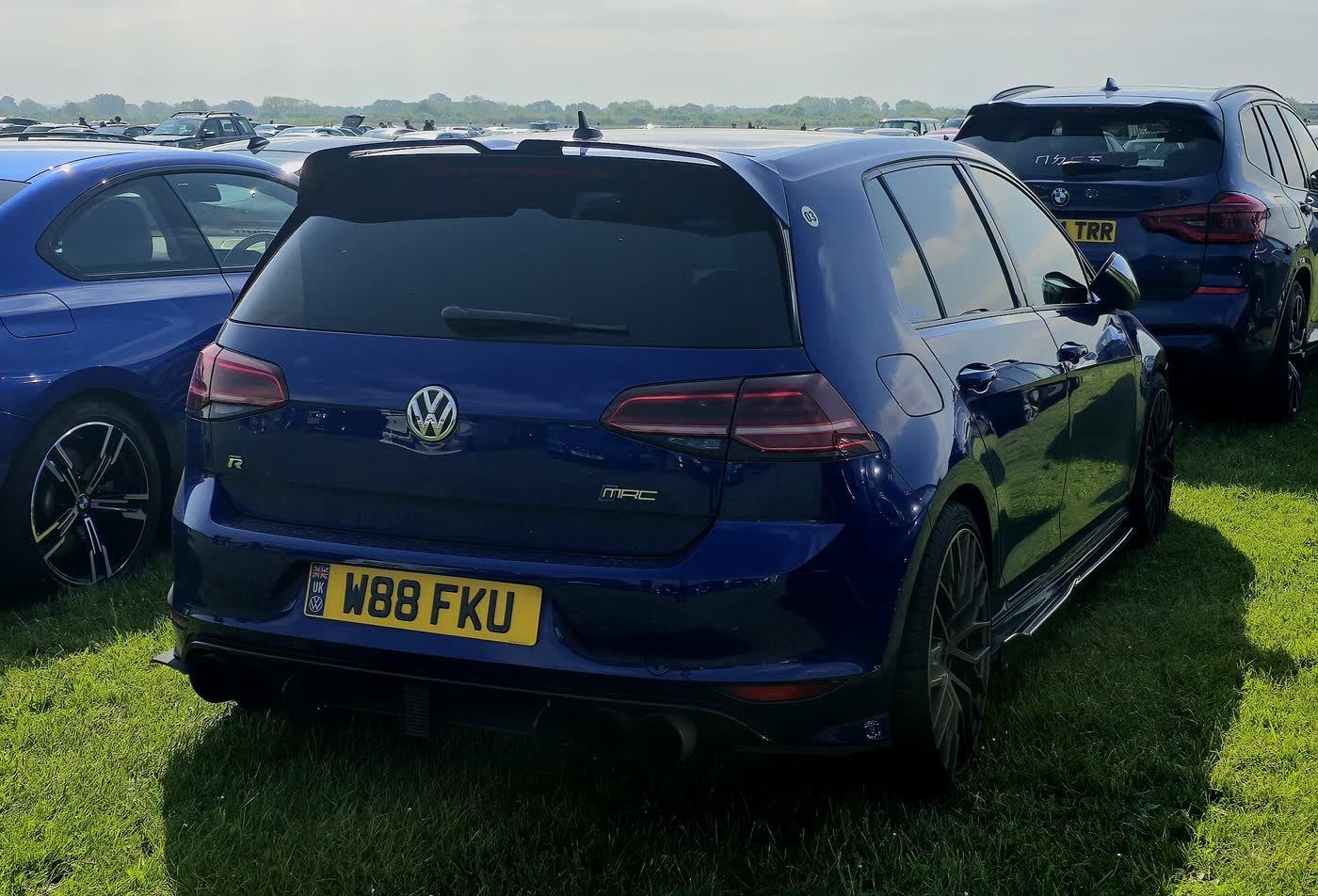
Third, and only relevant to some buyers: manual cars running upgraded clutches have reported thrust bearing failures, because a stiffer clutch puts more thrust load through the bearing. If you are looking at a modified manual R, that is a specific thing to ask about. Taken together this is a broader maintenance cluster than the GTI carries, but every item is moderate cost and none of it is catastrophic, which is why it lands on the same 6.
| Figure | Golf R | Source |
|---|---|---|
| Cargo volume | 22.8 cu ft | VW 2017 Golf R technical specifications |
| Cargo below shelf | 16.5 cu ft | we found no published source for this figure |
| Seats | 5 | VW 2017 Golf R technical specifications |
| Doors | 4 | KBB, 2017 Golf R |
| All-weather | Haldex AWD makes it a genuine year-round daily | our assessment; the permanent all-wheel-drive system is per the VW 2017 Golf R technical specifications |
| Comfort | DCC adaptive dampers available; far more compliant than the Focus RS | DCC availability per the VW 2017 Golf R press release; the comparison with the Focus RS is our assessment |
The R shares the Golf VII hatch body with the GTI, so it carries the same 22.8 cubic feet, four doors, and five real seats that put the GTI at the top of our Daily category. It ties that 9, and in the real world there is an argument it should beat it, because it adds all-weather traction without surrendering any space or comfort to get it.
The comparison that matters is against the Focus RS, which has marginally more cargo at 23.3 cubic feet and also has all-wheel drive. The R wins anyway, and it wins on refinement. The RS rides very firmly, is loud at speed, and puts you in aggressively bolstered Recaros. The R is a Golf: quiet, comfortable, and available with adaptive dampers that soften it. One is a performance car you can commute in. The other is a car you can commute in that happens to be very fast.
If you have one parking space and one budget and you live somewhere with real winters, this section plus The Drive is the entire argument for the Golf R over almost anything else on this Board.
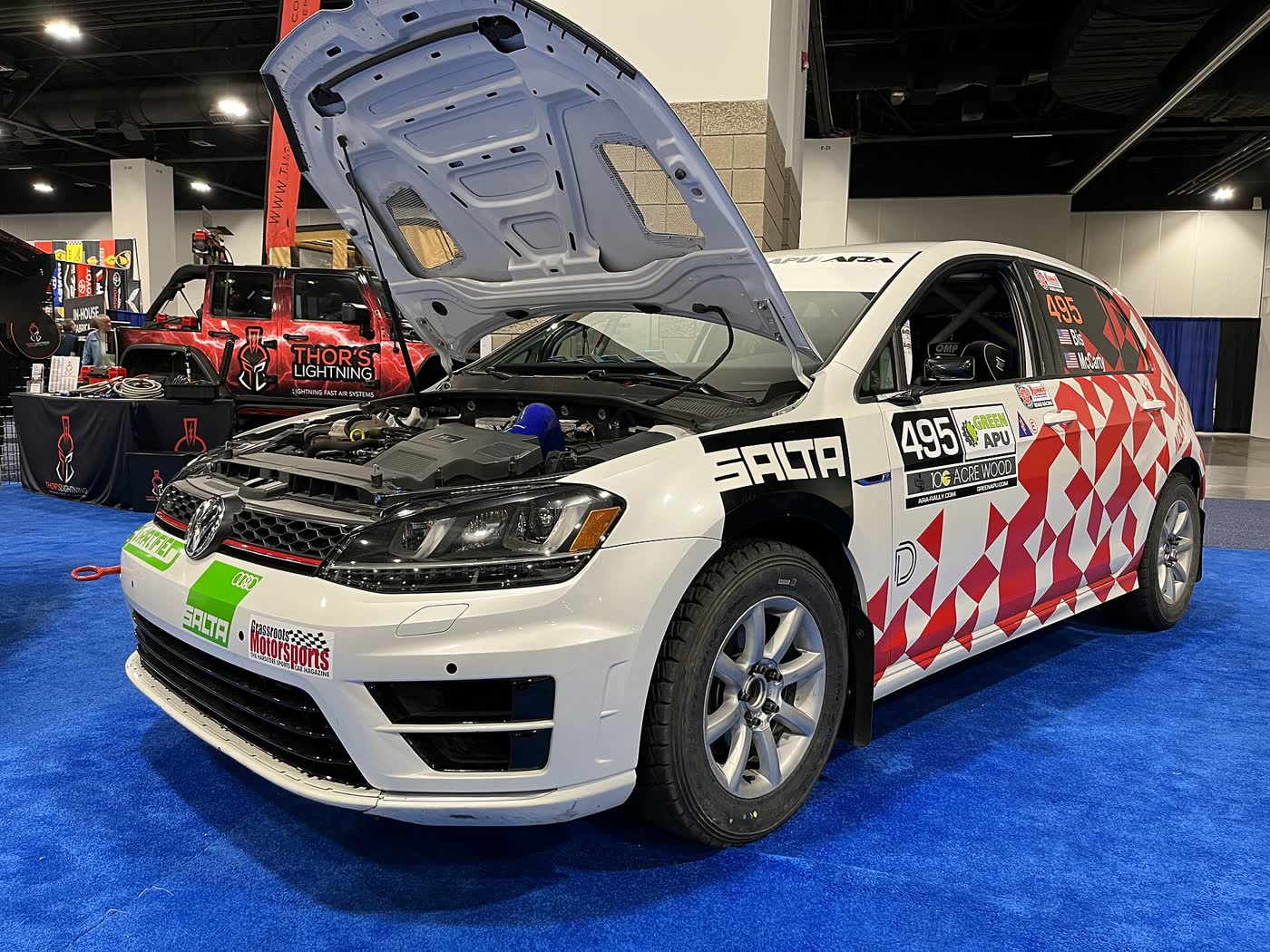
| Figure | Golf R (2015-2019) | Source |
|---|---|---|
| Max grip | ~0.96 g (estimated) | our estimate: interpolated from the GTI's measured grip, adjusted for the R's tires and weight |
| 70-0 braking | ~157 ft (estimated) | our estimate: interpolated from the GTI's measured braking, adjusted for the R's brakes and weight |
| Track hardware | Haldex AWD with up to 100% rear torque; Race mode | we found no published source for this figure |
| Race mode | Stiffer suspension, full traction control defeat | we found no published source for this figure |
| Caveat | Front-biased Haldex is composed and clinical rather than adjustable | our assessment |
| Competition pedigree | None recorded | none recorded in the sources checked |
Be straight about these two numbers, because they are the softest on the page: nobody has published an instrumented test of a Mk7 Golf R that we could reach, so the 0.96 g and 157 feet are our estimates rather than measurements. We built them from the GTI's Car and Driver figures of 0.95 g and 161 feet on summer tires, then adjusted: the R runs wider 235/35R19 rubber and 13.4-inch front discs, but carries 247 more pounds. Grip nudges up, braking nets slightly shorter. That is defensible reasoning and it is still reasoning. Do not quote either figure as a tested result, and note that the GTI's own numbers swing twenty feet depending on which tires are fitted, which is exactly how much uncertainty sits behind ours.
On behaviour, the R is clearly a step beyond the GTI. All-wheel drive kills the front-drive car's traction limitations, it does not scrabble out of a corner, and Race mode will stiffen the suspension and let you switch traction control fully off. It is fast, secure, and unflustered in conditions that would have a GTI struggling for grip.
What it is not is adjustable. Haldex is front-biased until it decides otherwise, so the R understeers into its limit and stays composed rather than rotating. There is no autocross or track pedigree on record for it the way there is for the Miata or the Type R. The word that keeps coming up for this car at the limit is clinical, and a 7 is what clinical earns on our scale. That puts it exactly where the Nissan Z sits: quick and capable, short on conversation.
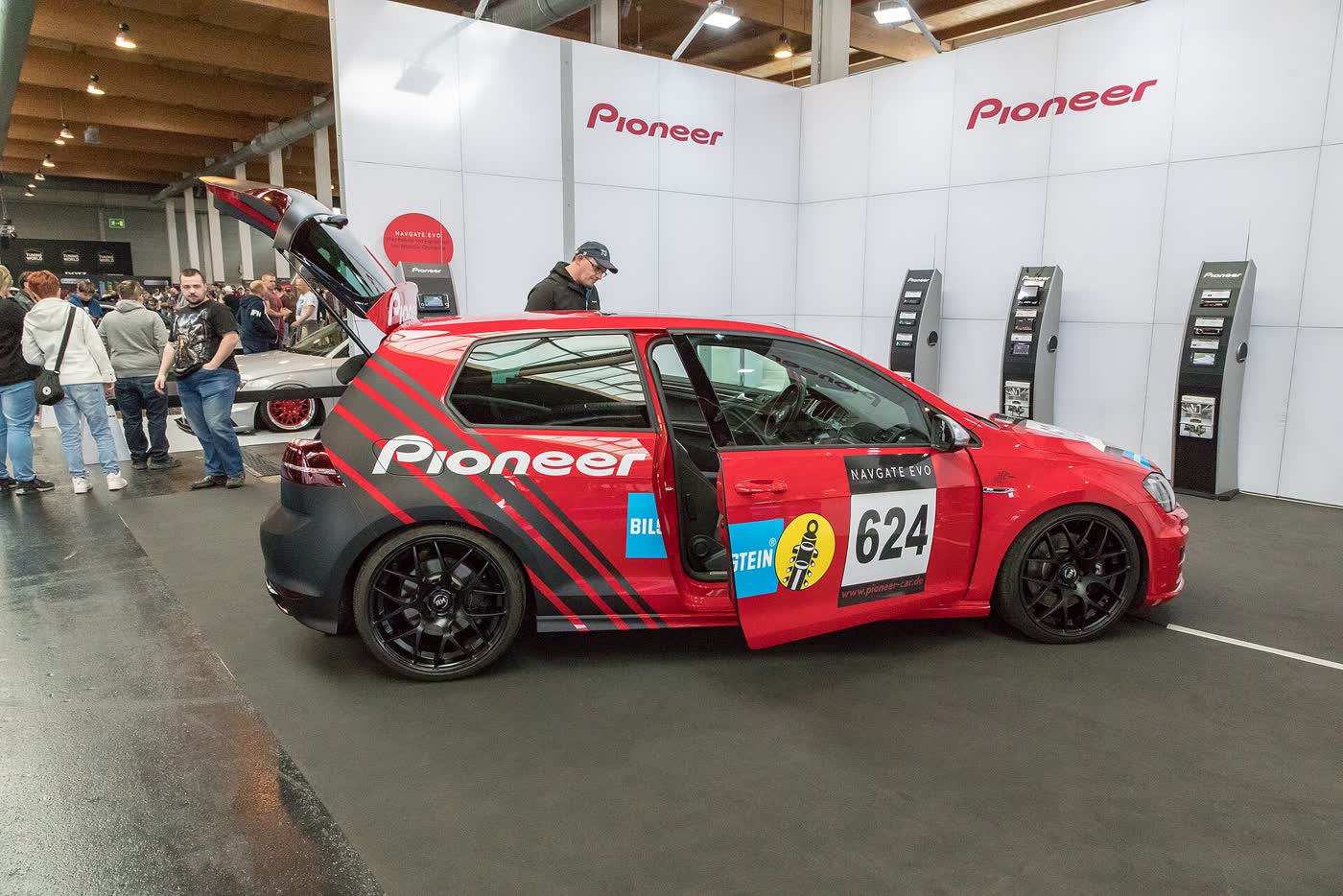
| Path | Result | Risk |
|---|---|---|
| APR Stage 1 | +60 hp / +101 lb-ft claimed on 93 octane, $799 | Low |
| Unitronic Stage 1 | 355 hp / 338 lb-ft claimed on 91 octane | Low |
| Unitronic Stage 2 | 397 hp / 368 lb-ft with supporting hardware | Low to moderate |
| Bigger turbo | Past the IS38 | Moderate |
| Big power | Turbo plus fueling | High |
The R gets the same great tuning engine as the GTI with a bigger turbo bolted to it. The IS38 is a genuine step above the GTI's IS20, and it is the part GTI owners buy when they want to go further. Around $800 gets you a Stage 1 flash, and the aftermarket behind the platform is elite, with Unitronic, APR, and Integrated Engineering all fully supporting it.
Read the numbers in that table carefully, though, because they are all vendor claims measured at the crank, not independent dyno figures at the wheels. That is a meaningful distinction and it is why we will not put a Golf R crank number next to a GTI wheel number and call it a comparison. What the figures do support is the shape of the platform: two independent tuners land in the same band from a Stage 1 flash, and that agreement is reasonable corroboration that the headroom is there.
The practical advantage over the GTI is not just the turbo, it is traction. A tuned front-drive GTI runs into torque steer and wheelspin long before it runs out of power. The R can actually use what a tune gives it. It falls short of the Supra and Nissan Z's 9 only because those turbocharged sixes have far bigger ceilings on stock internals.
Buy, and buy on history rather than on spec: verify the water pump and thermostat housing, and ask for the Haldex fluid record. If you are buying a DSG car, make it a Mk7.5 for the 80,000-mile service interval. It scores 49 out of 70 on a Daily of 9, real speed and all-weather traction, and giving up ground only on running costs and on engagement at the limit.
This car is for you if you want one quick, comfortable, invisible car that works every day of the year. It is not for you if you want a hot hatch with personality, because the Focus RS is the one that will entertain you and the R is the one that will simply get on with it.
So you want to buy a used Golf R. This scores 49 out of 70, it will do everything a GTI does while being considerably quicker in any weather, and it looks like something you would be given at an airport rental desk. That last part is either the entire appeal or a dealbreaker, and only you know which.
We scored this car as a 2015 to 2019 Mk7 or Mk7.5 with the manual gearbox, and it landed at 49 out of 70. One thing to be upfront about: this car has more gaps in its research than anything else we have published. We are going to be specific about where those gaps are rather than papering over them, because knowing what we do not know is part of buying well.
The verified range runs from about $17,500 to $27,000. At the bottom, we found a 2015 with 90,501 miles at $17,499. Nearer the top, a 2017 with 71,818 miles at $25,298. Call $22,000 the realistic number for a decent middle-of-the-road example.
What makes that interesting is where it sits. A GTI is around $19,000, so the R is roughly $3,000 more for 64 extra horsepower and all-wheel drive. A Focus RS is $28,000 and a Civic Type R is closer to $37,000. On a pure capability-per-dollar basis the R occupies a sweet spot in this segment, and that is a big part of why it finishes where it does on our Board.
Here is a sourcing warning that will save you money. You will find sites quoting a $25,000 to $32,000 range for these cars. That figure originates from an affiliate wheel-shop blog and it is flatly contradicted by actual Kelley Blue Book listings. If a seller cites that range at you as justification for their asking price, they are quoting marketing rather than market. Price off real completed listings.
One figure to read carefully. The three-year resale retention of about 75 percent is our estimate, not a captured number. We started from the GTI's verified 72 percent and stepped it up, because the R is the lower-volume halo model in the same range and firms harder. That is sound reasoning and it is still reasoning, so treat the 75 as directional. If a properly sourced figure lands materially higher, which would not surprise us, then a 7 here is conservative and the car is even better value than we have credited.
Two hundred and ninety-two horsepower and 280 pound-feet, and Car and Driver recorded 5.2 seconds to 60 for the manual. That makes it quicker than a GR86, dramatically quicker than a GTI, and slower only than the Focus RS among the hot hatches we have scored.
Before we go further, a correction, because this one is everywhere. Do not use the 296 horsepower figure. That is the European number. United States cars make 292 horsepower for 2015 through 2018 and 288 for 2019. You will see 296 quoted in listings and forum posts constantly, and it is simply the wrong market's spec sheet.
The real product here is not the 0 to 60 time, it is when you can use it. All-wheel drive means the R delivers that pace in rain, in cold, and from a standstill without any theatre or wheelspin. This is a car that is fast on a wet Tuesday morning in February, and very few fast cars are.
Now the part the spec sheet actively misleads you about. You will read that the Haldex system sends "up to 100 percent of torque to the rear," and that is technically accurate. What it implies, that this behaves like a rear-drive car when you want it to, is not. Haldex is front-biased by default and sends torque rearward reactively, on demand, once the fronts start to give up. The practical result is a car that grips and goes rather than one that rotates and plays. Compare that to the Focus RS, whose rear-biased system will pivot the car, and you have the single clearest difference between the two. Neither is wrong. They are different cars pretending to be the same one.
We score The Drive on feel and refinement, not on pure numbers, and the R lands on 8: quicker and more capable than the GTI's 7, short of the theatre that earns the RS and the Supra their 9s. One number now resolved: Volkswagen's own technical specifications put the manual at 3,305 pounds and the DSG at 3,362, which works out to 11.3 pounds per horsepower. That is identical to the Veloster N and well off the Civic Type R's 10.2, which tells you where the R's speed actually comes from: traction, not lightness.
Our figure is about $5,250 a year, which puts it between the GTI at $4,380 and the Focus RS at $8,866. Be aware of exactly how solid that number is, because it is a mixture. Two lines are sourced. The Zebra puts a Golf R at $199 a month, or $2,390 a year, on our standard profile, and Volkswagen's own 25 mpg combined rating for the manual gives $1,920 of fuel on our standard 12,000 miles at $4.00 a gallon. The tire and service lines, $380 and $560, are still estimates. So the total is now a real sum of its parts rather than a guess at a total, but two of those four parts are ours rather than measured.
What is thoroughly documented is the service schedule, and buried in it is the single most actionable piece of buying advice on this page. The DSG service interval is 40,000 miles on the Mk7 but 80,000 miles on the Mk7.5. That is a doubling, inside what most buyers think of as one model, and it is real recurring money over a long ownership. If you are buying a dual-clutch car, buy the facelift. If you are buying the manual, this does not apply to you and you can shop the whole range.
The other cost the GTI does not carry is the Haldex fluid service, due every 30,000 miles plus a three-year time component. It is not expensive on its own, but it is the maintenance item that keeps the all-wheel-drive coupling healthy, and it is the one most likely to have been skipped by an owner who did not know about it. Ask for the record. A car with no Haldex history is a car whose coupling has been running on old fluid, and that is worth knowing before you buy rather than after.
The rest of the schedule is unremarkable: spark plugs and air filter at 60,000 miles, oil at 10,000 from the factory though plenty of owners sensibly run 5,000, brake fluid first at three years and then every two, and no VW-specified interval for manual transmission fluid.
The headline issue is the same one that defines the entire Golf platform, and the evidence behind it is unusually good. TrueDelta's owner survey data covers 2,651 Golfs, and across that sample the water pump and thermostat housing is the single most-reported problem, ahead of the intake manifold, wheel bearings, and ignition coils. It is a plastic assembly, it warps and cracks from heat cycling, and it typically shows up somewhere between 60,000 and 100,000 kilometres. Budget around $900.
That is a big enough sample that you should treat this as a when, not an if. As with the GTI, a car with paperwork proving the job is done is worth paying more for, and a car without it has a bill in its near future that belongs in your offer.
Second item, and here we need to correct something that circulates widely. Intake-valve carbon buildup is real on this direct-injected engine, and walnut blasting runs roughly 350 to 600 euro every 60,000 to 80,000 kilometres. You will read that pre-facelift cars are direct-injection only and that the Mk7.5 added port injection which solved it. That year-split explanation is not established. It traces to a single affiliate source and we could not confirm it. The buildup is real. The tidy story about which model years escape it is not something to pay a premium for.
Third, and this one is narrow but worth knowing if you are shopping modified cars: manual Golf Rs running upgraded clutches have reported thrust bearing failures, because a stiffer clutch puts more thrust load through the bearing. If the car in front of you has an aftermarket clutch, ask specifically about it.
Add all of that up and you get a broader maintenance cluster than the GTI carries, since the R has the same water pump plus the carbon question plus the Haldex dependency plus the thrust bearing risk on modified cars. But every item on that list is moderate money and none of it is catastrophic, which is exactly why it lands on the same 6 the GTI does rather than lower.
Comfortably, and this is where the R quietly wins. It shares the Golf VII hatch body with the GTI, so you get the same 22.8 cubic feet of cargo, 16.5 of it below the parcel shelf, four doors, and five seats adults actually fit in. That earns a 9 on The Daily, level with the GTI, and the two of them are clear of everything else.
In the real world there is a decent argument the R should beat it outright, because it adds genuine all-weather traction without surrendering a single cubic foot or any comfort to get it. If you live somewhere with winters, this is a car that removes the need for a second vehicle rather than creating one.
The comparison that makes the point is against the Focus RS. The RS actually has marginally more cargo at 23.3 cubic feet and it also has all-wheel drive, and it still loses this category. The reason is refinement. The RS rides very firmly, it is loud at speed, and it puts you in aggressively bolstered Recaros. The R is a Golf: quiet, comfortable, and available with DCC adaptive dampers that soften it. One of them is a performance car you can commute in. The other is a car you commute in that happens to be very fast.
We have to open this section with a caveat rather than a figure. The 0.96 g and 157 feet on this page are our estimates, not measured results. No instrumented test of a Mk7 Golf R was reachable, so we built both numbers from the GTI's Car and Driver figures of 0.95 g and 161 feet on summer tires, adjusting for the R's wider 235/35R19s and 13.4-inch front discs against its extra 247 pounds. Grip steps up a little, braking comes in a little shorter. Bear in mind the GTI's own figures swing by twenty feet depending on which tires are fitted, which is roughly the size of the uncertainty sitting behind ours. This category is still really scored on behaviour, and you should read the 7 with that in mind.
On behaviour, the R is clearly a step beyond the GTI. All-wheel drive removes the front-drive car's traction limitation entirely, so it does not scrabble or torque-steer its way out of a corner, and Race mode will stiffen the suspension and allow full traction control defeat if you want it.
What it is not is adjustable. Haldex stays front-biased until it decides otherwise, so the R understeers into its limit and stays composed rather than rotating. There is no autocross or track pedigree on record for it the way there is for the Miata or the Civic Type R. The word that keeps coming up when people describe this car at ten tenths is clinical, and clinical is exactly what a 7 means on our scale. That places it alongside the Nissan Z: quick and capable, short on conversation.
If you want a hot hatch that entertains you when you push it, this is the section where you should start looking at the Focus RS or the Type R instead. If you want a car that makes you look good on a damp back road without ever threatening you, the R is superb at precisely that.
The R gets the same excellent tuning engine as the GTI with a bigger turbocharger bolted to it. The IS38 is a genuine step up from the GTI's IS20, and it is the part GTI owners buy when they want to go further. Around $800 gets you a Stage 1 flash. Unitronic quote 355 horsepower and 338 pound-feet on 91 octane for theirs, a gain of 63 horsepower and 58 pound-feet. Their Stage 2 claims 397 and 368 with supporting hardware. APR quote plus 60 horsepower and plus 101 pound-feet on 93 octane for $799. The aftermarket is elite, with Unitronic, APR, and Integrated Engineering all fully behind the platform.
Now the thing almost nobody explains properly, and it matters if you are cross-shopping. Every one of those tuner numbers is a marketing claim measured at the crank, not an independent dyno figure at the wheels. Our GTI page quotes roughly 290 wheel horsepower after a Stage 1 flash. If you put "355" next to "290" you would conclude the R is miles ahead, and that comparison is meaningless, because the two numbers are measured in different places.
It gets one step worse for the R specifically. Wheel horsepower is always lower than crank horsepower because the drivetrain absorbs some of it, and an all-wheel-drive car has considerably more drivetrain to turn than a front-drive one. So the gap between an R's crank claim and what it would show on a rolling road is wider than the same gap on a GTI. We are not going to invent a conversion factor for you, because we do not have independently dynoed figures for either car. What we will tell you is this: do not compare a crank number to a wheel number and think you have learned something, and be sceptical of any Golf R build thread quoting a headline figure without saying where it was measured.
What the tuner figures do support is the shape of the platform. Two independent companies land in the same power band from a simple flash, and that agreement is reasonable corroboration that the headroom is really there, even though neither number is proof of output.
The practical advantage over a tuned GTI is not just the bigger turbo, it is traction. A front-drive GTI runs into torque steer and wheelspin long before it runs out of power. The R can actually deploy what a tune gives it, in more conditions, more of the time. That is why it earns an 8 here and falls short of the Supra and Nissan Z's 9 only because those turbocharged sixes have far bigger ceilings on stock internals.
This is the real decision for anyone shopping all-wheel-drive hot hatches, and the two cars answer completely different questions. The RS is quicker, with 350 horsepower and a 4.7 second run to 60 against the R's 292 and 5.2. It is more capable at the limit, with 0.98 g of grip and a 158 foot stop from 70, scoring 8 to the R's 7. And its rear-biased all-wheel drive with Drift Mode will do things the Haldex system simply cannot.
The R wins everything else. It is $6,000 cheaper at around $22,000 against $28,000. It is cheaper to run, at roughly $5,250 a year against $8,866. It is significantly more comfortable and quieter, which is why it takes The Daily 9 to 8 despite having marginally less cargo space. And critically, it carries no equivalent of the Focus RS head-gasket story, where Ford's free fix under Program 17B32 expired in January 2019 and any remaining bill is now yours. On our Board the R scores 51 to the RS's 48.
So: if you want a hot hatch with genuine character that will entertain you on a back road and at a rallycross, and you can absorb both the running costs and the risk of an undocumented gasket, buy the Focus RS. If you want the car that is quick everywhere, cheap to run, comfortable enough for a long commute, and carries no catastrophic failure mode, buy the Golf R. Most people asking the question want the R, and a few of them will buy the RS anyway, which we entirely understand.
Worth asking, because the GTI scores 50 to the R's 51 and costs about $3,000 less. The two share a body, tie at 9 on practicality, and use the same engine family.
The R buys you three things: 64 more horsepower, all-weather traction, and the IS38 turbo's greater headroom if you plan to build the car. It costs you on running costs, where the GTI wins 7 to 6 thanks to better fuel economy, cheaper insurance at $1,850 against $2,390, and no Haldex fluid service.
The honest answer is that this is close, and the one-point gap reflects that. If you live somewhere flat and dry and mostly want a quick practical car for the least money, the GTI is the smarter purchase and you will not feel short-changed. If you deal with real weather, or you want the extra performance ceiling, the R is worth the step up. Neither choice is a mistake.
Buy, and buy on history rather than on the spec sheet. Verify the water pump and thermostat housing, ask for the Haldex fluid record, and if you are buying a DSG car make it a Mk7.5 for the 80,000-mile service interval. Those three checks are worth more than any amount of trim-level agonising.
It scored 49 out of 70 on a practicality score of 9, real speed and genuine all-weather traction, and giving up ground only on running costs and on engagement at the edge. Remember that four of the figures on this page are ours rather than measured: three-year resale, skidpad, braking, and the tire and service lines inside the running cost. Curb weight is now sourced from Volkswagen directly, at 3,305 pounds, which finally gives the car a power-to-weight number. But the grip and braking estimates in particular are interpolated from the GTI, and the figures say so where they are used.
This car is for you if you want one quick, comfortable, invisible car that works every single day of the year. It is not for you if you want a hot hatch with personality, because the Focus RS is the one that will entertain you and the Golf R is the one that will simply, quietly, get on with it.
Filming reference: cue sheet · for the hosts on set, not part of the review.
The frame that closes our video: the Golf R at 49/70, with the Golf GTI and the Focus RS alongside.