2018+ Mk7.5 · Performance Package · Manual
Buy the practical one that tunes like a monster. Get a 2018 or newer Mk7.5 with the Performance Package, and check the water pump history before you hand over a dollar.
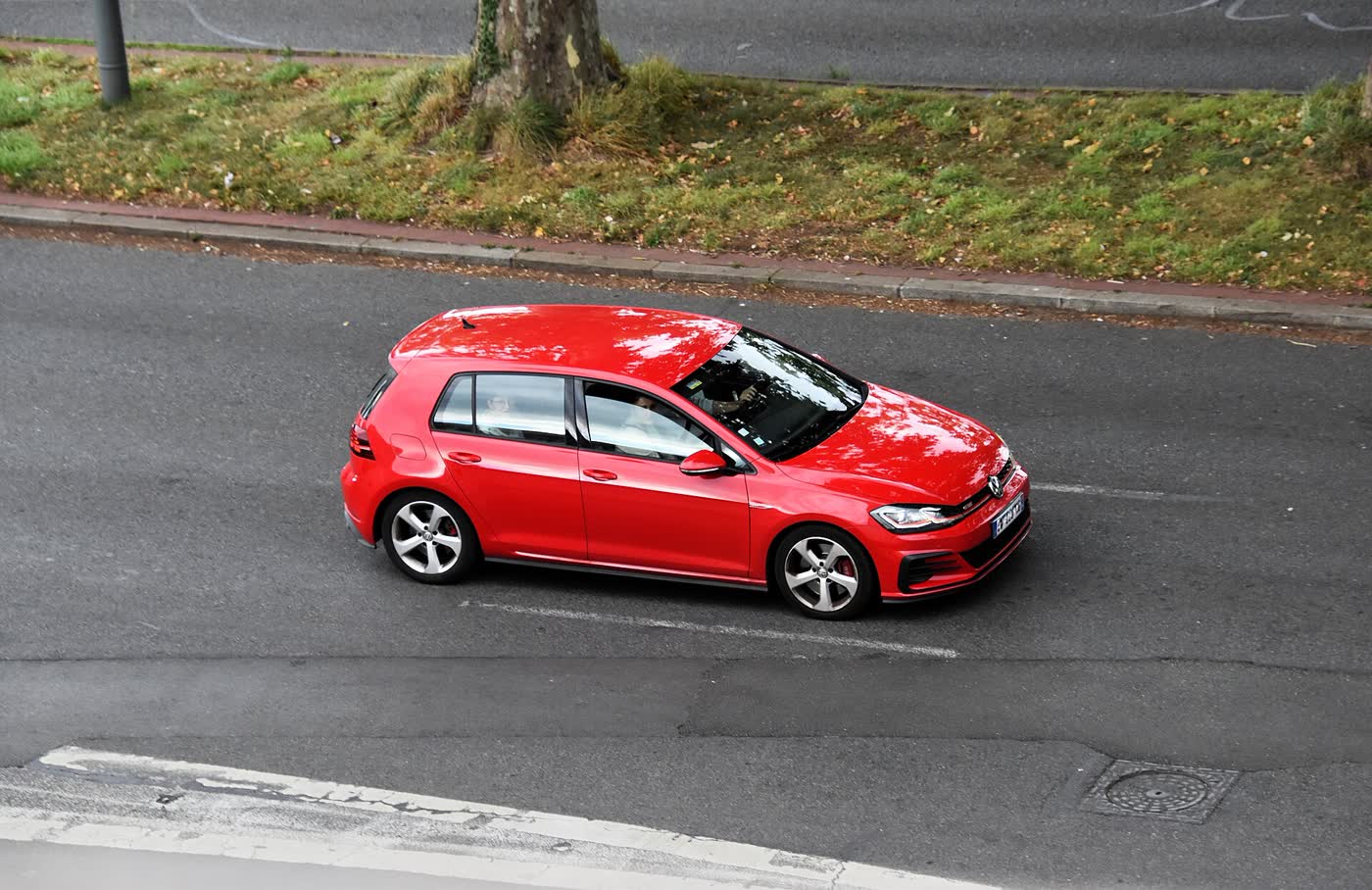
We scored the car as a 2018 or newer Mk7.5 with the Performance Package and the manual, which is the version most enthusiasts should be shopping, and it landed at 49 out of 70 with a verdict of Buy, with conditions.
This car is for someone who wants one car to do everything, who cares more about how easy a car is to live with than how it rotates on a track, and who likes the idea that a cheap flash makes it quick. If you want rear-drive adjustability at the limit, skip to The Limit and save yourself the argument.
All money figures use a fixed set of assumptions so they can be compared to other cars we cover: 12,000 miles a year, premium fuel at $4.00 a gallon, and insurance for a 35-year-old driver with a clean record and full coverage. Insurance numbers are published averages, not personal quotes. Prices are from Kelley Blue Book.
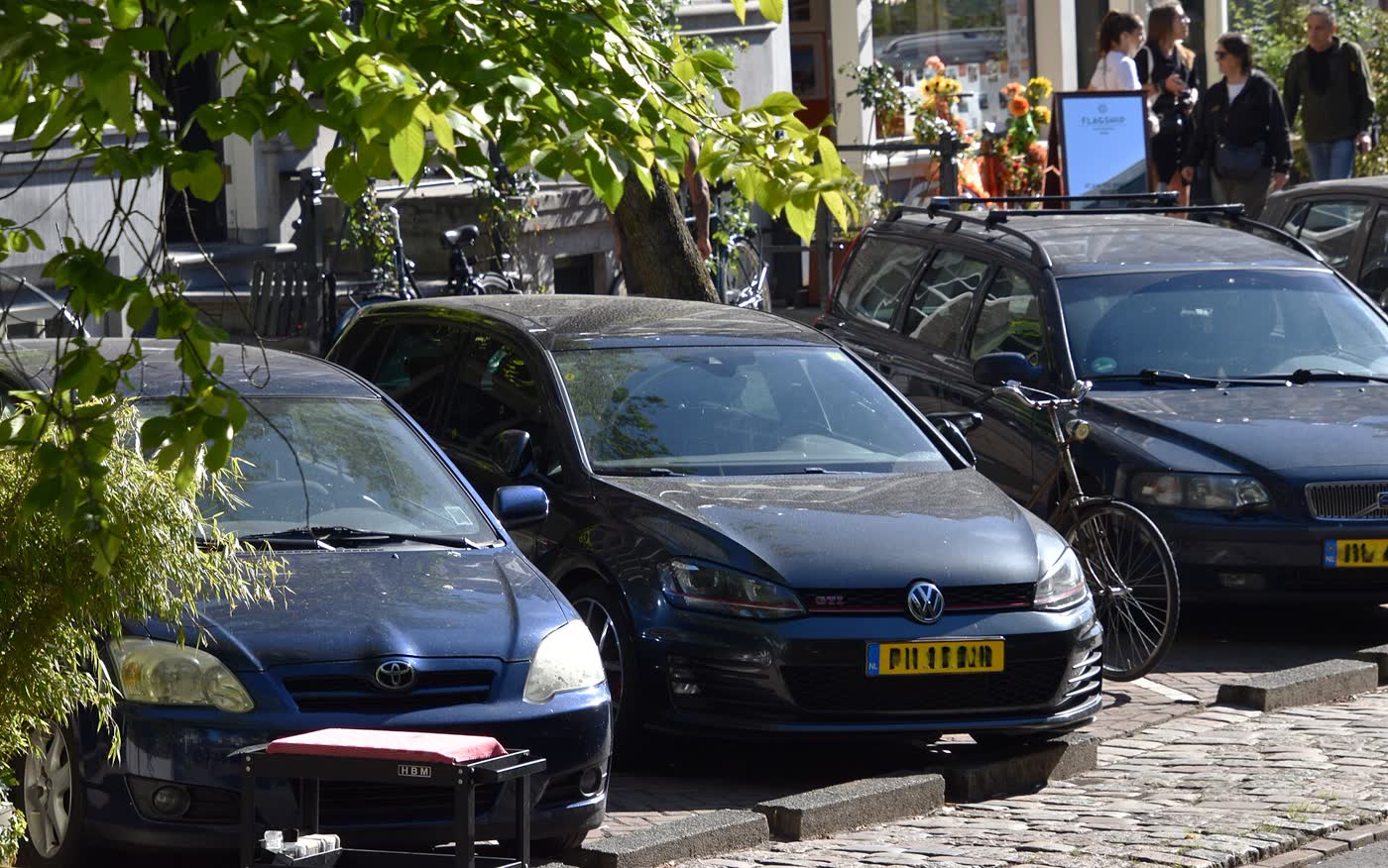
| Figure | Golf GTI (2018+ Mk7.5 w/ PP) | Source |
|---|---|---|
| Used buy-in (KBB private-party) | ~$19,000 | we found no published source for this figure |
| Typical retail listing | ~$22,000 | we found no published source for this figure |
| New 2026 price | $34,590 | vw.com, 2026 Golf GTI starting MSRP |
| 3-year resale retention | ~72% | we found no published source for this figure |
| Trims | S, SE, Autobahn, plus the Performance Package option; Rabbit (2019) | KBB, 2019 trim list: S, SE, Autobahn and Rabbit Edition. The Performance Package as a separate option is not listed there |
| Price trend | Mk7 values firming as a modern classic | KBB 2018 value history and KBB 2019 value history |
~ our estimate, not a measured or quoted figure. Why we mark figures
Around $19,000 buys a modern turbocharged hatchback with a limited-slip differential, four doors, and a chassis that reviewers have spent a decade calling the benchmark. That is less than a GR86, less than a Focus RS, and about half of a used Supra. If your budget tops out around twenty thousand dollars and you want one car that does everything, this is the shortest path there.
The honest caveat is resale. At roughly 72 percent retention over three years, the GTI depreciates faster than the Japanese cars it competes with, and that gap is real money if you plan to sell in a few years. It is the single reason this category scores a 7 rather than an 8. The offsetting news is that Mk7 values are firming as the car settles into modern-classic status, so the steep early drop is mostly behind a used buyer.
On trim, hold out for the Performance Package. The VAQ electronic limited-slip differential and the larger brakes are the difference between a warm hatch and a proper one, and they are the hardware that this whole score is built on. A base S without it is a different and much less interesting car.
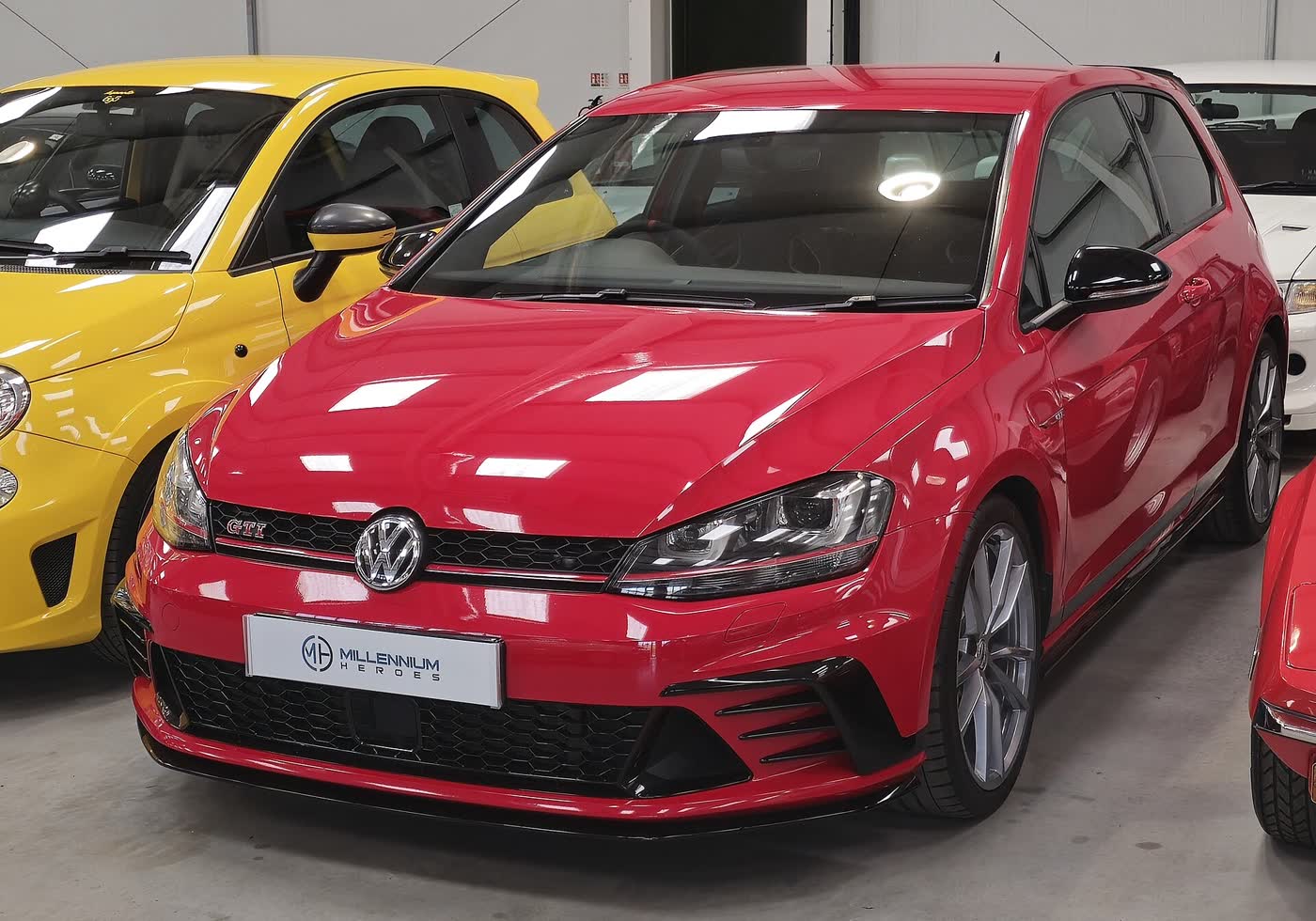
| Figure | Golf GTI (2018+ Mk7.5) | Source |
|---|---|---|
| Power-to-weight | 13.4 lb per hp | derived: 3,058 lb divided by 228 hp |
| Power | 228 hp, 258 lb-ft | KBB, 2019 model year |
| Curb weight | ~3,058 lb | Cars.com, 2019 GTI S manual (3,062 lb) |
| 0 to 60 mph | 6.0 to 6.4 sec | Car and Driver, via Yahoo: 6.0 sec for the 2018 Autobahn manual on all-season tires. The 6.4 end of the range: no source located |
| Engine | 2.0T EA888 Gen3, front-wheel drive | fueleconomy.gov: 2.0 L turbo, front-wheel drive. The EA888 Gen 3 name: Foreign Automotive |
| Transmission | 6-speed manual or DSG dual-clutch | fueleconomy.gov, 6-speed manual and fueleconomy.gov, DSG |
The GTI makes the same 228 horsepower as a GR86 but backs it with 258 lb-ft of torque, and that torque is what the car feels like. It is fast in the way that matters on a real road: pull in any gear, no need to wring it out, no downshift required to make progress. Where a Miata asks you to work for it, the GTI just goes.
That refinement is also the ceiling. This is a front-wheel-drive car, so it has muscle and polish rather than a rear-drive car's rotation. It never feels like it is pivoting around you, and the sensation of steering the car with the throttle is simply not on the menu. Scored on feel, that is a 7: good, not thrilling.
So the buyer question is what you want from the driving. If you want a car that makes every commute and every back road easy and quick, the GTI is close to ideal and the DSG makes traffic painless. If the point of owning a performance car is the conversation between you and the rear axle, this is not the car and no amount of tuning changes that.
| Figure | Golf GTI (2018+ Mk7.5) | Source |
|---|---|---|
| Total annual running cost | ~$4,380/yr | derived: the four lines below added together ($1,778 + $1,850 + $240 + $500 = $4,368) |
| Fuel | ~$1,778/yr (27 to 28 mpg, 91 octane) | derived: 12,000 miles divided by 27 mpg, at $4.00 a gallon; 27 mpg is EPA's combined rating for the 2019 manual |
| Insurance | ~$1,850/yr | we found no published source for this figure |
| Tires (amortized) | ~$240/yr | our estimate |
| Routine service | ~$500/yr | our estimate |
| Fuel economy | 27 to 28 mpg combined | fueleconomy.gov, 2018 manual: 28 and fueleconomy.gov, 2019 manual: 27 |
| Octane | 91 recommended | we found no published source for this figure |
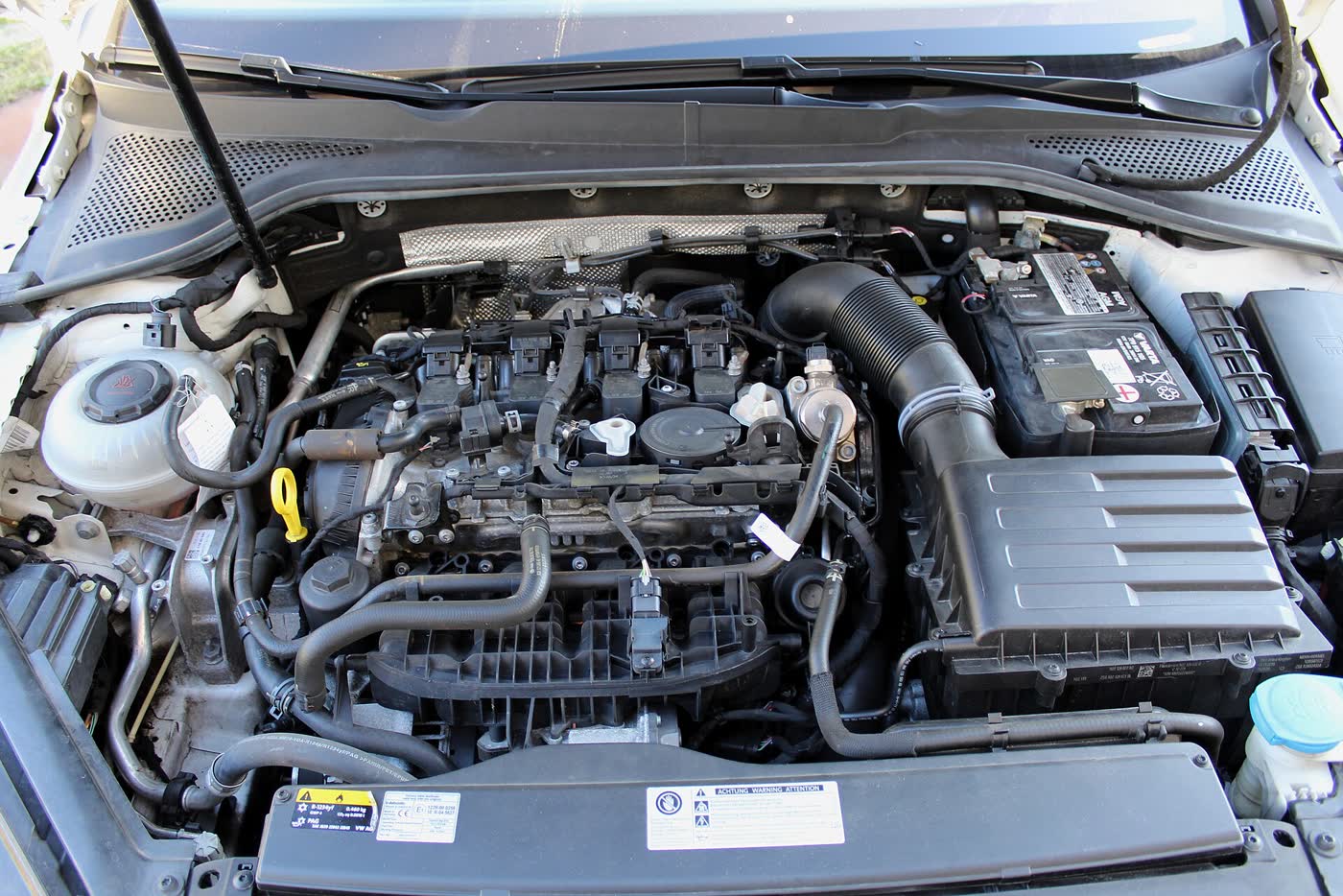
About $4,380 a year all in, and the shape of that number is friendly. Nearly 28 mpg from a car this quick is good, the tires are ordinary sizes rather than staggered nineteens, and insurance sits at a moderate $1,850 because insurers read a Golf as a Golf. Against the rear-drive V6 cars on our Board, that is a four-figure annual saving.
Where it loses ground is service. VW maintenance costs more than the equivalent Japanese work, and the $500 routine line is real rather than optimistic. It also wants 91 octane, so you do not get the Miata's regular-fuel break. Those two things are why this is a 7 and not the Miata's 9.
The practical read: this is a car you can actually afford to drive every day, which matters because the whole case for a GTI is that it is your only car. A performance car you cannot afford to run sits in the garage, and this one does not have that problem.
| Figure | Golf GTI (2018+ Mk7.5) | Source |
|---|---|---|
| Worst realistic repair | ~$900 (water pump + thermostat housing) | we found no published source for this figure |
| Signature failure | Plastic water pump / thermostat housing, cracks around 50,000 to 100,000 miles | Foreign Automotive describes the plastic water pump and thermostat housing module failing. The 50,000 to 100,000 mile window: no source located |
| Carbon buildup | Real on the EA888 Gen3; the claim that 2017+ cars added port injection and fixed it is unconfirmed | Foreign Automotive on carbon buildup on the direct-injected EA888 Gen 3. The port-injection claim: no source located that confirms it |
| Other common items | PCV valve / air-oil separator, diverter valve, ignition coils | Foreign Automotive covers the PCV valve and the ignition coils. The diverter valve: no source located |
| Engine longevity | 150,000 to 200,000+ miles common if maintained | our estimate |
The Risk on a GTI is a known maintenance cluster rather than a lurking catastrophe, and that distinction is the whole score. Nothing here will hand you a five-figure bill. The EA888 Gen3 fixed the oil consumption and timing chain problems that hurt earlier versions, and these engines regularly run past 150,000 miles when maintained.
The one you must plan for is the water pump and thermostat housing. It is plastic, it cracks from heat cycling, and it is close to a certainty somewhere between 50,000 and 100,000 miles at roughly $900. That is not a reason to walk away, it is a number to put in your offer, and a car with the job already done and paperwork to show it is worth paying more for.
One thing to be careful about, because it is repeated everywhere and we cannot stand it up. Intake-valve carbon buildup is real on this direct-injected engine and needs periodic walnut blasting. The popular explanation, that pre-facelift cars are direct-injection only and the 2017 and later Mk7.5 added port injection to solve it, is not established: it traces to a single affiliate source and our verification pass could not confirm it. The buildup is real. The tidy story about which model years escape it is not something you should pay a premium for, and we have said the same thing on our Golf R page.
We still scope this review to 2018 and newer, but for reasons we can actually evidence rather than that one. It is the facelift car, it is the version whose Performance Package content became standard equipment on SE and Autobahn trims, and across the Mk7.5 range VW doubled the DSG service interval from 40,000 to 80,000 miles, which is a documented ownership cost difference if you buy the dual-clutch.
| Figure | Golf GTI | Source |
|---|---|---|
| Cargo volume | 22.8 cu ft | KBB, 2019 model year |
| Cargo below shelf | 16.5 cu ft | fueleconomy.gov lists luggage volume as 16 cu ft, in whole numbers |
| Seats | 5 | Cars.com, 2019 GTI specs |
| Doors | 4 | Cars.com, 2019 GTI specs |
| Comfort | Refined and comfortable, DSG option for traffic | our assessment |
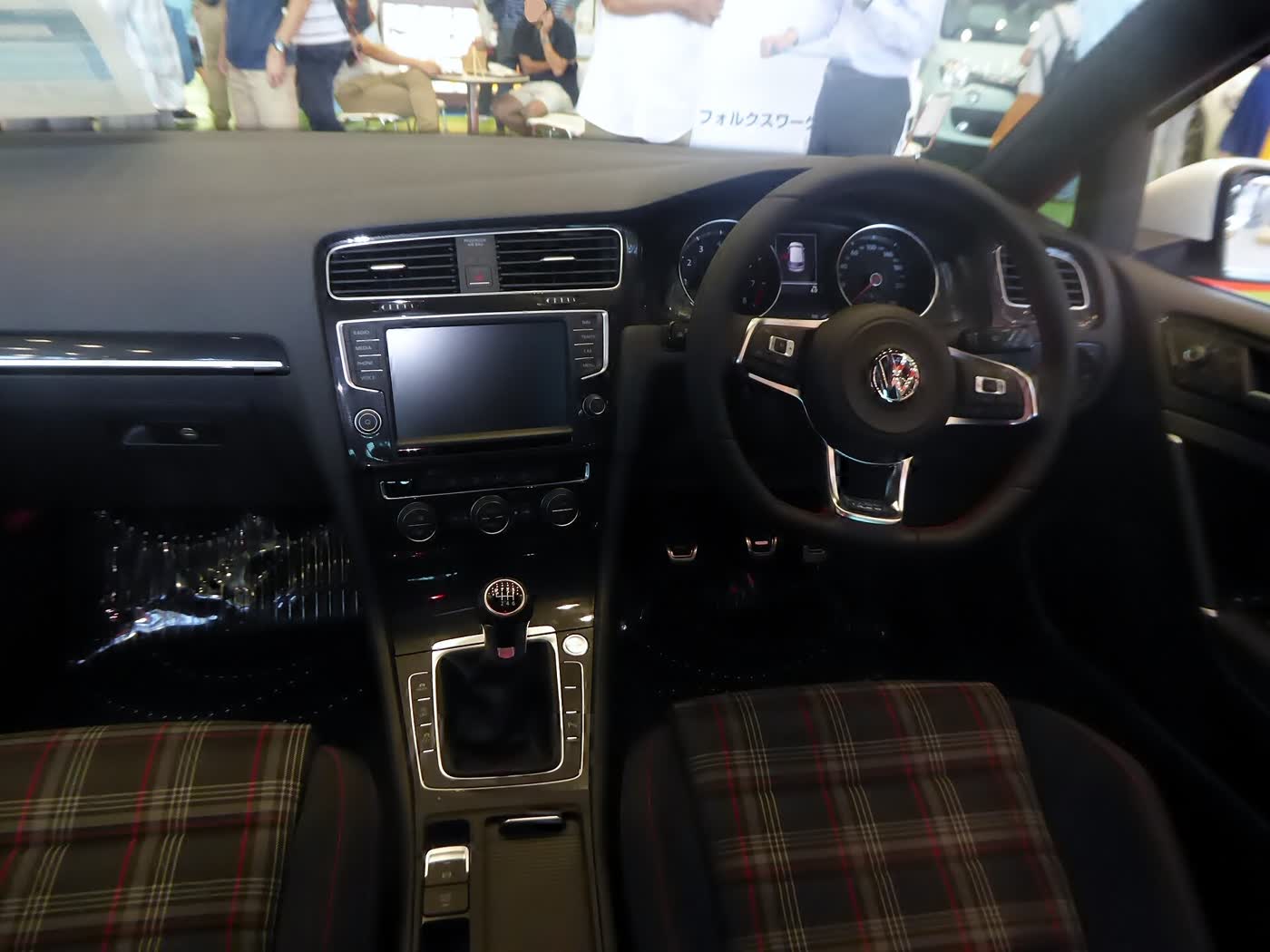
This scores a 9 on the Daily, level with the Golf R, and the two of them are clear of everything else. Four doors, a real back seat adults fit in, and 22.8 cubic feet of cargo, which is more space than a lot of crossovers offer. The Miata gives you 4.6 cubic feet and two seats. The GR86 gives you 6.3 and a token pair of rear seats. The GTI gives you an actual car.
What makes that remarkable is the company it keeps. This is a 9 for practicality in a car that still tunes to roughly 290 wheel horsepower for the price of a set of tires. Almost every other car we have scored asks you to trade usability for pace. This one mostly refuses to make you choose.
If you have one parking space, one budget, and one car, this section is the entire argument for the GTI. 22.8 cubic feet carries a family, a dog, and a home improvement run on Saturday and still be the car you want on an empty road on Sunday.
| Figure | Golf GTI (2018+ w/ PP) | Source |
|---|---|---|
| SCCA Solo class | H Street / touring (FWD) | 2026 SCCA Solo Rules, Appendix A: Golf GTI (2006-21) is listed in H Street |
| Max grip | 0.95 g (summer tires) / 0.89 g (all-season) | Car and Driver, via Yahoo: 0.95 g for the 2018 SE on summer tires, 0.89 g for the 2018 Autobahn on all-seasons |
| 70-0 braking | 161 ft (summer) / 174 ft (all-season) | Car and Driver, via Yahoo: 174 ft for the 2018 Autobahn, 13 ft longer than the SE, which gives 161 ft |
| Source | Car and Driver, 2018 GTI SE on Bridgestone Potenza S001 summer tires | Car and Driver, via Yahoo |
| Track hardware | Performance Package: VAQ electronic limited-slip, larger brakes, optional adaptive dampers | Car and Driver, via Yahoo: for 2018 the electronic limited-slip differential and the larger brakes are standard on SE and Autobahn, and the Autobahn has adaptive dampers as standard |
| Caveat | FWD understeer at the edge; brakes fade after repeated hard laps | our assessment; no source located for the brake fade |
SCCA H Street · shared with the Fiesta ST, the Civic Si, the Focus ST, the GTI Mk6 and the Mazdaspeed3 on this Board.
These figures are now verified, and the answer turned out to be tires rather than anything mysterious. Car and Driver measured 0.95 g and 161 ft for a 2018 GTI SE on Bridgestone Potenza S001 summer tires, and 0.89 g and 174 ft for a 2018 Autobahn manual on Hankook all-seasons. A 2017 Sport with the Performance Package stopped in 154 ft. Same car, twenty feet of difference, entirely down to rubber. Always name the tires when you quote a GTI braking number.
The GTI is sorted and capable at the limit without ever being thrilling, and 6 is an honest number for that. The VAQ electronic limited-slip in the Performance Package works, pulling the car out of corners rather than just spinning the inside front wheel, and the bigger brakes are a meaningful upgrade over the base car.
The ceiling is the layout. Front-wheel drive means the car ultimately understeers, and it lacks the adjustability that lets a rear-drive car be steered on the throttle. On a track day the brakes will also fade after repeated hard laps. It is fun. It is not the car that teaches you car control, and the GR86 and Focus RS both beat it here.
Worth saying plainly on camera: our Limit score rates engagement and behavior at the edge, not grip alone. That is why a Miata at 0.90 g can out-score cars that pull more lateral g. The GTI's 6 is about how the car feels when pushed, not about the number in the table.
| Path | Result | Risk |
|---|---|---|
| Stage 1 flash | ~$700, 50 to 70 hp, roughly 270 to 290 whp | Low |
| Stage 2 plus supporting hardware | More power; add a catch can, watch the water pump | Low to moderate |
| Bigger turbo | Past the stock IS20 ceiling | Moderate |
| Big power | Needs turbo plus fueling; the IS20 walls out | High |
| Stock internals ceiling | 350 to 400 hp with supporting mods | n/a |
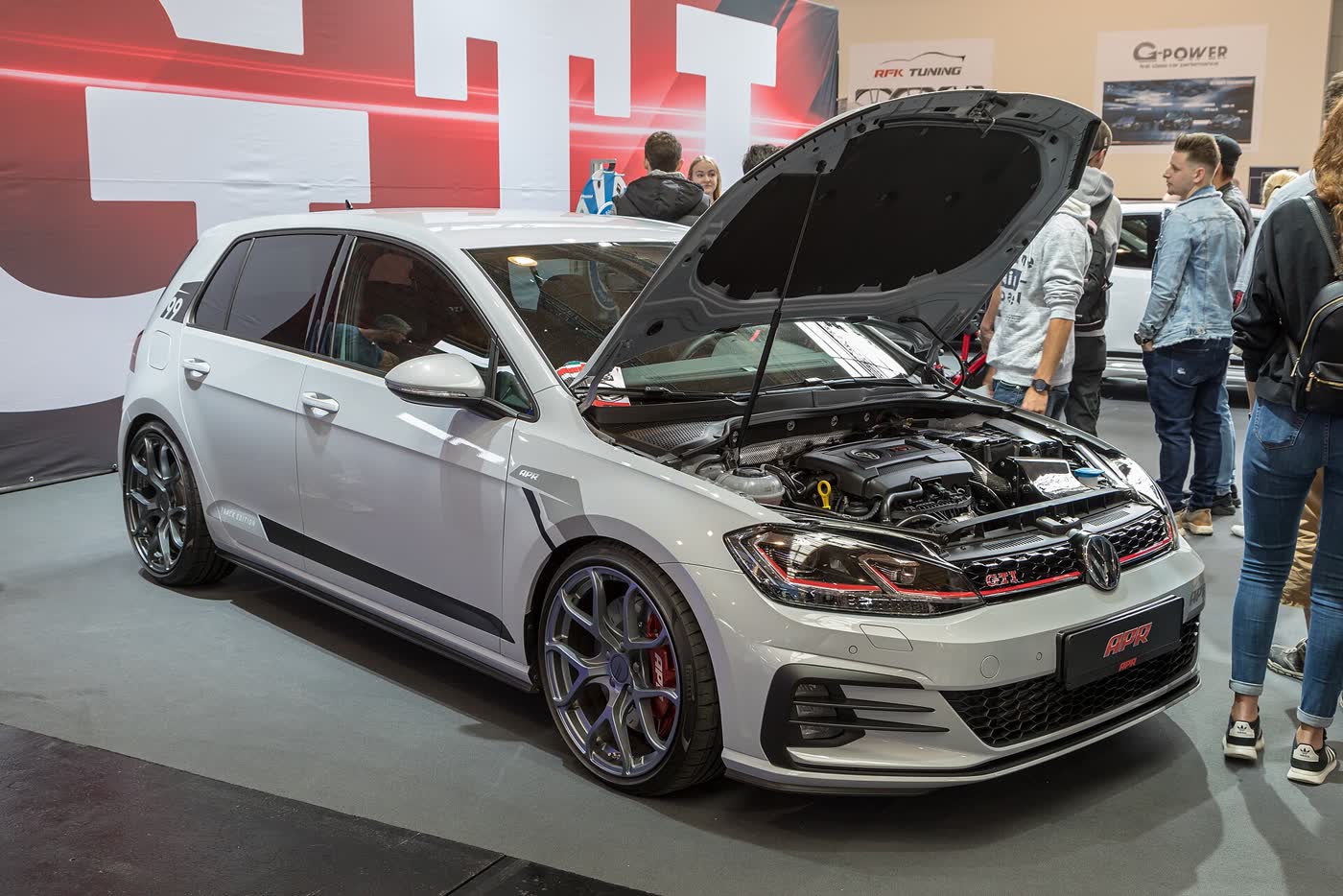
The EA888 Gen3 is one of the great cheap-power engines, and this is where the GTI earns its 8. A roughly $700 Stage 1 flash adds 50 to 70 horsepower, because VW deliberately leaves boost on the table from the factory. Roughly 290 wheel horsepower for the price of a set of tires, and the aftermarket behind it is elite, with APR, Unitronic, and Integrated Engineering all fully supporting the platform.
Two things cap it below a 9. The standard IS20 turbo is a step below the Golf R's IS38 and walls out fairly early, so real power means a turbo and fueling rather than just a bigger tune. And front-wheel drive limits how much power is actually usable before torque steer takes over.
The sensible build is the obvious one: flash it, add a catch can, keep an eye on the water pump, and enjoy a car that now runs with things costing twice as much. Chasing the 350 to 400 horsepower the stock internals will take is possible, but the cost curve steepens quickly and the practical daily driver you bought starts to disappear.
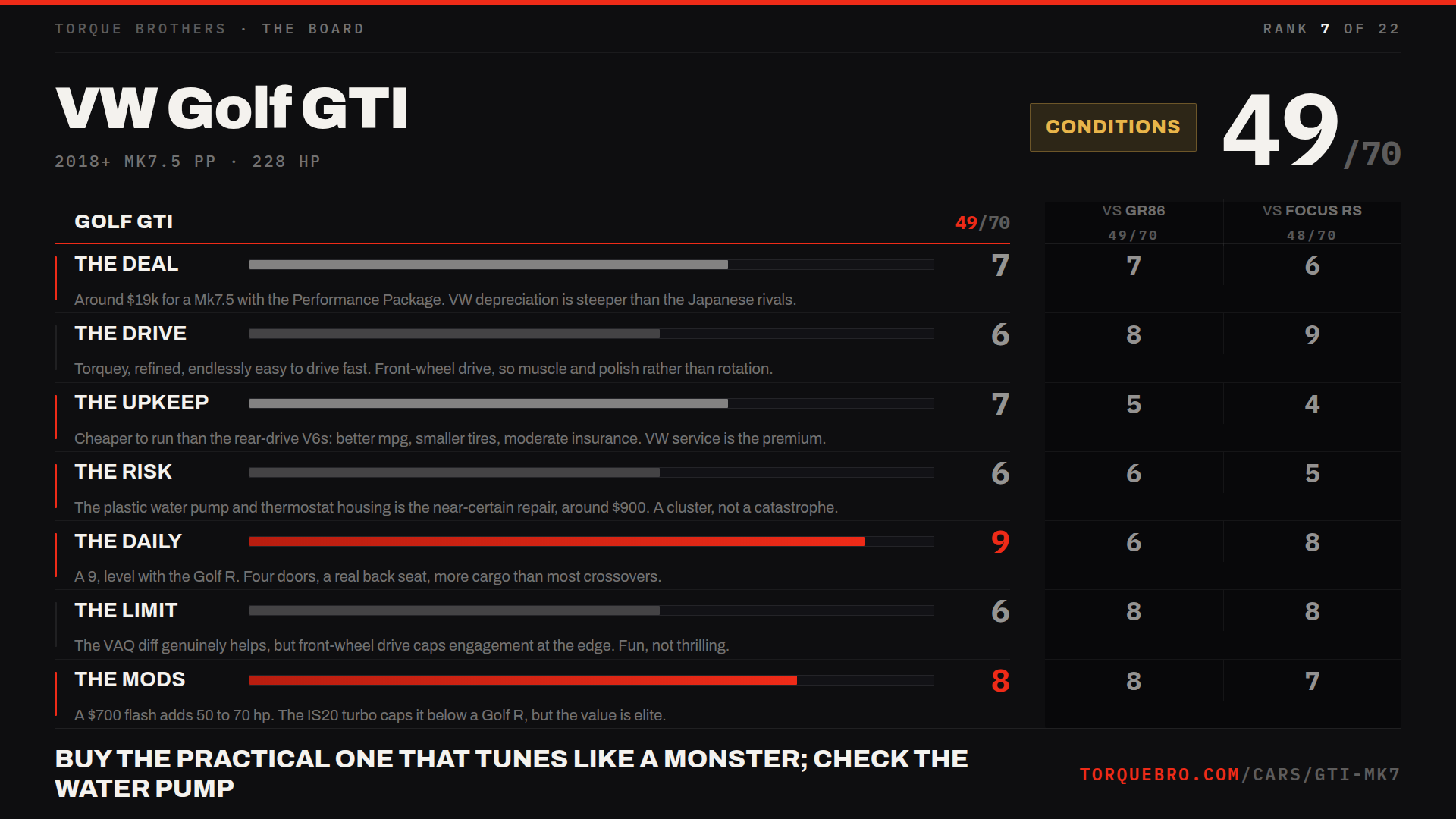
Buy, but buy the right one: a 2018 or newer Mk7.5 with the Performance Package, and verify the water pump and thermostat housing history. It scores 49 out of 70 by winning practicality outright, taking the cheap-power category, and staying affordable to run, while giving up ground at the limit to the rear-drive cars.
This car is for you if you need one car to do everything and refuse to give up being quick. It is not for you if what you actually want is rotation and adjustability at the edge, because front-wheel drive is a fixed fact of the car. Knowing which of those two people you are is the whole decision.
So you want to buy a used GTI. Here is the short version before we get into it: this scores a 9 on practicality, level with the Golf R, it tunes to roughly 290 wheel horsepower for the price of a set of tires, and there is a single plastic component that decides whether you bought a good one or a project. Stick around and we will tell you exactly which one to buy and what to check before you hand over any money.
We scored this car as a 2018 or newer Mk7.5 with the Performance Package and the manual gearbox, and it landed at 49 out of 70. That put it ahead of the GR86 and the Supra at the time of writing, which is not where most people expect a hot hatch to finish. Here is the whole story, category by category.
Around $19,000 buys a Mk7.5 with the Performance Package from a private seller, and about $22,000 gets you the same car from a dealer. To put that in context, a new 2026 GTI stickers at $34,590, so the used car is roughly 45 percent off a new one. For that money you are getting a turbocharged hatchback with a limited-slip differential, four doors, and a chassis that reviewers spent most of a decade calling the class benchmark.
The honest knock, and the reason this category scores a 7 rather than an 8, is depreciation. A GTI holds around 72 percent of its value over three years, which is noticeably worse than the Japanese cars it competes with. If you are the kind of buyer who sells every three years, that gap is real money and you should factor it in. The offsetting news for a used buyer is that Mk7 values are firming as the car settles into modern-classic status, so the steepest part of that curve has already happened to somebody else.
On trim, this is the part to get right. The lineup ran S, SE, and Autobahn, with a Rabbit edition in 2019, and the Performance Package was the option that mattered: it brought the VAQ electronic limited-slip differential and larger brakes. For 2018, Volkswagen made that content standard on SE and Autobahn cars, which is one of the reasons we scope this review to 2018 and newer. A base S without the differential is a different and much less interesting car, so hold out for the right one rather than saving a few hundred dollars.
The numbers first: 228 horsepower and 258 pound-feet of torque from the 2.0-litre EA888 Gen3, about 3,058 pounds, which works out to 13.4 pounds per horsepower, and 0 to 60 in the 6.0 to 6.4 second range. Car and Driver measured 6.0 seconds flat for a 2018 Autobahn manual, along with a 14.5 second quarter mile at 100 mph.
Here is the comparison that explains the car. A GR86 makes the same 228 horsepower. The GTI backs it with 74 more pound-feet of torque, and torque is what you actually feel on a road. The GTI pulls in any gear, at any revs, without a downshift and without any drama. Where a Miata asks you to work for your speed and reward you for it, the GTI simply goes. That is a completely different kind of quick, and for a lot of people it is the more useful one.
The ceiling is the layout, and we should be straight about it. This is a front-wheel-drive car, so what it offers is muscle and polish rather than rotation. It does not pivot around you, and steering the car with the throttle is not on the menu at any speed. Scored on feel, which is how we score The Drive, that is a 6: good, never thrilling. If the whole point of a performance car for you is the conversation between your right foot and the rear axle, no amount of tuning fixes this and you should buy something rear-driven.
One practical note on gearboxes. The manual is the engagement answer and the DSG dual-clutch is the traffic answer, and both are good. If you are buying a DSG car, there is a real ownership cost difference worth knowing about, and we cover it in the running costs section below.
About $4,380 a year, all in, on our standard assumptions of 12,000 miles a year and a 35-year-old driver with clean history. The shape of that number is friendly almost everywhere. You get 27 to 28 mpg combined from a car this quick, which is impressive. The tires are ordinary sizes and cost around $240 a year amortised, rather than the $650 the staggered nineteens on a Supra or a Nissan Z will run you. Insurance sits at a moderate $1,850, because insurers look at a Golf and see a Golf.
Against the rear-drive V6 cars on our Board, that adds up to a four-figure saving every single year, and that is money you either keep or spend on the car. It is the single biggest practical argument for buying a hot hatch instead of a sports coupe.
Two things stop it scoring higher. Volkswagen dealer service costs more than the equivalent Japanese work, so the $500 routine service line is realistic rather than optimistic. And it wants 91 octane, so you do not get the regular-fuel break that helps the Miata so much. Those two items are why this is a 7 rather than the Miata's 9. It is still cheaper to run than the other hot hatches here, and it is cheap enough that you can use it every day, which matters because the entire case for a GTI is that it is your only car.
The good news first. The EA888 Gen3 engine fixed the oil consumption and timing chain problems that hurt earlier versions of this family, and these engines routinely run past 150,000 and often past 200,000 miles when they are maintained. There is no catastrophic, wallet-emptying failure lurking in this car the way there is in some of its rivals. What you get instead is a known cluster of moderate maintenance items, and that distinction is the whole reason it scores a 6 on The Risk rather than something worse.
The one you must plan for is the water pump and thermostat housing. It is a plastic assembly, it warps and cracks from heat cycling, and it is close to a certainty somewhere between 50,000 and 100,000 miles. Budget around $900. This is the signature failure of the whole Golf platform, and it is the single most useful thing to ask about when you are looking at a car. A GTI with paperwork showing the job has already been done is worth paying more for. A GTI without it is a car with a $900 bill somewhere in its near future, and you should price your offer accordingly rather than walking away.
Now a correction, because this one circulates widely and we could not stand it up. Intake-valve carbon buildup is real on this direct-injected engine and it needs periodic walnut blasting. You will read confidently that pre-facelift cars are direct-injection only and that the 2017 and later Mk7.5 added port injection which solved it. That year-split explanation is not established. It traces back to a single affiliate source and our verification pass could not confirm it. The buildup is real. The tidy story about which model years escape it is not something you should pay a premium for, and if a seller uses it to justify their price, they are quoting marketing rather than fact.
Beyond those two, the list is short and cheap: the PCV valve and air-oil separator, the diverter valve, and ignition coils. All are well understood, all are moderate money, and none of them should change your decision.
Yes, and this is the category where the GTI stops competing and starts winning. It scores a 9 on The Daily, level with its own sibling the Golf R, and the two of them are clear of everything else we have scored.
You get 22.8 cubic feet of cargo space, 16.5 of it below the parcel shelf, four doors, and five seats that adults fit in. That is more usable space than a lot of small crossovers offer. For comparison, a Miata gives you 4.6 cubic feet and two seats, and a GR86 gives you 6.3 and a pair of rear seats that are really a shelf. This is not a sports car with a token back seat bolted on. It is an actual car that happens to be fast.
What makes that remarkable is the company it keeps. This is a 9 for practicality in a car that will make roughly 290 wheel horsepower for the price of a decent set of tires. Almost everything else we have scored asks you to trade usability for pace. The GTI mostly refuses to make you choose, and if you have one parking space, one budget, and one car, that refusal is the entire argument.
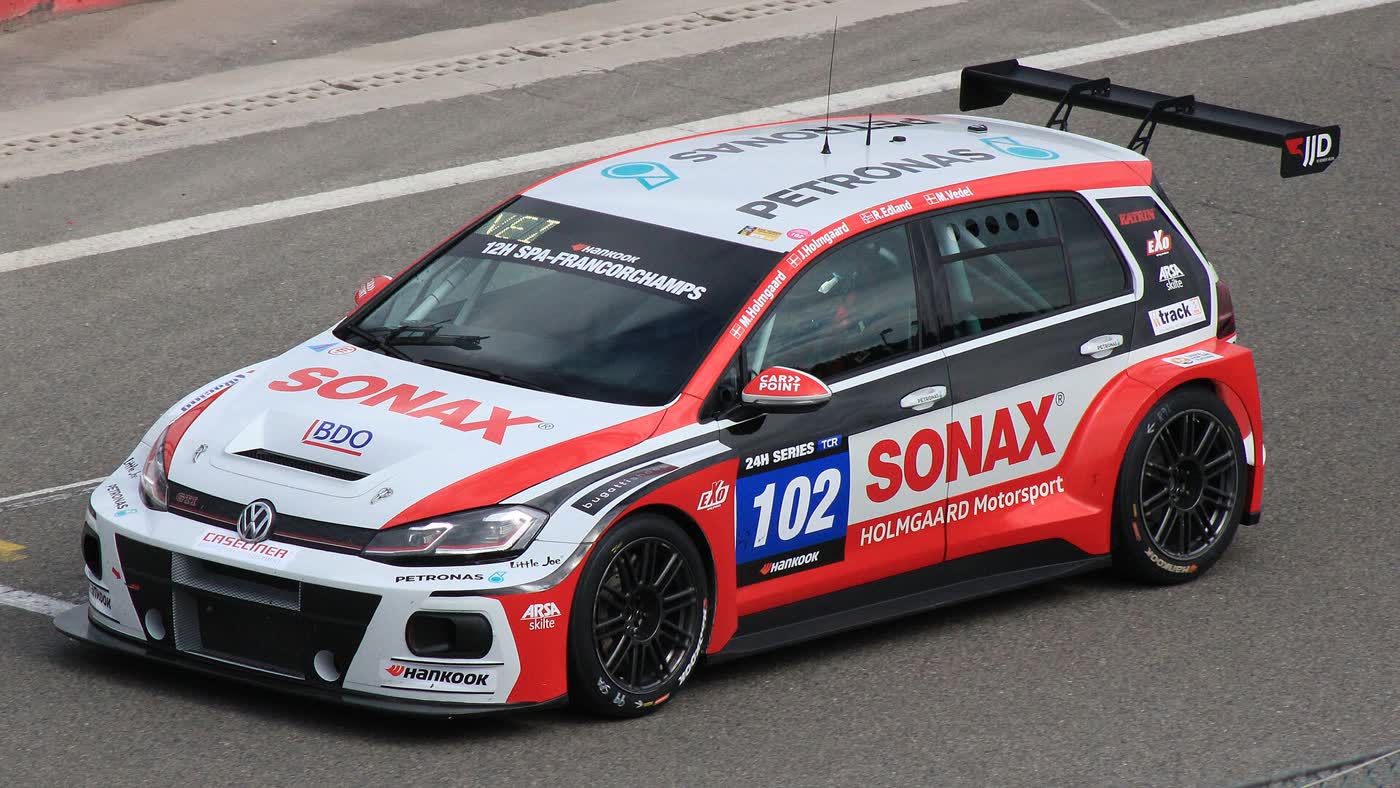
It is sorted and capable without ever being thrilling, and a 6 on The Limit is an honest number for that. The VAQ electronic limited-slip differential in the Performance Package works, pulling the car out of a corner rather than just lighting up the inside front wheel, and the larger brakes are a real upgrade over the base car. It runs in SCCA Solo's H Street class.
The instrumented figures are worth understanding properly, because tires turn out to be the entire story. Car and Driver measured 0.95 g of grip and a 161 foot stop from 70 mph for a 2018 GTI SE on Bridgestone Potenza S001 summer tires. The same outlet measured 0.89 g and 174 feet for a 2018 Autobahn manual riding on Hankook all-season rubber. A 2017 Sport with the Performance Package stopped in 154 feet. That is a twenty foot spread on the same car, produced by nothing but the rubber. If you take one thing from this section, take that: whenever anybody quotes you a GTI braking number, ask what tires it was wearing.
The ceiling is the same one we keep coming back to. Front-wheel drive means the car ultimately understeers, and it lacks the adjustability that lets a rear-drive car be steered on the throttle. On a track day the brakes will also fade after repeated hard laps. Both the GR86 and the Focus RS beat the GTI in this category, and that is the correct result. Worth saying plainly, because people misread it: our Limit score rates engagement and behaviour at the edge, not grip. That is exactly why a Miata pulling 0.90 g can out-score cars that grip harder. The GTI's 6 is about how the car feels when you push it, not about the number in the table.
This is where the GTI earns its 8 on The Mods and, frankly, where a lot of people fall in love with it. A Stage 1 flash costs around $700 and adds 50 to 70 horsepower, taking the car to roughly 270 to 290 wheel horsepower. That is not a typo. Volkswagen deliberately leaves boost on the table from the factory, and the EA888 Gen3 has been called the king of modern tuning for exactly that reason. Roughly 290 wheel horsepower for the price of a set of tires.
The aftermarket behind it is elite, with APR, Unitronic, and Integrated Engineering all fully supporting the platform, so you are never short of options or knowledge. The stock internals will take 350 to 400 horsepower with supporting hardware.
Two things cap it below a 9. The standard IS20 turbocharger is a step below the IS38 fitted to the Golf R, and it walls out relatively early, so going beyond Stage 2 means a turbo and fueling rather than just a bigger tune. And front-wheel drive limits how much power is actually usable before torque steer starts making decisions for you. Our advice is the boring, correct one: flash it, fit a catch can, keep an eye on that water pump, and enjoy a car that now runs with things costing twice as much.
This is the question almost every GTI shopper eventually asks, so let us settle it. The Golf R is the same car with 292 horsepower instead of 228, Haldex all-wheel drive, and a 5.2 second run to 60. It costs around $22,000 against the GTI's $19,000, so roughly $3,000 more. It scores 51 on our Board to the GTI's 50.
The R wins The Drive, 7 to 6, and The Limit, 7 to 6, because all-wheel drive removes the traction limitation that defines the front-drive car. The two tie at 9 on The Daily, because they share a body and the R gives up nothing to fit the extra hardware. Where the GTI wins is running costs: 7 to 6 on The Upkeep, because the R is thirstier, insures higher at around $2,390 a year, and adds a Haldex fluid service every 30,000 miles that the GTI simply does not have. Over a few years that gap is not trivial.
So the call is about you. If you live somewhere with real winters, or you want the IS38 turbo's headroom for a build, the Golf R is worth the extra $3,000 and then some. If you want a cheap route to a quick, practical car with running costs the other hot hatches cannot match, the GTI is the smarter buy and it is why the two finish one point apart rather than five.
The other cross-shop worth naming is the GR86, which the GTI out-points 50 to 49. The GTI wins practicality by a mile, 9 to 6, plus running costs and cheap power. The GR86 wins The Limit on rear-drive engagement. If you have somewhere else to put the groceries and you want the car to talk to you, buy the Toyota. If you need one car, buy the Volkswagen.
Buy, but buy the right one. Get a 2018 or newer Mk7.5 with the Performance Package, and verify the water pump and thermostat housing history before you hand over any money. That single condition falls straight out of the research: 2018 and newer gets you the facelift with the Performance Package content standard on SE and Autobahn trims and the doubled DSG service interval, the Performance Package gets you the VAQ differential and the bigger brakes, and the water pump check keeps you clear of the one near-certain repair on the platform.
It scored 49 out of 70 by winning practicality outright, taking the cheap-power category, and staying affordable to run, while giving up ground at the limit to the rear-drive cars. The only person who should skip it is the buyer who wants rotation and adjustability at the edge, because front-wheel drive is a fixed fact of this car and no modification changes it. For everyone else, and especially for anyone who needs one car to do absolutely everything without giving up being quick, this is a very easy car to recommend.
Filming reference: cue sheet · for the hosts on set, not part of the review.
The frame that closes our video: the Golf GTI at 49/70, with the GR86 and the Focus RS alongside.